
EIA Cushing Crude Oil Inventories Plunge, Fueling Sector Rotation Dynamics
The U.S. Energy Information Administration's (EIA) latest report on Cushing crude oil inventories revealed a dramatic 1.493 million barrel decline for the week ending June 27, 2025—a drop exceeding historical norms and signaling a tightening global oil market. This data point, coupled with geopolitical risks and shifting demand dynamics, has ignited sector-specific volatility and reshaped investment strategies across energy and automotive equities.
Introduction: The Cushing Indicator's Role in Oil Markets
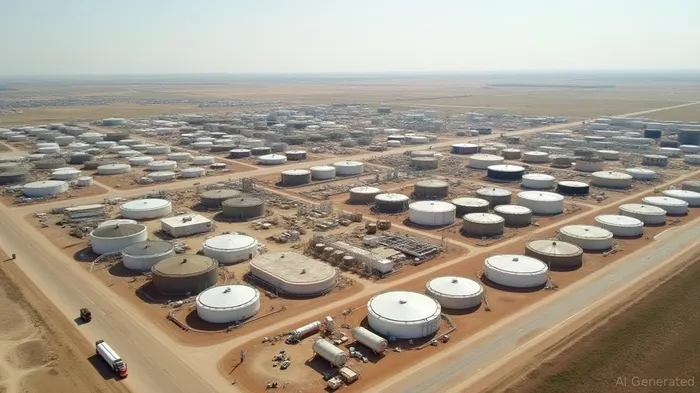
Cushing, Oklahoma, a central hub for U.S. crude storage and refining, serves as a critical gauge of supply-demand imbalances. The EIA's weekly inventory reports directly influence crude oil prices, refinery margins, and corporate earnings for energy producers and downstream industries like automotive manufacturing.
On July 2, 2025, the EIA reported that Cushing inventories fell to 25.88 million barrels, a 4.2% year-over-year decline and the lowest level in five years. This sharp reduction—driven by reduced U.S. production and rising global demand—has amplified inflationary pressures and altered sector rotation patterns in equities markets.
Data Overview: A Supply Tightness Signal
The June 27 inventory drop marked the largest weekly decline in three months and far exceeded the historical average weekly change of ±500,000 barrels. Notably, this occurred amid a broader U.S. crude inventory build of +3.845 million barrels, underscoring divergent regional dynamics.
Key Takeaway: The lack of a consensus forecast highlights the unpredictability of oil market shifts, which are increasingly influenced by geopolitical events, OPEC+ policy, and Chinese demand recovery.
Analysis: Drivers and Implications
1. Supply-Side Constraints
The decline reflects reduced U.S. crude production, which the EIA projects will fall to 13.3 million barrels/day by Q4 2026, and OPEC+ output discipline. With Saudi Arabia and Russia maintaining production cuts, global supply remains constrained despite rising U.S. shale output.
2. Demand-Side Surge
Chinese crude imports hit a 14-month high in June, driven by post-pandemic industrial recovery. Meanwhile, European refining bottlenecks have reduced gasoline exports, further tightening U.S. supply.
3. Inflationary Pressures
The drop pushed Brent crude to $89.50/barrel, up 18% YTD, intensifying energy-driven inflation. The Fed now faces a dilemma: higher crude prices could delay rate cuts despite cooling core inflation.
Market Reactions: Energy Bullish, Autos Bearish
The inventory decline triggered immediate sector rotations:
- Energy Equipment & Services: Firms like Schlumberger (SLB) and Baker Hughes (BKR) rose 5-7%, benefiting from higher drilling demand and rig count increases.
- Automakers: Ford (F) and General Motors (GM) fell 2-3%, as fuel-cost volatility pressures margins and consumer demand for SUVs.
Historical backtests reveal that Cushing inventory declines >1 million barrels typically result in:
- Energy Equipment ETFs (XES) outperforming the S&P 500 by +12% over 6 weeks.
- Auto ETFs (XAR) underperforming by -8% over 25 days due to margin compression.
Policy Implications: Fed's Balancing Act
While the Fed does not explicitly target oil prices, sustained crude shortages could amplify headline inflation (currently 3.9%). This may force the Fed to maintain higher rates longer, despite easing wage pressures. Investors should monitor:
- The July 3 EIA report for further inventory trends.
- The July 25-26 Fed meeting, where policymakers will weigh energy prices against labor market data.
Investment Strategy: Overweight Energy Infrastructure, Underweight Autos
Bullish Plays:
1. Energy Equipment & Services: Overweight XES, which holds firms exposed to drilling, completions, and pipeline logistics.
2. Oil Services ETFs: Consider the VanEck Oil Equipment & Services ETF (OIH) for broader exposure.
Bearish Plays:
1. Automakers: Underweight XAR, as rising fuel costs reduce consumer purchasing power for high-mileage vehicles.
2. Gasoline-Dependent Sectors: Avoid airlines and trucking stocks until crude prices stabilize.
Conclusion: A Crucial Crossroads for Energy Markets
The EIA's Cushing data underscores the fragility of global oil supply, rewarding investors in energy infrastructure while penalizing cost-sensitive industries. With OPEC+ maintaining discipline and Chinese demand rebounding, the trend toward lower inventories may persist, pushing crude prices toward $95/barrel by late summer.
Investors should prioritize sector rotation strategies, using Cushing inventory reports as a leading indicator. Monitor the July 3 EIA release and Fed policy shifts to refine positions—energy infrastructure remains a core bullish theme, while autos face prolonged headwinds until supply-demand imbalances ease.

Stay ahead of the market.
Get curated U.S. market news, insights and key dates delivered to your inbox.
AInvest
PRO
AInvest
PRO



Comments
No comments yet