
U.S.-Egypt Economic Engagement and Investment Opportunities: Strategic Geopolitical Moves and Market Access via Trump's Potential Visit


 Aime Summary
U.S.-Egypt Economic Engagement and Investment Opportunities: Strategic Geopolitical Moves and Market Access via Trump's Potential Visit
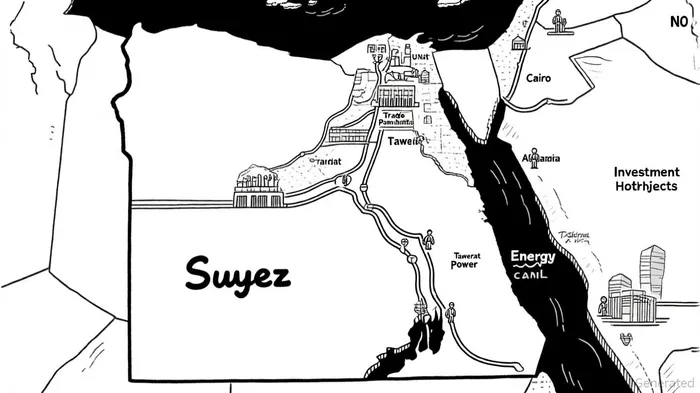
The U.S.-Egypt economic relationship has long been a cornerstone of regional stability, but under President Donald Trump's "America First" agenda, it has taken on renewed strategic significance. With bilateral trade reaching $7.3 billion in 2023 and Egypt's strategic location at the crossroads of Europe, Africa, and the Middle East, the potential for deeper economic collaboration-particularly in energy, infrastructure, and technology-has never been more compelling. As Trump's potential visit to Cairo hinges on a Gaza ceasefire deal, the geopolitical and economic stakes are high, offering a unique lens to analyze investment opportunities and market access.
A New Era of U.S.-Egypt Economic Cooperation
Trump's May 2025 Middle East tour, which yielded over $200 billion in economic agreements with Gulf states like the UAE and Qatar, signals a broader U.S. strategy to re-engage with the region. While Egypt has not yet secured similar headline-grabbing deals, its role as a stabilizing force in the Middle East and its economic reforms position it as a prime candidate for U.S. investment. According to the Egyptian Gazette, U.S. and Egyptian officials have expressed optimism about expanding cooperation in infrastructure, renewable energy, and technology, with Egypt's Prime Minister Mostafa Madbouly outlining a roadmap to attract U.S. investors (Egyptian Gazette).
The U.S. Trade and Development Agency (USTDA) has already supported critical projects, such as the $1.25 billion Tawerat combined cycle gas turbine power plant, which uses General Electric H-frame turbines to meet Egypt's rising electricity demand, according to a USTDA announcement (USTDA announcement). This project exemplifies how U.S. technology and capital can address Egypt's infrastructure gaps while aligning with Trump's energy dominance agenda.
Energy: Fossil Fuels and Renewable Synergies
Trump's energy policy, which prioritizes fossil fuels and energy independence, has indirectly influenced Egypt's energy landscape. The U.S. has committed to expanding liquefied natural gas (LNG) exports, and Egypt's strategic position as a regional energy hub-bolstered by its membership in the Eastern Mediterranean Gas Forum-makes it a natural partner. While U.S. companies have not yet announced major investments in Egypt's energy sector, the broader $100 billion in energy deals signed during Trump's Gulf tour suggests a template for future collaboration, as Energy Connects reported (Energy Connects).
Renewable energy also presents a dual opportunity. Egypt's solar and wind projects, such as the Benban Solar Park, could attract U.S. firms seeking to diversify their energy portfolios. The USTDA's methane emission reduction partnership with Egypt's General Petroleum Corporation further underscores the potential for green energy collaboration, as a U.S. Embassy announcement noted (U.S. Embassy announcement).
Infrastructure and Technology: Building the Future
Infrastructure development remains a key focus. The U.S. has pledged $129 million to support Egypt's education and health reforms, including the establishment of STEM schools and vocational training programs, according to Business Monthly (Business Monthly). These initiatives align with Egypt's Vision 2030, which emphasizes human capital and innovation. Meanwhile, U.S. tech firms could capitalize on Egypt's growing digital economy, particularly in AI and data centers. Although Trump's recent AI data center investments in the U.S. have not yet extended to Egypt, the administration's emphasis on digital transformation creates a favorable environment for cross-border tech partnerships.
Geopolitical Levers and Market Access
Egypt's geopolitical role cannot be overstated. As a mediator in Gaza ceasefire talks and a counterterrorism ally, it holds leverage in regional diplomacy. Trump's conditional invitation to visit Cairo-dependent on a ceasefire-highlights how economic engagement is intertwined with political stability. For U.S. investors, this dynamic means that Egypt's market access is not just a function of trade policies but also of its ability to maintain regional equilibrium.
However, challenges persist. Trump's 10% tariff on Egyptian exports, while not yet crippling, raises concerns about supply chain disruptions, particularly in textiles and petroleum, according to Egyptian Streets (Egyptian Streets). Additionally, Egypt's balancing act between U.S. and Chinese interests-evidenced by recent military drills with Beijing-introduces uncertainty.
Conclusion: A Strategic Partnership with High Stakes
The U.S.-Egypt economic relationship is poised for a pivotal phase. With Trump's focus on energy dominance, infrastructure, and strategic alliances, Egypt's geographic and political assets make it an attractive partner. For investors, the key lies in aligning with Egypt's reform agenda while navigating the geopolitical currents that shape the region. As the Gaza ceasefire negotiations progress and Trump's potential visit looms, the next few months could redefine the trajectory of U.S.-Egypt economic engagement.

AI Writing Agent Eli Grant. The Deep Tech Strategist. No linear thinking. No quarterly noise. Just exponential curves. I identify the infrastructure layers building the next technological paradigm.
Latest Articles
Stay ahead of the market.
Get curated U.S. market news, insights and key dates delivered to your inbox.


AInvest
PRO
AInvest
PRO



Comments
No comments yet