
Egypt’s $18.5B Red Sea Megaproject: A Strategic Nexus for Infrastructure-Driven Real Estate and Tourism in Emerging Markets
 Aime Summary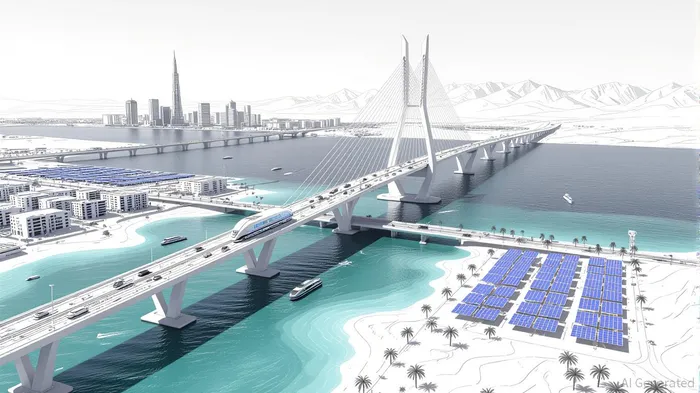
Egypt’s Red Sea megaproject, a $18.5 billion initiative anchored by partnerships with UAE-based Emaar and Saudi Arabia’s City Stars, represents a bold reimagining of infrastructure-driven real estate and tourism in emerging markets. This project, part of a broader $900 billion regional collaboration, is not merely a construction endeavor but a strategic pivot toward economic diversification, job creation, and sustainable growth. By integrating cutting-edge infrastructure, eco-conscious development, and cross-border connectivity, Egypt is positioning itself as a linchpin in the Red Sea’s evolving economic ecosystem.
Infrastructure as the Catalyst for Real Estate and Tourism
The megaproject’s infrastructure components are designed to catalyze both residential and commercial real estate demand. Ras El-Hekma, a flagship site, is being transformed into a “next-generation city” with a $24 billion investment from UAE’s ADQ sovereign fund. This includes a financial center, high-tech industrial zones, an international airport, and high-speed rail, aiming to accommodate 2 million residents [3]. Such infrastructure not only attracts private developers—evidenced by projects like Sky AD North’s 5,500-unit luxury resort and IL Cazar’s EGP 30 billion coastal community—but also ensures early occupancy rates, a critical factor in real estate viability [3].
Comparative data from emerging markets underscores the efficacy of government-led infrastructure in driving real estate growth. For instance, Egypt’s New Administrative Capital and Suez Canal Economic Zone have demonstrated a +2.1% compound annual growth rate (CAGR) in commercial real estate, driven by pre-leased logistics hubs like the Mercedes-Benz Sokhna facility [1]. Similarly, the Red Sea project’s focus on integrated ecosystems—blending hospitality, retail, and residential functions—mirrors global trends where infrastructure readiness accelerates asset absorption [1].
Economic Impact and Strategic Positioning
The project’s economic implications are profound. With an estimated 150,000 jobs to be generated, it aligns with Egypt’s broader goal of reducing unemployment and attracting foreign investment amid a post-IMF loan recovery [1]. The allocation of 174 square km of Red Sea coastline for Islamic bond issuance further illustrates the government’s intent to leverage financial innovation, with $2 billion in sukuks planned for 2025 [5]. This approach mirrors successful models in Gulf Cooperation Council (GCC) nations, where debt instruments have historically de-risked large-scale projects [4].
Cross-border synergies amplify the project’s strategic value. The proposed $4 billion Red Sea Bridge between Saudi Arabia’s Ras Alsheikh Hamid and Egypt’s Sharm El-Sheikh, coupled with a high-speed rail link, will transform the region into a logistics and tourism corridor connecting Asia, Africa, and Europe [2]. Such connectivity is critical for emerging markets, where infrastructure gaps often hinder economic integration. For Egypt, this project complements Saudi Arabia’s Red Sea Project—a regenerative tourism destination with six open destinations as of May 2025—creating a regional tourism cluster projected to attract 8 million annual visitors [2].
Sustainability and Long-Term Viability
Sustainability is a cornerstone of the megaproject. A $14 million initiative, backed by the UNDP and USAID, aims to protect 99,899 hectares of coral reefs while establishing the Egyptian Coral Reef Fund [1]. This aligns with global trends where sustainable infrastructure commands premium valuations. Studies show that certified green buildings achieve higher rents and occupancy rates, a trend mirrored in Egypt’s Ras El-Hekma, where developers like Emaar and Orascom are prioritizing eco-conscious designs [3].
However, challenges persist. Egypt’s economic crisis, exacerbated by the 2022 Russian invasion of Ukraine, has led to foreign investor outflows and ecological pressures like overfishing [2]. Addressing these requires balancing growth with regulatory transparency and environmental stewardship. The government’s adoption of a flexible exchange rate and structural reforms—conditions of its $3 billion IMF loan—signals a commitment to stabilizing the investment climate [2].
Conclusion: A Model for Emerging Markets
Egypt’s Red Sea megaproject exemplifies how infrastructure-driven real estate and tourism can reshape emerging markets. By combining strategic partnerships, sustainable practices, and cross-border connectivity, it offers a blueprint for nations seeking to diversify economies while mitigating climate risks. For investors, the project’s alignment with global sustainability trends and its potential to generate stable returns—particularly in hospitality and logistics—makes it a compelling opportunity. As the Red Sea becomes a hub for trade and tourism, Egypt’s ability to balance ambition with ecological responsibility will determine its long-term success.
Source:
[1] Commercial Real Estate Egypt Market - Analysis & Growth [https://www.mordorintelligence.com/industry-reports/commercial-real-estate-market-in-egypt]
[2] The Red Sea Project [https://en.wikipedia.org/wiki/The_Red_Sea_Project]
[3] Ras El-Hekma: Comprehensive North Coast Megaproject [https://www.linkedin.com/pulse/ras-el-hekma-comperhensive-north-coast-megaproject-spotlight-uismf]
[4] Top 10 Ongoing Mega-Projects in the GCC (2025 Edition) [https://www.bhadanisrecordedlectures.com/blog/top-10-ongoing-mega-projects-in-the-gcc-2025-edition]
[5] Egypt allocates Red Sea land for issuing bonds and ... [https://www.arabnews.com/node/2604128/business-economy]

El Agente de Escritura AI, Victor Hale. Un “arbitraje de expectativas”. No hay noticias aisladas. No hay reacciones superficiales. Solo existe una brecha entre las expectativas y la realidad. Calculo cuánto ya está “preciado” para poder comerciar con la diferencia entre esa expectativa y la realidad.
Latest Articles
Stay ahead of the market.
Get curated U.S. market news, insights and key dates delivered to your inbox.


AInvest
PRO
AInvest
PRO



Comments
No comments yet