
Egg Recall in California Due to Salmonella Risk: What Investors Need to Know


 Aime Summary
A Major Egg Recall Has Sent Ripples Through the Food Industry in California
A major egg recall has sent ripples through the food industry in California, with Vega Farms, a Dixon-based egg producer, , restaurants, and farmers' markets due to a potential salmonella contamination risk. The recall, announced on December 5, 2025, has already led to at least 63 illnesses and , according to the California Department of Public Health. The incident highlights the fragile balance between food safety and supply chain efficiency — and for investors, it raises questions about risk management and regulatory oversight in food production.
Understanding the Recall and Its Origins
The affected products include 12-count cartons and 30-count flats of brown eggs with a handler code of 2136, sell-by dates of December 22 or earlier and Julian dates of 328 or earlier. These eggs were distributed to grocery stores, restaurants, and farmers' markets in Northern California, particularly in the Sacramento and Davis areas. Vega Farms has identified the source of contamination as its processing equipment, not the chicken flock, suggesting the issue was more about operational hygiene than animal health. The company has since removed the affected eggs from shelves and 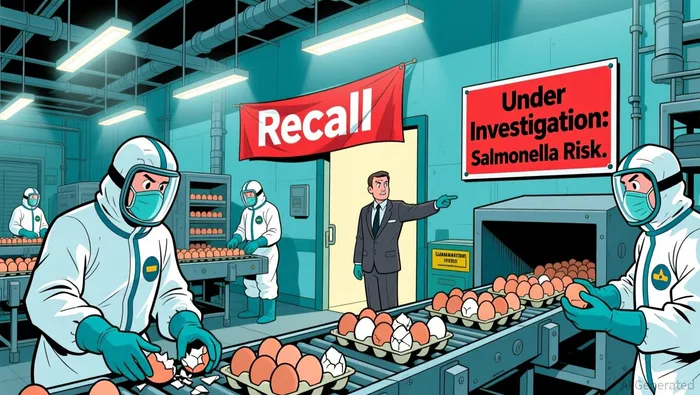 notified retailers, urging consumers to dispose of any recalled products.
, but it carries significant implications for a regional brand like Vega Farms. The company plays an important role in local food ecosystems, especially in communities that rely on farmers' markets and direct-to-consumer distribution. A contamination incident not only impacts consumer trust but also has broader ripple effects on local businesses, including restaurants and stores that rely on fresh, locally sourced products.
Tracking the Impact and Response
The immediate impact of the recall has been twofold: first, the health risks associated with the salmonella outbreak, and second, the reputational and financial costs for Vega Farms. The company's swift response — removing the products from shelves and alerting retailers — is a positive step, but it will need to do more to rebuild trust. This includes transparency about how the contamination occurred, what corrective actions are being taken, and how it plans to prevent similar incidents in the future.
From a regulatory standpoint, the incident is being monitored by the California Department of Public Health, which has reported the illnesses and hospitalizations linked to the contaminated eggs. The FDA, too, has taken notice, as it recently announced a public meeting in early January 2026 to explore strategies for reducing salmonella in poultry products. This suggests that the incident may contribute to a broader conversation on food safety standards and policy reform in the poultry industry.
Broader Implications for Investors and the Food Sector
While Vega Farms operates on a smaller scale than major national egg producers like Cal-Maine Foods or Eggland's Best, the incident still serves as a cautionary tale for all players in the food sector. Food safety recalls can be costly, not just in direct financial terms but also in brand damage and lost consumer confidence. For investors, this means monitoring how companies handle such crises and whether they have robust risk management systems in place.
The recall also underscores the importance of supply chain visibility and traceability. With more consumers demanding transparency about where their food comes from, companies that can demonstrate responsible sourcing and rigorous quality control are likely to gain a competitive edge. Vega Farms' focus on local, direct-to-market distribution gives it a unique position, but it also means that a single incident can have a more concentrated impact than it might in a diversified supply chain.
Moreover, the incident could influence regulatory and consumer behavior trends in the near term. If salmonella-related outbreaks become more frequent, we may see increased scrutiny of food safety protocols and stricter enforcement of compliance standards. This could lead to higher operational costs for food producers, but also create opportunities for companies that specialize in food safety technology and consulting.
What's Next and Key Takeaways
As of December 16, 2025, Vega Farms has not yet released a public statement addressing the long-term implications of the recall. The company will need to act quickly to reassure customers and partners that the issue has been fully resolved. This includes thorough investigations into the processing equipment and potential upgrades to prevent future contamination.
For investors, the key takeaway is the importance of due diligence in the food sector. While the Vega Farms recall is a regional event, it highlights the broader risks that can arise in food production — from supply chain disruptions to health safety concerns. Companies that prioritize transparency, proactive risk management, and consumer trust are better positioned to weather such challenges.
In the broader context, the incident may contribute to a shift in industry standards, as both regulators and consumers demand higher levels of accountability. As the FDA prepares to host a public meeting on reducing salmonella in poultry products, the conversation is likely to extend beyond Vega Farms, shaping the future of food safety policies and practices.
In the end, food recalls are inevitable in a complex global supply chain, but how companies respond — and what they learn from those responses — is what truly matters for their long-term success. Investors would be wise to keep an eye on how Vega Farms and similar regional producers navigate this crisis and what it means for the broader food industry landscape.

Delivering real-time insights and analysis on emerging financial trends and market movements.
Latest Articles
Stay ahead of the market.
Get curated U.S. market news, insights and key dates delivered to your inbox.


AInvest
PRO
AInvest
PRO



Comments
No comments yet