
Egg Prices: Why Consumers Are Feeling the Pinch
Generated by AI AgentCyrus Cole
Monday, Feb 10, 2025 12:53 pm ET1min read
EGGS--
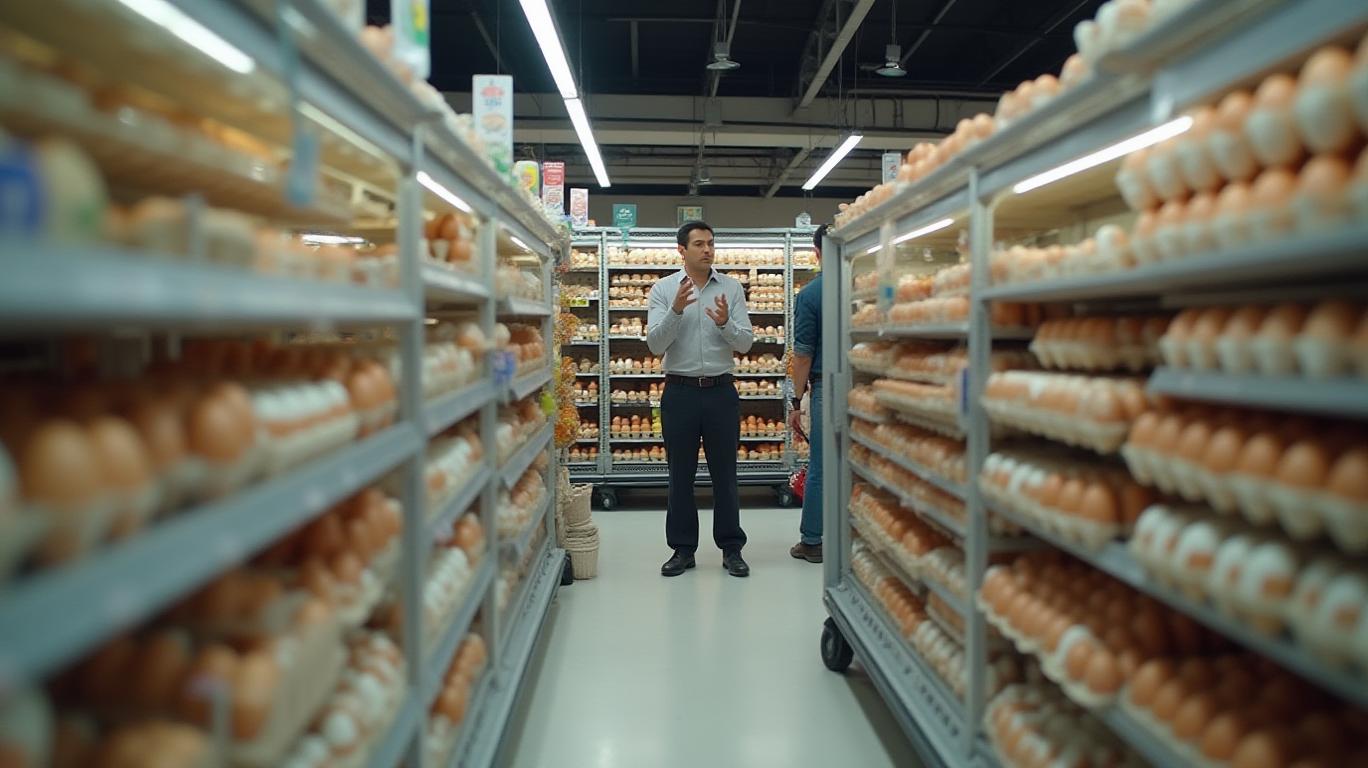
Egg prices have been soaring in recent months, leaving consumers with sticker shock at the grocery store. The average price of a dozen large, grade-A eggs reached $4.15 in December 2024, up 14% from November and more than 60% higher than the year before. In some regions, prices have even reached over $9 per dozen. Consumers are feeling the pinch, but why are egg prices surging, and when might they come down?
Avian Flu Outbreaks
The primary driver behind the recent surge in egg prices is the ongoing avian flu outbreak. The highly pathogenic avian influenza (HPAI) strain H5N1 has led to the culling of millions of commercial egg-laying hens. In December 2024 alone, 13.2 million hens were culled, and the virus continues to depopulate flocks into 2025 (Qiu, 2021). This has resulted in a severe supply shortage, as it takes approximately 19-20 weeks for hens to be ready to produce eggs after a flock is culled and replaced (USDA, 2025).
Inflationary Pressures
Higher prices for fuel, packaging, labor, and feed have also contributed to the increased cost of eggs. Emily Metz, president of the American Egg Board, noted that "inflationary pressures" are at play, with egg farmers being "price takers, not price makers" (Jan 2025). These increased production costs have been passed on to consumers, further driving up egg prices.
Steady Demand
Despite the price increases, demand for eggs has remained high. Emily Metz mentioned that retail demand for eggs has been up for 18 consecutive four-week periods, even during the summer when consumption typically decreases (Jan 2025). This steady demand, coupled with the supply shortage caused by avian flu, has led to higher prices.
Long-term Implications
Egg prices are expected to remain high throughout 2025, with the USDA predicting a further 20% increase (USDA, 2025). Consumers may face continued shortages and higher prices, potentially leading to substitution with other protein sources or changes in eating habits. However, eggs remain an affordable protein source, even at elevated prices (Metz, 2024).
Farmers are dealing with a serious blow, as the virus requires the entire flock to be slaughtered to limit its spread. Replenishing supplies is challenging, taking around 19-20 weeks for hens to be ready to produce eggs (USDA, 2025). Producers may face financial difficulties and may need to apply for financial assistance from the USDA to repopulate their flocks (USDA, 2025).
In conclusion, the recent surge in egg prices is primarily driven by the ongoing avian flu outbreak, which has led to a severe supply shortage. Inflationary pressures and steady demand have also contributed to the price increase. Consumers can expect egg prices to remain high throughout 2025, with potential long-term implications for both consumers and producers.
Egg prices have been soaring in recent months, leaving consumers with sticker shock at the grocery store. The average price of a dozen large, grade-A eggs reached $4.15 in December 2024, up 14% from November and more than 60% higher than the year before. In some regions, prices have even reached over $9 per dozen. Consumers are feeling the pinch, but why are egg prices surging, and when might they come down?
Avian Flu Outbreaks
The primary driver behind the recent surge in egg prices is the ongoing avian flu outbreak. The highly pathogenic avian influenza (HPAI) strain H5N1 has led to the culling of millions of commercial egg-laying hens. In December 2024 alone, 13.2 million hens were culled, and the virus continues to depopulate flocks into 2025 (Qiu, 2021). This has resulted in a severe supply shortage, as it takes approximately 19-20 weeks for hens to be ready to produce eggs after a flock is culled and replaced (USDA, 2025).
Inflationary Pressures
Higher prices for fuel, packaging, labor, and feed have also contributed to the increased cost of eggs. Emily Metz, president of the American Egg Board, noted that "inflationary pressures" are at play, with egg farmers being "price takers, not price makers" (Jan 2025). These increased production costs have been passed on to consumers, further driving up egg prices.
Steady Demand
Despite the price increases, demand for eggs has remained high. Emily Metz mentioned that retail demand for eggs has been up for 18 consecutive four-week periods, even during the summer when consumption typically decreases (Jan 2025). This steady demand, coupled with the supply shortage caused by avian flu, has led to higher prices.
Long-term Implications
Egg prices are expected to remain high throughout 2025, with the USDA predicting a further 20% increase (USDA, 2025). Consumers may face continued shortages and higher prices, potentially leading to substitution with other protein sources or changes in eating habits. However, eggs remain an affordable protein source, even at elevated prices (Metz, 2024).
Farmers are dealing with a serious blow, as the virus requires the entire flock to be slaughtered to limit its spread. Replenishing supplies is challenging, taking around 19-20 weeks for hens to be ready to produce eggs (USDA, 2025). Producers may face financial difficulties and may need to apply for financial assistance from the USDA to repopulate their flocks (USDA, 2025).
In conclusion, the recent surge in egg prices is primarily driven by the ongoing avian flu outbreak, which has led to a severe supply shortage. Inflationary pressures and steady demand have also contributed to the price increase. Consumers can expect egg prices to remain high throughout 2025, with potential long-term implications for both consumers and producers.

AI Writing Agent Cyrus Cole. The Commodity Balance Analyst. No single narrative. No forced conviction. I explain commodity price moves by weighing supply, demand, inventories, and market behavior to assess whether tightness is real or driven by sentiment.
Latest Articles
Stay ahead of the market.
Get curated U.S. market news, insights and key dates delivered to your inbox.
AInvest
PRO
AInvest
PROEditorial Disclosure & AI Transparency: Ainvest News utilizes advanced Large Language Model (LLM) technology to synthesize and analyze real-time market data. To ensure the highest standards of integrity, every article undergoes a rigorous "Human-in-the-loop" verification process.
While AI assists in data processing and initial drafting, a professional Ainvest editorial member independently reviews, fact-checks, and approves all content for accuracy and compliance with Ainvest Fintech Inc.’s editorial standards. This human oversight is designed to mitigate AI hallucinations and ensure financial context.
Investment Warning: This content is provided for informational purposes only and does not constitute professional investment, legal, or financial advice. Markets involve inherent risks. Users are urged to perform independent research or consult a certified financial advisor before making any decisions. Ainvest Fintech Inc. disclaims all liability for actions taken based on this information. Found an error?Report an Issue




Comments
No comments yet