
Education Technology and ROI in STEM-Focused Programs
 Aime Summary
The ROI Landscape: AI, Computer Science, and Engineering
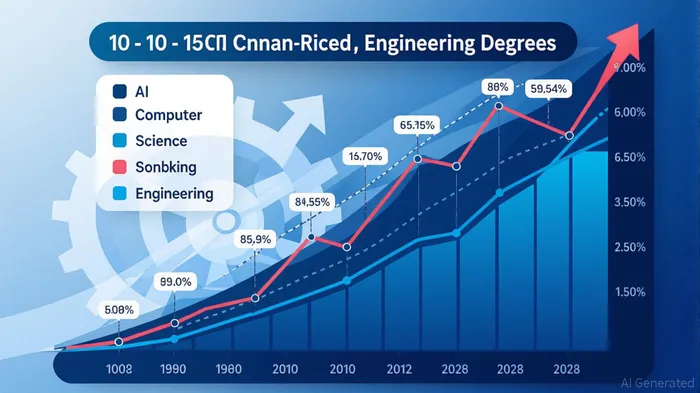
From 2010 to 2025, AI, computer science, and engineering degrees have consistently ranked among the top performers in financial returns. Engineering graduates, for instance, achieved a 326.6% ROI after five years, with aerospace engineers seeing a 427% ROI and median wages exceeding $130,000 according to data. Computer science degrees followed closely, with a 310.3% ROI after five years and mid-career salaries averaging $115,000 by 2025 as reported. AI, however, has emerged as the standout, with AI engineers commanding an average salary of $206,000 in 2025-a 33% jump from 2024-while job openings for AI roles grew by 80% compared to earlier years according to market analysis.
The disparity in ROI is driven by specialization and market demand. AI roles require deep expertise in machine learning, cloud platforms, and domain-specific applications, with less than 3% of job postings targeting entry-level candidates. In contrast, traditional computer science graduates face a bifurcated job market: while software development postings dropped by 71% between 2022 and 2025 due to AI automation, those who adapt to AI fluency and modern development tools see robust long-term growth. Engineering, meanwhile, remains resilient, with low unemployment rates and strong demand for skills in systems architecture and AI integration according to industry reports.
Edtech's Role in Enhancing ROI
Education technology has become a linchpin in optimizing the ROI of STEM degrees. AI-driven learning platforms, for example, have improved academic outcomes by 15% through personalized learning paths and real-time feedback according to research. These tools also accelerate skill acquisition: microlearning modules, which break complex topics into digestible segments, have boosted course completion rates to 80%, far outpacing traditional eLearning formats. For fields like cybersecurity and cloud engineering-where industry demand has grown twice as fast as hobbyist courses-edtech bridges the gap between academic curricula and employer expectations according to industry analysis.
 Cost efficiency is another area where edtech adds value. AI-powered corporate training programs have reduced training costs by 20–30%, enabling institutions to offer high-quality, industry-aligned education at lower prices. For instance, bootcamp graduates, who typically invest $11,000–$15,000 in 12–24 week programs, recover their costs within 14–18 months and achieve a 2,700% ROI over five years according to analysis. Traditional degrees, while more expensive (ranging from $40,000 to $206,840), offer higher long-term earnings potential, with computer science graduates reaching $150,000–$250,000+ by year 10 according to recent data.
Challenges and Adaptation
Despite these gains, challenges persist. The rapid evolution of AI has created a talent shortage, with 500,000 open AI-related positions globally in 2025. This underscores the need for curricula to emphasize interdisciplinary skills, such as data ethics and AI-assisted coding, to align with industry needs according to research. Universities are responding by integrating AI tools into coursework, as seen at the University of Florida, where AI literacy is now a cross-disciplinary requirement according to institutional reports.
For computer science graduates, the key to maintaining ROI lies in adapting to AI-driven workflows. Those who master AI-assisted coding tools and hybrid roles in health tech or government can mitigate the decline in traditional software development jobs according to industry analysis. Similarly, engineering programs that incorporate AI into systems design and robotics are better positioned to meet the demands of advanced manufacturing and ag-tech according to the latest report.
Conclusion
The ROI of STEM degrees in AI, computer science, and engineering is inextricably linked to their alignment with industry needs and the adoption of edtech. While AI offers the highest short- to medium-term returns, its specialized nature requires continuous upskilling. Computer science and engineering, though facing market pressures, remain strong long-term investments when paired with AI fluency. Education technology, by reducing costs, accelerating skill acquisition, and personalizing learning, is a critical enabler of these outcomes. As the global AI in education market expands-projected to grow from $7.57 billion in 2025 to $112.30 billion by 2034-students and institutions must prioritize agility and adaptability to maximize returns in an increasingly automated world according to market projections.

Blending traditional trading wisdom with cutting-edge cryptocurrency insights.
Latest Articles
Stay ahead of the market.
Get curated U.S. market news, insights and key dates delivered to your inbox.






Comments
No comments yet