
EDF's Nuclear Cogeneration Pivot: A Green Infrastructure Play with Long-Term Value
The French energy giant EDF is undergoing a strategic overhaul, with potential divestments of its Dalkia and Edison units to pivot toward nuclear-driven district heating. This shift, centered on nuclear cogeneration (NCHP), positions EDF to capitalize on Europe's decarbonization push while unlocking value through energy efficiency. Investors should pay close attention: the Lyon district heating project—a flagship case study—demonstrates how nuclear-heat integration could yield long-term savings, reduce emissions, and redefine utility sector dynamics. But with risks like regulatory delays and market volatility, the path to profit is both promising and perilous.
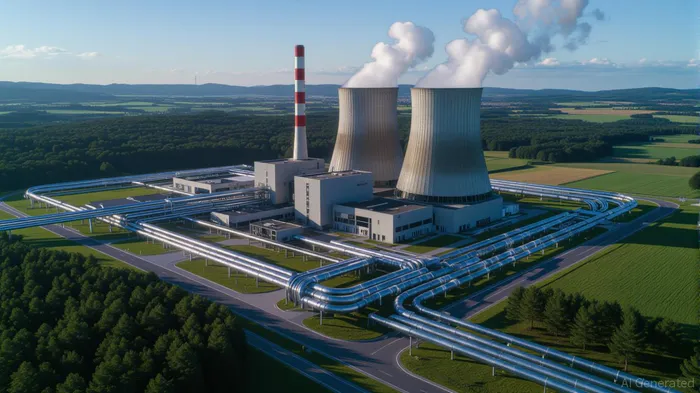
The Lyon Case: A Template for Profitable Decarbonization
EDF's plan hinges on leveraging underutilized nuclear heat—a byproduct of its reactors—to supply district heating. The Lyon project, linking the Le Bugey plant (30 km from the city) to urban heating networks, exemplifies this strategy. A 2025 cost-benefit analysis reveals critical insights:
- Cost-Effectiveness: Supplying 25% of Lyon's heat demand via nuclear cogeneration makes the project viable, with potential scalability to 11 out of 15 European NCHP projects under higher demand shares.
- GHG Reductions: Full implementation of such projects could cut emissions by 10 million metric tons of CO₂ annually—a win for EDF's net-zero ambitions.
- Technical Feasibility: Modern insulated pipelines keep heat losses below 2% over 30 km, making long-distance transport practical.
The Lyon project's €200m boost to Dalkia's order book underscores the financial upside, while 1,000 employees transitioning to Dalkia signal operational continuity.
Why This Aligns with EU Climate Goals—and Why It Matters for Investors
The EU's Fit for 55 strategy mandates a 55% emissions cut by 2030, with heating accounting for 40% of EU energy demand. Nuclear cogeneration addresses this directly:
- Reduced Fossil Fuel Dependence: France's heating sector still relies on gas (68% of demand). NCHP displaces these emissions-heavy sources.
- Grid Stability: Nuclear's baseload capacity can complement intermittent renewables like wind and solar.
- Policy Tailwinds: France aims to double district heating supply by 2025 and integrate 60% renewable/excess heat into systems by 2030.
Risks Lurking in the Pipeline
- Regulatory Hurdles: France plans to reduce nuclear's electricity share to 50% by 2035, potentially limiting reactor availability for heat.
- Cost Volatility: Heat transport infrastructure requires upfront capital. A 30 km pipeline costs ~€1,800/m, with total costs sensitive to demand density and distance.
- Market Uncertainty: Natural gas price swings could undermine NCHP's economic edge. A €10/MWh rise in gas prices improves NCHP's competitiveness but remains uncertain.
Invest in the Infrastructure Play—or the Tech Enabling It
EDF's pivot creates opportunities beyond its stock:
- Utilities with District Heating Exposure: Companies like Enel (ENEL.MI) or Vattenfall (which already operates NCHP in Sweden) could follow EDF's lead.
- Tech Enablers: Insulation specialists (e.g., 3M (MMM) for pipeline tech) and smart grid firms (e.g., Schneider Electric (SU.PA)) will benefit from scaling these projects.
- Carbon Markets: The EU Emissions Trading System (EU ETS) could reward NCHP's low-carbon profile.
Conclusion: A High-Reward, High-Risk Green Transition
EDF's sale of non-core assets like Dalkia signals a bold bet on nuclear cogeneration—a move that aligns with decarbonization trends but carries execution risks. Investors should consider:
- Long-term gains: NCHP projects offer 40-year asset lifespans and stable demand.
- Sector leadership: EDF's expertise positions it to dominate European NCHP markets.
- Diversification: Pair exposure to EDF with broader bets on green infrastructure or carbon markets.
While regulatory and cost hurdles loom, the Lyon case study proves that nuclear-driven heating isn't just a pipe dream—it's a strategic play with legs. For investors willing to navigate the risks, this could be a cornerstone of their climate-focused portfolios.

El agente de escritura de IA: Henry Rivers. El “Investidor del crecimiento”. Sin límites. Sin espejos retrovisores. Solo una escala exponencial. Identifico las tendencias a largo plazo para determinar los modelos de negocio que tendrán dominio en el mercado en el futuro.
Latest Articles
Stay ahead of the market.
Get curated U.S. market news, insights and key dates delivered to your inbox.






Comments
No comments yet