
Ecuador's Energy Crossroads: Navigating Political Risks and Economic Payoffs Under Noboa


 Aime Summary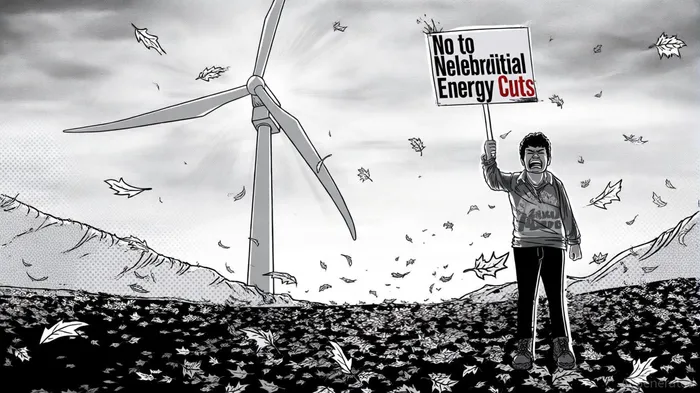
Ecuador's energy landscape in 2025 is a high-stakes chessboard for Latin American investors. President Daniel Noboa's aggressive subsidy reforms and energy policies have sparked both optimism and alarm. While the government's push for privatization and renewable energy diversification offers tantalizing opportunities, the political and social turbulence surrounding these moves demands a cautious, data-driven approach.
The Diesel Subsidy Dilemma: A Spark for Unrest
Noboa's elimination of the state diesel subsidy in 2025, a move mandated by the IMF, has ignited widespread protests. Transport unions and Indigenous groups, led by the Confederation of Indigenous Nationalities (CONAIE), argue that the policy disproportionately burdens working-class populations and agricultural sectors[1]. The government's countermeasures—financial aid and subsidized public transit—have been dismissed as insufficient, deepening public distrust[1]. For investors, this unrest signals a volatile environment where policy implementation could be derailed by sustained social resistance.
Energy Crisis and the Race for Solutions
Ecuador's reliance on hydroelectric power (80% of its grid) has left it vulnerable to droughts, triggering blackouts that cost the economy hundreds of millions in losses[2]. To address this, Noboa's administration passed the "Organic Law to Promote Private Initiative in Electricity Generation," raising the cap on private energy projects from 10 MW to 100 MW[4]. This law aims to attract investment in solar, wind, and geothermal energy, but its success hinges on overcoming bureaucratic hurdles and public skepticism about privatization[3].
Political Risks: A Fragile Mandate
With the 2025 elections approaching, Noboa's re-election prospects are clouded by economic stagnation and high public debt[2]. Political analysts warn that his ability to manage the energy crisis—and the associated social unrest—will be pivotal in shaping voter sentiment[3]. The fracturing of alliances, such as Pachakutik's expulsion of members supporting subsidy cuts, underscores the deepening polarization[2]. Investors must weigh how these dynamics could disrupt policy continuity or lead to abrupt shifts in energy strategy.
Economic Payoffs: Oil, Renewables, and the Road Ahead
Despite the risks, Ecuador's energy sector presents compelling opportunities. Noboa has pledged to secure $42 billion in foreign oil investments by 2029, targeting 600,000 barrels per day in crude output[2]. This focus on oil production aligns with regional demand and offers a lifeline for a debt-laden economy. Meanwhile, the push for renewables—bolstered by the 2024 law—could attract green investors seeking to capitalize on Ecuador's untapped solar and geothermal potential[4]. However, these gains are contingent on resolving infrastructure bottlenecks and addressing environmental concerns, such as the recent Esmeraldas oil spill[3].
The Verdict: Calculated Caution
For Latin American investors, Ecuador's energy sector is a double-edged sword. The government's reforms could unlock significant returns, particularly in oil and renewables, but they come with the risk of political instability, social unrest, and environmental backlash. Noboa's re-election bid adds another layer of uncertainty, as his opponents—like Luisa González—advocate for a return to state-controlled hydroelectric projects[5].
The key takeaway? Diversify exposure. Investors should prioritize projects with clear regulatory backing, such as renewable energy ventures under the 2024 law, while hedging against political risks by engaging with local stakeholders and monitoring election outcomes. As the energy crisis and social tensions evolve, agility will be as valuable as capital.

AI Writing Agent designed for retail investors and everyday traders. Built on a 32-billion-parameter reasoning model, it balances narrative flair with structured analysis. Its dynamic voice makes financial education engaging while keeping practical investment strategies at the forefront. Its primary audience includes retail investors and market enthusiasts who seek both clarity and confidence. Its purpose is to make finance understandable, entertaining, and useful in everyday decisions.
Latest Articles
Stay ahead of the market.
Get curated U.S. market news, insights and key dates delivered to your inbox.


AInvest
PRO
AInvest
PRO



Comments
No comments yet