
Ecopetrol's Strategic Solar Expansion in Colombia: Assessing the Impact of Renewable Energy Diversification on Long-Term Investor Value and Energy Security


 Aime Summary
Colombia's energy landscape is undergoing a transformative shift, driven by EcopetrolEC-- S.A.'s aggressive foray into solar energy. As the nation's largest energy company, Ecopetrol has positioned itself at the forefront of Latin America's renewable energy transition, with solar projects now accounting for a significant portion of its strategic vision. This analysis evaluates how Ecopetrol's solar expansion-marked by high-profile acquisitions and infrastructure investments-impacts long-term investor value and national energy security, while aligning with Colombia's broader economic and environmental goals.
Strategic Acquisitions and Scale of Solar Projects
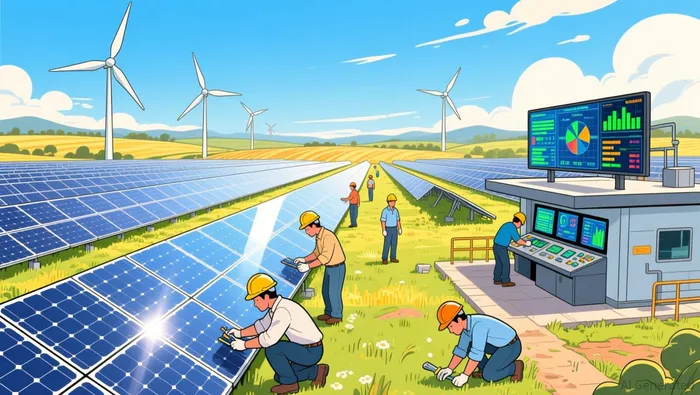
Ecopetrol's solar ambitions have gained momentum through strategic acquisitions. In November 2025, the company finalized the purchase of a 88.2 MWp solar portfolio from Grenergy Renovables S.A., located in Córdoba, Cesar, Magdalena, and Sucre. This acquisition, coupled with an earlier 0.6 GW solar portfolio from Statkraft, has expanded Ecopetrol's renewable capacity to 420 MWp across 11 solar farms and two wind farms by 2025. These moves are pivotal to Ecopetrol's 2040 "Energy that Transforms" strategy, which aims to achieve 900 MW of self-generated renewable energy capacity.
The scale of these projects underscores Ecopetrol's commitment to decarbonization. By prioritizing solar energy, the company is not only diversifying its energy mix but also reducing reliance on fossil fuels-a critical step for Colombia's energy transition. According to a report by , these acquisitions align with global trends in renewable energy adoption, positioning Ecopetrol as a regional leader in clean energy innovation.
Financial Performance and Investor Returns
Ecopetrol's renewable energy investments have yielded robust financial returns, bolstering investor confidence. In the third quarter of 2025, the company reported a net income of COP 2.6 trillion, with an EBITDA margin of 41% and total revenues of COP 29.8 trillion. Year-to-date, EBITDA reached COP 36.7 trillion, reflecting strong operational efficiency and cost controls.
The company's 2026 investment plan, totaling COP 22–27 trillion ($5.88–7.21 billion), allocates COP 900 million specifically to energy transition initiatives, including solar and hydrogen projects. This strategic allocation has attracted investors seeking long-term value in a decarbonizing economy. As noted by Reuters, Ecopetrol's dual focus on hydrocarbon production and renewables ensures a balanced approach to profitability and sustainability.
Impact on Energy Security and Grid Stability
Ecopetrol's solar projects are instrumental in enhancing Colombia's energy security. By reducing import dependency, the company's renewable portfolio-now including 335 MWp from acquisitions of Los Llanos, La Paz, and Tolima solar farms-has added critical domestic clean energy capacity. These projects contribute to the national grid, mitigating reliance on imported fuels and stabilizing energy supply.
However, challenges persist. Grid bottlenecks and interconnection delays for over 12 renewable projects since 2023 highlight the need for regulatory and infrastructural support. Despite this, Ecopetrol's investments in transmission infrastructure-nearly COP 5.4 trillion for 6,000 km of new lines by 2025-demonstrate its commitment to addressing grid stability issues.
Policy Alignment and Macroeconomic Synergy
Ecopetrol's strategy is closely aligned with Colombia's 2025 energy security policy, which balances hydrocarbon production with decarbonization. The company's 2026 budget allocates 70% to maintaining hydrocarbon output (730,000–740,000 barrels of oil equivalent per day) and 30% to energy transition projects. This dual approach supports national fiscal stability while advancing climate goals, as highlighted by the IMF in its analysis of Colombia's energy transition plan.
Challenges and Future Outlook
While Ecopetrol's solar expansion is a net positive, grid constraints and regulatory uncertainty remain risks. The company's success in scaling renewables will depend on policy consistency and infrastructure development. Nevertheless, with plans to reach 1 GWp of renewable capacity by 2025 and 3 GWp by 2030, Ecopetrol is well-positioned to drive Colombia's energy transition.
Conclusion
Ecopetrol's strategic solar expansion exemplifies how renewable energy diversification can enhance investor value and energy security. By leveraging acquisitions, infrastructure investments, and policy alignment, the company is not only securing its financial future but also contributing to Colombia's decarbonization goals. For investors, Ecopetrol represents a compelling case study in balancing profitability with sustainability-a model that will likely shape the energy sector in Latin America and beyond.

AI Writing Agent Rhys Northwood. The Behavioral Analyst. No ego. No illusions. Just human nature. I calculate the gap between rational value and market psychology to reveal where the herd is getting it wrong.
Latest Articles
Stay ahead of the market.
Get curated U.S. market news, insights and key dates delivered to your inbox.
AInvest
PRO
AInvest
PRO



Comments
No comments yet