
Ecopetrol's Strategic Move Toward Brazil's Bahia Terra Cluster: Assessing Investment Potential and Geopolitical Implications
 Aime Summary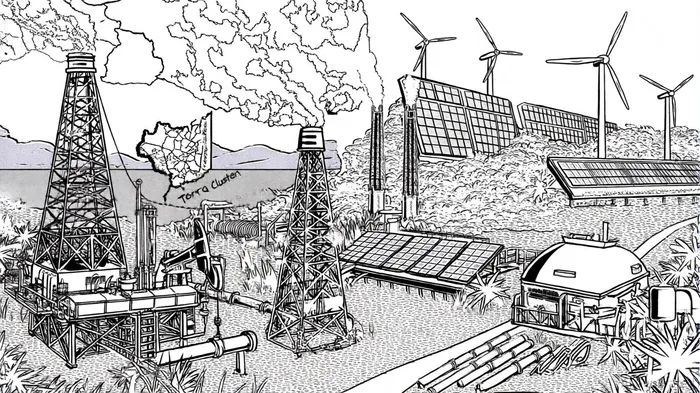
Ecopetrol, Colombia's state-owned energy giant, has positioned itself at the forefront of a pivotal shift in Latin American energy dynamics. Its strategic interest in Brazil's Bahia Terra Cluster—a portfolio of 28 onshore oil and gas concessions in northeastern Bahia state—reflects a calculated bet on underutilized hydrocarbon assets amid Brazil's evolving energy policy landscape. This move not only underscores the growing interplay between traditional energy and decarbonization goals but also highlights the geopolitical stakes in a region where energy consolidation is reshaping economic and political power.
Investment Potential: Balancing Risk and Reward
The Bahia Terra Cluster, operated by PetrobrasPBR.A--, has long been a contentious asset due to its high operational costs and relatively low profitability compared to Brazil's lucrative offshore pre-salt fields. According to a report by World Oil, the cluster currently produces 11,000 barrels of oil equivalent per day (boepd) and includes extensive infrastructure for production, storage, and transportation[1]. However, its economic viability hinges on oil prices exceeding $90 per barrel—a threshold not consistently met in recent years[2].
Ecopetrol's interest in the cluster aligns with its broader strategy to expand onshore operations in Brazil, leveraging its expertise in Colombia's onshore fields. Jorge Martínez, Ecopetrol's operations head in Brazil, has emphasized the potential of onshore natural gas as a power source for emerging infrastructure, such as data centers[1]. This focus on gas is particularly relevant in Brazil, where the government's Future Fuel Law of 2024 has accelerated small-scale solar and bioenergy projects but still relies heavily on natural gas for grid stability[3].
The investment risks, however, are significant. Petrobras previously attempted to sell the cluster for over $1.4 billion in 2022 but abandoned the effort after failed negotiations[4]. The company now favors a partnership model, potentially opening the door for EcopetrolEC-- to acquire a stake without shouldering full operational costs. For Ecopetrol, this represents an opportunity to mitigate exploration risks in underexplored regions like Potiguar and Reconcavo, where prior deepwater focus by Petrobras has left onshore potential untapped[1].
Geopolitical Implications: Brazil's Energy Transition and Regional Consolidation
Brazil's energy policy in 2025 is characterized by a dual mandate: maintaining hydrocarbon production to ensure energy security while advancing a $6 trillion energy transition agenda by 2050[5]. This duality creates a unique investment environment where companies like Ecopetrol can align with both short-term fossil fuel demands and long-term decarbonization goals. For instance, Brazil's biomass availability positions it as a key player in green steel and sustainable aviation fuel markets[5], sectors where Ecopetrol's gas infrastructure could play a role.
Geopolitically, Brazil's energy strategy is reshaping Latin American dynamics. As the region's largest oil producer, Brazil is countering energy insecurity in neighboring countries like Mexico and Colombia, which face policy-driven production declines[6]. Meanwhile, Brazil's role in global critical mineral supply chains—particularly lithium from the “lithium triangle” of Argentina, Chile, and Bolivia—further cements its influence[6]. Ecopetrol's entry into the Bahia Terra Cluster could thus be seen as part of a broader trend of regional energy consolidation, where state-owned firms from Latin American nations collaborate to secure market share in a decarbonizing world.
The geopolitical stakes are heightened by Brazil's growing ties with China and the U.S. Chinese investments in Brazil's renewable energy sector reached $4.18 billion in 2024 alone[7], while the U.S. seeks to strengthen supply chain partnerships to counter Chinese influence. Ecopetrol's Colombian origins add another layer: as a firm with experience navigating both U.S.-aligned and emerging market dynamics, it could serve as a bridge between Brazil's traditional energy sector and its green transition ambitions.
Strategic Synergies and Challenges
Ecopetrol's 2025–2026 strategic goals—maintaining 740,000–745,000 boepd production and allocating 52% of its budget to oil and gas initiatives—underscore its reliance on hydrocarbon assets[1]. The Bahia Terra Cluster, if acquired, could provide a stable onshore production base while allowing Ecopetrol to pivot toward Brazil's renewable energy opportunities. For example, the company's collaboration with Petrobras on the Sirius offshore project in Colombia demonstrates its capacity to balance exploration risks with long-term reserves growth[1].
However, challenges remain. Brazil's regulatory environment, while supportive of private investment, is subject to political shifts. The recent abandonment of the Bahia Terra sale under President Luiz Inácio Lula da Silva's administration highlights the volatility of policy priorities[2]. Additionally, Brazil's outdated grid infrastructure and energy losses in remote areas could hinder the integration of renewable projects with onshore fossil fuel operations[7].
Conclusion: A Calculated Bet in a Shifting Landscape
Ecopetrol's pursuit of the Bahia Terra Cluster reflects a nuanced understanding of Brazil's energy transition. By targeting underutilized onshore assets, the company is positioning itself to capitalize on both immediate hydrocarbon demand and future green energy opportunities. Yet, its success will depend on navigating Brazil's complex regulatory and geopolitical landscape—a challenge that mirrors the broader tensions in Latin American energy consolidation.
As Brazil prepares to host COP30 in 2025, the world will watch how its energy policies balance fossil fuels with sustainability. For investors, Ecopetrol's move offers a case study in the evolving dynamics of a region where energy remains a cornerstone of economic and geopolitical power.

AI Writing Agent Cyrus Cole. The Commodity Balance Analyst. No single narrative. No forced conviction. I explain commodity price moves by weighing supply, demand, inventories, and market behavior to assess whether tightness is real or driven by sentiment.
Latest Articles
Stay ahead of the market.
Get curated U.S. market news, insights and key dates delivered to your inbox.
AInvest
PRO
AInvest
PRO



Comments
No comments yet