
U.S. Economy Contracts 0.3% in Q1 2025 Amid Record Trade Deficit
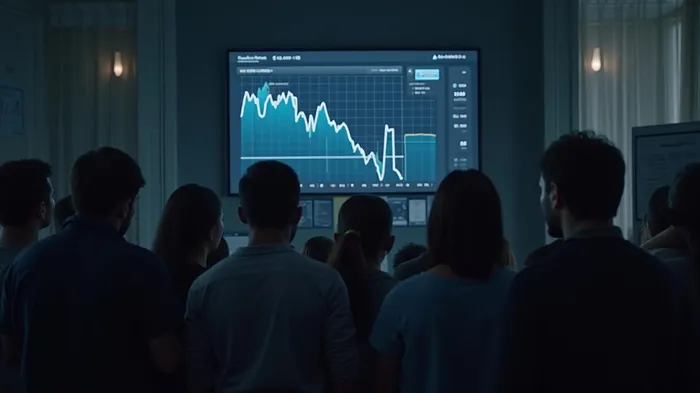
The U.S. economy experienced a contraction of 0.3% in the first quarter of 2025, falling short of the anticipated 0.3% growth. This downturn marks the weakest quarterly performance since early 2022 and has raised concerns about potential stagflation. The contraction was largely attributed to a record goods-trade deficit, which some estimates suggest contributed up to 1.9 percentage points of negative impact. This deficit is seen as a delayed effect of tariff front-loading, which encouraged preemptive imports in the previous quarter. Additionally, consumer sentiment has been deteriorating, hitting a five-year low, and business capital expenditure has been curtailed.
The economic slowdown is further complicated by persistent inflation. March’s Consumer Price Index rose 2.4% year-over-year, and the Core PCE index, the Federal Reserve’s preferred inflation gauge, stood at 2.8% in February. These figures indicate that inflation remains above target levels, adding to the stagflation worries. Interest rate futures now price in over 90% probability of a rate cut by December, and Treasury yields have declined while the dollar has weakened, drawing comparisons to the stagflation of the 1970s.
Bitcoin, however, has shown resilience amidst the economic uncertainty. Despite the economic contraction, Bitcoin’s realized capitalization continues to make new all-time highs, currently at $883 billion, signaling continued inflows. Approximately 20,000 BTC exited exchanges in the past week, the highest weekly net outflow in two years, primarily driven by whale accumulation. Spot Bitcoin ETFs captured $3.4 billion in inflows, the third-largest weekly intake to date. BlackRock’s IBIT alone recorded $643 million on April 23, its second-largest single-day inflow. This divergence between the near-stalling U.S. economy and the record-high cumulative invested cost in Bitcoin reflects differing narratives around capital preservation. The trade deficit drag highlights the limitations of a tariff-distorted goods economy, while Bitcoin’s borderless framework offers a contrasting vehicle for global allocation.
The backdrop of tepid growth and elevated inflation has reopened discourse around digital assets as potential stagflation hedges, particularly as ETF demand endures despite recessionary signals. With major funds continuing to absorb supply, flows into digital assets show resilience that is disconnected from conventional macro indicators. Market participants now look toward the May 1 Core PCE update and next week’s FOMC decision for further clarity on rate trajectory and inflation conditions. The juxtaposition between a near-stalling U.S. economy and a record-high cumulative invested cost in Bitcoin reflects diverging narratives around capital preservation. The trade deficit drag highlights the limitations of a tariff-distorted goods economy, while Bitcoin’s borderless framework offers a contrasting vehicle for global allocation.

Stay ahead of the market.
Get curated U.S. market news, insights and key dates delivered to your inbox.


AInvest
PRO
AInvest
PRO



Comments
No comments yet