
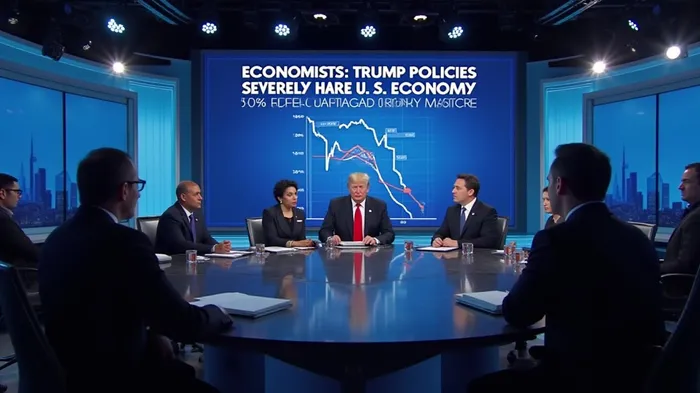
Economists: Trump Policies Severely Harm U.S. Economy, 55% Say Damage Severe
The recent 90-day trade truce between the United States and China has temporarily reduced high import tariffs, but the economic outlook for the United States remains bleak. The truce has not resolved the underlying fiscal health concerns, and the debate over the country's financial stability continues. The truce has provided a brief respite from the escalating trade tensions, but the long-term economic impact remains uncertain. The reduction in tariffs has eased some of the immediate pressure on businesses and consumers, but the broader economic challenges, such as rising debt levels and increasing interest payments, persist. The truce has also highlighted the need for a more comprehensive and sustainable trade agreement that addresses the root causes of the trade dispute.
The economic data released in recent weeks has shown mixed results, with some sectors experiencing growth while others continue to struggle. The truce has provided a temporary boost to the stock market, but the underlying economic fundamentals remain weak. The truce has also raised questions about the effectiveness of tariffs as a tool for achieving trade concessions and the potential for further escalation in the trade war. The truce has provided a brief respite from the trade tensions, but the long-term economic impact remains uncertain. The reduction in tariffs has eased some of the immediate pressure on businesses and consumers, but the broader economic challenges, such as rising debt levels and increasing interest payments, persist. The truce has also highlighted the need for a more comprehensive and sustainable trade agreement that addresses the root causes of the trade dispute.
Economists surveyed in a recent poll agree that the policies of the Trump administration have harmed the U.S. economy, with over 55% of respondents stating that the damage is severe. Despite a significant downward revision of growth expectations and an upward revision of inflation forecasts in April, economists maintained these projections in May. The U.S. economy contracted by 0.3% in the previous quarter, primarily due to a record increase in imports. The economy is expected to grow by 1.5% this quarter and 1.4% for the full year, a significant slowdown from last year's 2.8%. Growth is projected to be 1.5% next year. The probability of a U.S. recession in the next year has decreased from 45% in April to 35%. Economists' views on inflation have remained largely unchanged, with expectations that inflation will average above the Federal Reserve's 2% target until at least 2027, aligning with consumer expectations that have been at multi-decade highs.
Economists are divided on the timing of the next interest rate cut by the Federal Open Market Committee (FOMC). Slightly more than half of the 103 economists surveyed predict that the FOMC will resume rate cuts in the next quarter, most likely in September, consistent with rate futures pricing. Another 25 economists expect a rate cut in the final quarter, while 18 do not anticipate any rate cuts this year. In contrast, nearly 40% of respondents in the April survey expected at least one rate cut by the end of the second quarter, while only 8 economists now predict a June rate cut. There is no clear consensus on where interest rates will be by the end of 2025, but approximately three-quarters of economists (74 out of 103) expect rates to be in the 3.75%-4.00% range or higher, up from two-thirds in April. The two pauses in tariff increases have added new uncertainty to growth and inflation prospects. FOMC members have indicated that they will wait to see all direct inflation data resulting from tariffs before cutting rates, which may delay action until the fourth quarter or even early next year.

Manténgase al tanto de las últimas noticias de Wall Street en tiempo real.
Latest Articles
Stay ahead of the market.
Get curated U.S. market news, insights and key dates delivered to your inbox.


AInvest
PRO
AInvest
PRO



Comments
No comments yet