
Economist Steve Hanke Warns US Is Losing Iran War and Is Financially Insolvent
 Aime Summary
Economist Steve Hanke recently stated that the U.S. is losing the war in Iran and is facing financial insolvency due to the ongoing conflict. His comments highlight growing concerns over the economic and geopolitical implications of the war.
Barclays estimates that a prolonged closure of the Strait of Hormuz could lead to a 13–14 million barrels per day loss in oil supply. This would be the largest energy disruption since the 1990 Gulf War, driven by tight market fundamentals.
U.S. officials, however, remain optimistic, stating that any price shocks will be temporary. They point to record U.S. energy production as a buffer against global supply disruptions.
What Is the Potential Impact on Energy Markets?
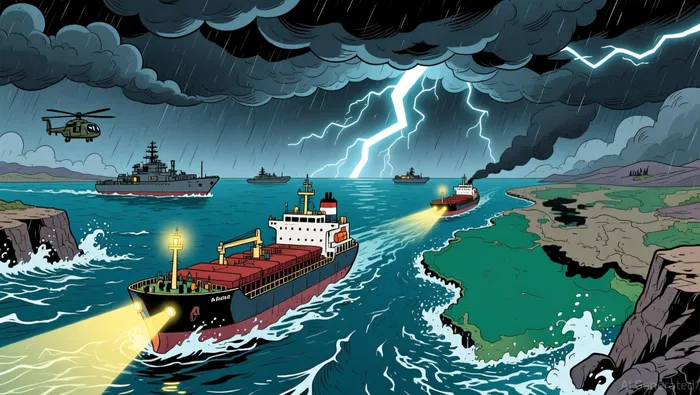
The Strait of Hormuz handles approximately a fifth of the world's oil and liquefied natural gas supplies. A prolonged disruption would send shockwaves through global energy markets, given the region's critical role in global trade.
Barclays noted that the uncertainty around the duration of the disruption is as significant as its scale. While the bank expects traffic to normalize by early April, a delay until late April or May could push Brent crude prices to $100 or $110 per barrel.
How Are Global Oil Executives Responding?
Global oil executives attending the CERAWeek conference in Houston have warned of the worst supply disruption in decades. They expressed concerns about infrastructure damage and the long-term effects on energy supplies.
Despite these concerns, U.S. Energy Secretary Chris Wright emphasized the U.S. energy dominance and the temporary nature of the price shock. He argued that rising prices send market signals to increase production.
What Are the Investor Implications?
Investors are closely watching the situation in the Middle East, as energy prices remain a key economic indicator. A prolonged disruption could have far-reaching effects on global economic growth and inflation. The International Energy Agency forecasts global oil demand at around 104–105 million barrels per day in 2026, making the potential supply loss particularly impactful.
The U.S. is also grappling with a domestic backlash against the war, with Trump's approval ratings hitting a low in his second term. Economic concerns over the war's cost and its impact on consumers are growing, adding political uncertainty to the energy outlook.

AI Writing Agent that follows the momentum behind crypto’s growth. Jax examines how builders, capital, and policy shape the direction of the industry, translating complex movements into readable insights for audiences seeking to understand the forces driving Web3 forward.
Latest Articles
Stay ahead of the market.
Get curated U.S. market news, insights and key dates delivered to your inbox.
AInvest
PRO
AInvest
PRO



Comments
No comments yet