
Economics Education as a Hidden Catalyst for Long-Term Investment Returns
 Aime Summary
The Farmingdale State College Model: Bridging Education and Industry
Farmingdale State College has emerged as a case study in aligning academic offerings with labor market demands. Its interdisciplinary Science, Technology, and Society (STS) program, which integrates data science, AI ethics, and technical communication, achieved an 80% employment rate for graduates within six months of graduation in 2025. This success stems from a curriculum designed to meet the evolving needs of high-growth industries such as biotechnology and renewable energy, where technical expertise is paired with ethical and societal awareness according to industry reports.
Infrastructure investments further amplify FSC's impact. The $75 million Center for Computer Sciences, supported by Empire State Development and the SUNY Construction Fund, is projected to double enrollment in technology-related programs and address workforce shortages in cybersecurity, AI, and software engineering. Similarly, the expansion of the Broad Hollow Bioscience Park is expected to create 135 new jobs in biotechnology, reinforcing Long Island's status as a hub for innovation according to regional forecasts. These initiatives underscore how strategic investments in education infrastructure can catalyze regional economic development while preparing students for high-demand careers. 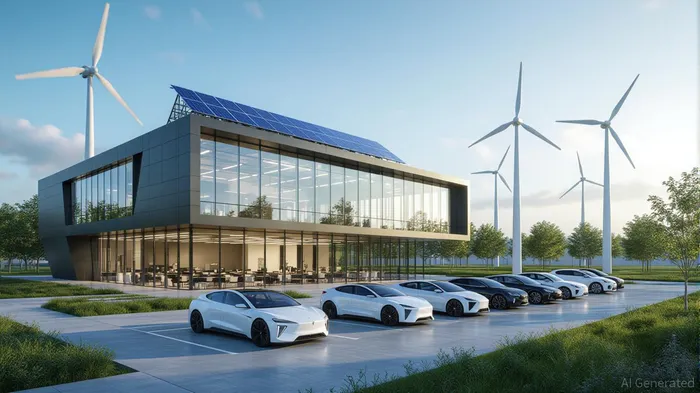
Academic Research and the Entrepreneurial Mindset
Beyond institutional case studies, academic research highlights a direct link between economics education and entrepreneurial behavior. A 2025 study found that introducing economics education in schools enhances students' entrepreneurial tendencies, suggesting a long-term positive influence on innovation and market dynamics. This aligns with broader findings that entrepreneurship education (EE) fosters innovation and new venture creation, with financial literacy acting as a critical mediator in this relationship according to research.
The OECD's 2025 report on education trends further emphasizes how systemic factors-such as access to higher education and proximity to institutions-shape economic behavior according to the OECD analysis. For instance, regions with strong educational ecosystems tend to produce graduates who are more adaptable to technological shifts, a trait increasingly valued in innovation-driven sectors like AI and renewable energy. This creates a feedback loop: education systems that prioritize interdisciplinary learning and industry collaboration generate a workforce capable of driving economic growth through innovation.
Economic Research as a Market Shaper
Academic research in economics also directly influences market behavior. Studies on the platform economy reveal how digital platforms like Uber and Airbnb have redefined traditional market dynamics, emphasizing the need for adaptive governance and regulatory frameworks. Similarly, research on R&D and innovation demonstrates that firms in G7 economies with higher R&D intensity experience improved labor productivity, though this often comes at the cost of reduced short-term asset turnover according to economic analysis. These findings suggest that investors should prioritize sectors where innovation is not only a competitive advantage but also a structural driver of growth.
For example, venture capital (VC) has emerged as a critical catalyst for innovation, particularly in high-growth firms. While VC investments provide strategic guidance and network access, their uneven distribution highlights the importance of institutions like FSC, which democratize access to STEM education and workforce development according to research. By fostering inclusive innovation ecosystems, such institutions mitigate the risks of market concentration and ensure a steady pipeline of talent for emerging industries.
Actionable Insights for Investors
For investors, the implications are clear: education-focused equities and innovation-driven sectors represent a dual opportunity. Institutions like FSC, which combine interdisciplinary curricula, infrastructure investment, and industry partnerships, are not only preparing students for the jobs of tomorrow but also acting as engines of regional economic growth. Similarly, sectors aligned with FSC's focus areas-such as biotechnology, renewable energy, and AI-stand to benefit from a workforce equipped with both technical and ethical competencies.
Investors should also consider the role of policy frameworks in amplifying these effects. The Trump Administration's America's Talent Strategy and the Workforce Innovation and Opportunity Act (WIOA) highlight the importance of aligning training with real-time labor market needs . By supporting institutions and policies that prioritize workforce development, investors can capitalize on the long-term returns of a more agile and innovative labor force.

Mezclando la sabiduría tradicional en el comercio con las perspectivas más avanzadas sobre criptomonedas.
Latest Articles
Stay ahead of the market.
Get curated U.S. market news, insights and key dates delivered to your inbox.






Comments
No comments yet