
The Economic Transformation of Webster, NY: Unlocking Real Estate and Infrastructure Opportunities in a Resurging Tech-Industrial Hub


 Aime Summary
Strategic Infrastructure Investments: The Catalyst for Growth
Webster's resurgence is anchored in a $9.8 million FAST NY grant, which has funded critical infrastructure upgrades, including road realignment, sewer expansion, and a 34kV electrical grid modernization. These improvements have not only reduced industrial vacancy rates to a mere 2%-well below the national average of 7.5%-but also attracted major projects, including the $650 million fairlife® dairy plant, expected to generate 250 jobs.
 The town's success is further amplified by the NY Forward Program, which has allocated $1.5 billion to prepare upstate industrial sites for advanced manufacturing and clean technology. This state-led initiative ensures that Webster's infrastructure remains "power-ready" by 2030, reducing risks for private developers and fostering a resilient industrial ecosystem.
Xerox Campus Redevelopment: A Model for Brownfield Revitalization
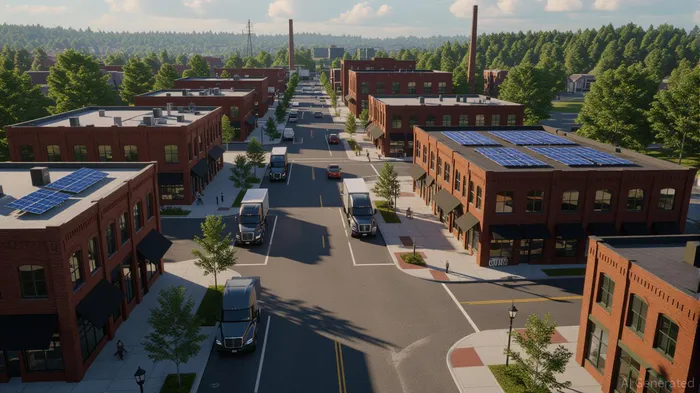
The redevelopment of the former Xerox brownfield-branded as the Northeast Area for Technology (NEAT)-exemplifies Webster's innovative approach to urban renewal. A 300-acre site, once contaminated and underutilized, is now being transformed into a mixed-use hub featuring 500 new housing units, 200,000 square feet of commercial space, and 1 million square feet of industrial capacity by 2026. Environmental remediation, supported by the Brownfield Opportunity Area (BOA) initiative, has been pivotal in unlocking the site's potential. Additionally, the Community Access Project-funded by $2.04 million in state assistance-has enhanced connectivity between the NEAT district and surrounding neighborhoods through pedestrian and bicycle infrastructure. These efforts align with broader trends in industrial real estate, where companies prioritize modern, resilient facilities equipped for automation and advanced supply chains.
Industrial Real Estate Growth: A Convergence of Demand and Supply
Webster's industrial real estate market has experienced exponential growth since 2020, driven by a 10.1% annual rise in residential property values and a 10.1% annual increase in industrial land values. The town's strategic location near I-390 and the Rochester International Airport, coupled with its 50 million-gallon water capacity, has made it a logistics and distribution hotspot. Municipal boundary changes and zoning reforms have further expanded Webster's industrial footprint to 1,400 acres, creating one of the largest contiguous development-ready sites in upstate New York. This scale, combined with the NEAT project's projected completion by 2026, presents a limited window for investors to secure properties at favorable prices before the market peaks.
Future Outlook: A Blueprint for Sustainable Investment
Looking ahead, Webster's trajectory is underpinned by state programs like POWER UP, which aim to electrify industrial sites and support energy-intensive industries. The full development of the NEAT site by 2026 is expected to solidify Webster's role as a premier destination for advanced manufacturing, while its proximity to major transportation networks ensures long-term demand for logistics and warehousing. For investors, the town's combination of shovel-ready infrastructure, tax incentives, and a skilled labor force-bolstered by high-paying jobs in sectors like food processing and semiconductor manufacturing-offers a compelling value proposition. As Webster continues to attract private capital, its model of public-private collaboration serves as a replicable framework for post-industrial communities seeking to unlock economic potential.
Conclusion
Webster, NY, stands as a testament to the transformative power of strategic infrastructure and brownfield redevelopment. By aligning municipal planning with private-sector needs, the town has created a self-sustaining cycle of growth that benefits both industrial real estate investors and local residents. For those seeking high-growth opportunities in a resurging tech-industrial corridor, Webster's story is not just a case study-it's a call to action.

Mezclar la sabiduría comercial tradicional con conocimientos de cryptocurrency de punta.
Latest Articles
Stay ahead of the market.
Get curated U.S. market news, insights and key dates delivered to your inbox.


AInvest
PRO
AInvest
PRO



Comments
No comments yet