
The Economic Transformation of Webster, NY: Unlocking Real Estate and Industrial Investment Potential


 Aime Summary
FAST NY Grant: A Catalyst for Shovel-Ready Development
The FAST NY program, launched in December 2022, has allocated over $283 million to infrastructure projects aimed at preparing sites for high-growth industries. According to the program's announcement, Webster's $9.8 million grant, announced in August 2025, is part of a broader $51 million round of awards under the program. This funding targets the Northeast Area for Technology (NEAT) site-a 300-acre parcel adjacent to the Xerox Campus-where upgrades to transportation, sanitary sewer, and electrical infrastructure are being prioritized. According to a report by , the project includes road reconstruction, multimodal connectivity enhancements, and electrical master planning, all designed to transform the area into a "shovel-ready" site capable of attracting semiconductor supply chain businesses and advanced manufacturers.
The grant falls under Track C of the FAST NY program, which focuses on existing mature sites requiring infrastructure improvements to accelerate development. By addressing critical gaps in infrastructure, the project reduces the risk and cost for future developers, making Webster an attractive location for capital-intensive industries. As stated by the New York State Empire State Development (ESD) agency, such grants are pivotal in aligning municipal assets with the needs of high-tech sectors, which demand robust utilities and accessible transportation networks.
Xerox Campus Reconfiguration: From Brownfield to Innovation Hub
The Xerox Campus, a former corporate headquarters spanning over one million square feet of industrial space, has long been a symbol of underutilized potential. However, the FAST NY grant is catalyzing its transformation into a model for sustainable industrial development. The infrastructure upgrades-ranging from expanded sewer lines to new roadways-address historical challenges tied to the site's brownfield status, enabling its subdivision and redevelopment.
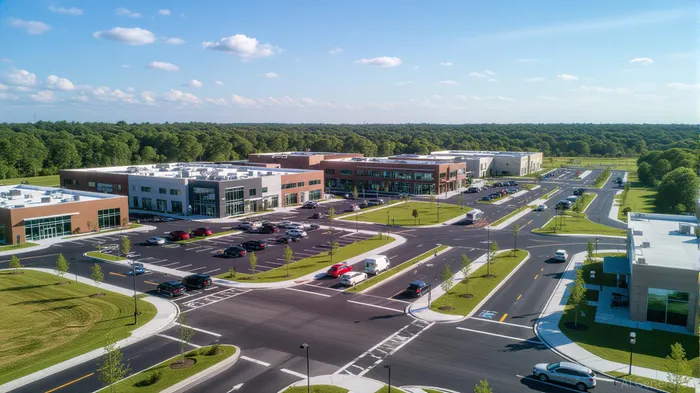
A key partner in this effort is Xerox CorporationXRX--, which has begun selling portions of the campus to facilitate shared growth with the local community. This shift aligns with broader trends in corporate real estate, where legacy campuses are being repurposed to support collaborative ecosystems. The NEAT site's proximity to the Xerox Campus also positions it to leverage existing infrastructure, such as the campus's electrical grid and transportation corridors, further enhancing its appeal to manufacturers.
The project's environmental and economic benefits are underscored by a $203,130 grant supporting the North End Business District Sustainable Development Plan. According to , this initiative aims to evaluate land ownership patterns, environmental obstacles, and redevelopment strategies for the western portion of the Xerox Campus and adjacent industrial areas. By addressing these challenges upfront, Webster is mitigating risks for future investors and ensuring that the site's development aligns with long-term sustainability goals.
WEDA's Strategic Vision: Building Partnerships for Growth
The Webster Economic Development Alliance (WEDA) is playing a central role in leveraging the FAST NY grant to attract high-tech industries. Its 2026 strategic plan emphasizes infrastructure readiness, public-private partnerships, and targeted outreach to sectors such as semiconductors and renewable energy. According to WEDA's official website, the alliance is also prioritizing the creation of a "business-friendly environment" through streamlined permitting processes and workforce development programs. These efforts are critical for attracting industries that require not only physical infrastructure but also a skilled labor pool and regulatory efficiency. The alliance's focus on advanced manufacturing and food and beverage sectors further diversifies the local economy, reducing reliance on any single industry and enhancing long-term resilience.
Investment Implications: A Shovel-Ready Opportunity
For investors, the convergence of infrastructure upgrades, strategic partnerships, and state funding in Webster presents a rare opportunity. The NEAT site's shovel-ready status-defined by pre-approved zoning, completed environmental remediation, and upgraded utilities-eliminates many of the delays and costs typically associated with site development. This is particularly valuable for industries like semiconductors, where time-to-market is a critical competitive factor.
Moreover, the project aligns with Governor Kathy Hochul's broader economic agenda to position New York as a leader in advanced manufacturing. This initiative is part of a larger ecosystem of support for high-tech industries. With the state committing over $283 million to similar initiatives since 2022, Webster's infrastructure investments are part of a larger ecosystem of support for high-tech industries. For real estate developers, this means a reduced regulatory and financial burden, as well as access to state incentives for projects that create jobs and stimulate local economies.
Conclusion: A Blueprint for Future-Proof Investment
Webster's transformation is a testament to the power of strategic infrastructure investment in unlocking economic potential. By leveraging the FAST NY grant to revitalize the Xerox Campus and surrounding areas, the town is creating a blueprint for how municipalities can attract high-growth industries in a competitive national landscape. For investors, the combination of shovel-ready sites, state-backed funding, and WEDA's proactive leadership offers a compelling case for long-term value creation. As the project progresses in 2026 and beyond, Webster is poised to become a model for industrial and commercial real estate development in the Northeast.

Blending traditional trading wisdom with cutting-edge cryptocurrency insights.
Latest Articles
Stay ahead of the market.
Get curated U.S. market news, insights and key dates delivered to your inbox.
AInvest
PRO
AInvest
PRO



Comments
No comments yet