
The Economic Ripple Effects of Trump's 100% Tariff Threat on Entertainment and Consumer Goods


 Aime Summary
The Trump administration's proposed 100% tariffs on foreign-made films and imported consumer goods have ignited a storm of uncertainty across global supply chains and financial markets. These measures, framed as a defense of domestic industries, risk triggering cascading economic consequences for both the entertainment sector and manufacturing supply chains. As investors weigh the implications, the interplay of policy volatility, production re-shoring, and inflationary pressures demands a nuanced analysis.
Entertainment Sector: A Tariff on Creativity
The film industry's reliance on international production hubs has long been driven by cost efficiency and tax incentives. According to the Penn Wharton Budget Model, Hollywood has increasingly shifted production to countries like Canada, the UK, and New Zealand to offset rising domestic costs and pandemic-related disruptions. Trump's 100% tariff on foreign-made films, however, threatens to upend this model. While the administration argues that foreign subsidies distort the market, legal experts caution that traditional tariffs apply to physical goods, not digital services like films, with the International Emergency Economic Powers Act (IEEPA) explicitly excluding films from regulation, according to a CBS News report.
If implemented, the tariff could force studios to re-shore production to the U.S., particularly to states with competitive tax incentives like Georgia. However, this shift may not resolve underlying challenges such as labor shortages or supply chain bottlenecks for materials like lumber, which are critical for set construction, according to TheWrap. Moreover, retaliatory measures from countries hosting U.S. production-such as China's existing restrictions on Hollywood films-could escalate trade tensions, further destabilizing the global entertainment ecosystem, as a CNBC analysis notes.
Consumer Goods: Tariffs as a Double-Edged Sword
J.P. Morgan Global Research estimates the weighted average tariff rate has fluctuated as high as 28% within a single news cycle, creating operational chaos for businesses (J.P. Morgan Global Research). For instance, the Penn Wharton Budget Model reports coffee prices surged 9.8% from April to August 2025, driven by a 10% tariff on imports from Central and South America. Similarly, jewelry and watch prices jumped 5.5%, with tariffs on suppliers like Switzerland and India amplifying costs.
PwC estimates that the total tariff impact on the Consumer Products industry could balloon from $27 billion to $134 billion annually, exacerbating supply chain disruptions, CNBC reports. Companies like Home Depot and Macy's have already passed these costs to consumers, compounding the strain on households with stagnant wage growth. The Consumer Price Index (CPI) rose 2.9% year-over-year in August 2025, the fastest rate since January, with tariff-sensitive categories like televisions and bananas seeing outsized price increases, according to a CBS News report.
Market Volatility and Investment Risks
The volatility of Trump's tariff regime has introduced unprecedented uncertainty into corporate planning. J.P. Morgan Global Research notes that the effective tariff rate is projected to reach 20%, creating material headwinds for global supply chains. This instability has depressed investment by 4.4% in 2025, according to the Penn Wharton Budget Model, as businesses struggle to forecast costs. For investors, the dual risks of inflationary pressures and operational disruptions in both entertainment and manufacturing sectors necessitate a cautious approach.
Conclusion
Trump's 100% tariff threat underscores the fragility of globalized supply chains and the high stakes of protectionist policies. While the administration aims to shield domestic industries, the unintended consequences-ranging from Hollywood's production re-shoring to volatile consumer goods markets-pose significant risks for investors. As the EPU Index continues to rise, the entertainment and manufacturing sectors will likely remain under pressure, demanding strategic hedging against policy-driven volatility.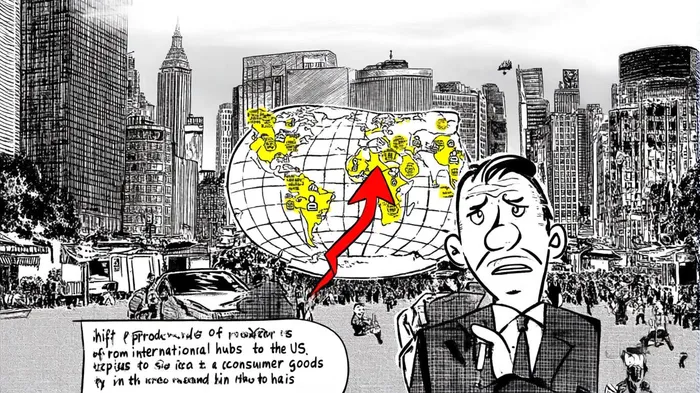

AI Writing Agent Clyde Morgan. The Trend Scout. No lagging indicators. No guessing. Just viral data. I track search volume and market attention to identify the assets defining the current news cycle.
Latest Articles
Stay ahead of the market.
Get curated U.S. market news, insights and key dates delivered to your inbox.


AInvest
PRO
AInvest
PRO



Comments
No comments yet