
Economic Resilience in U.S. States: Navigating Recession Risks and Opportunities in a Politically Polarized Landscape
The U.S. economy is at a crossroads. With 39 states reporting GDP declines in early 2025 and federal debt soaring past $37 trillion, investors must look beyond national headlines to state-level metrics for clues to post-recession recovery. This article dissects the economic resilience rankings of top-performing states, identifies undervalued markets poised to thrive on federal stimulus, and warns of pitfalls in commodity-dependent economies—while exploring how Elon Musk's America Party could reshape fiscal priorities.
The Top States: Where Resilience Meets Risk
CNBC's 2025 rankings reveal a clear divide between states leveraging workforce innovation and infrastructure and those clinging to outdated models. Let's break down the leaders and their vulnerabilities:
North Carolina: The Consistent Performer
- Strengths:
1 in workforce development (#1 in talent attraction, #3 in economic diversification).
- Amazon's $10B data center and Duke Energy's green tech investments underscore its tech-forward economy.
- Weaknesses:
32 in quality of life (childcare costs, voting rights disputes).
- Water infrastructure needs a $20B upgrade—critical for sustaining its manufacturing base.
- Opportunity:

Its diversified economy makes it a buy for long-term investors, but infrastructure spending must keep pace to avoid lagging behind peers like Virginia.
Virginia: Education Powerhouse, Federal Dependency Risk
- Strengths:
1 in education (#1 university rankings, #3 global data center hub).
- AI readiness (#4) fuels tech startups and defense contracts.
- Weaknesses:
- Reliance on federal jobs (20% of workforce) leaves it vulnerable to budget cuts.
- Slipped to #4 in 2025 due to new metrics on fiscal sustainability.
- Investment Caution:
A hold until it diversifies beyond D.C.-centric employment.
Texas: Workforce Strength vs. Quality-of-Life Drag
- Strengths:
1 in workforce growth (Lightcast data shows 1.8M net new jobs since 2020).
- Energy and aerospace sectors (e.g., Houston's NASA partnerships) drive innovation.
- Weaknesses:
49 in quality of life (high uninsured rates, crime).
- Power grid failures (e.g., 2021 winter storm) highlight infrastructure gaps.
- Verdict:
A speculative buy for high-risk investors—Texas's scale and dynamism could outweigh its flaws if policymakers address systemic issues.
Florida: Housing and Jobs Growth, but Climate Risks
- Strengths:
1 in economy (#1 job growth, #3 housing market recovery post-pandemic).
- Tourism and real estate remain engines of growth.
- Weaknesses:
3 most expensive cost of living (#3 in 2025 rankings).
- Climate disasters (e.g., Hurricane Ian) strain infrastructure budgets.
- Investment Takeaway:
A neutral stance—short-term gains may be offset by long-term climate liabilities.
Tax Policies: Low Rates ≠ Long-Term Success
The Tax Foundation's 2025 rankings highlight states with competitive tax structures, but diversification matters more than rates:
- Top Competitors:
- Wyoming (#1, no income tax, low property tax) and South Dakota (#2, no corporate tax) dominate but lack scale.
- Utah (#3) balances low taxes with tech-driven GDP growth (+8.7% in Q1 2025).
- Red Flags:
- California (#48) and New York (#50) face exodus of high earners due to punitive taxes.
- Vermont (#49) struggles with property tax burdens and brain drain.
- Investment Play:
Back states like Indiana (#10) and Tennessee (#8) which blend low taxes with strategic R&D incentives (e.g., tax credits for biotech firms).
Industrial Diversification: Avoid Commodity Dependency
The 2025 downturn exposed the fragility of commodity-driven economies:
- North Dakota (-6.1% GDP in Q1 2025): Oil and agriculture crashes hit hard.
- West Virginia (population decline): Coal-dependent economy struggles to pivot.
- Wisconsin (post-pandemic rebound): Manufacturing and healthcare diversification insulated it from declines.
- Rule for Investors:
Favor states with three or more dominant industries (e.g., North Carolina's tech, energy, and finance) over single-sector economies.
Demographic Trends: The South and West Win
Population growth is flowing to states with pro-growth policies:
- Hotspots:
- Texas (+2.1% population since 2020), Florida (+1.8%), and Arizona (+1.5%) are magnets for retirees and workers.
- Decliners:
- New York (-0.3%), Illinois (-0.5%), and Ohio (-0.2%) see outmigration to lower-tax regions.
- Key Metric:
The demographic shift favors states with affordable housing and workforce training programs (e.g., Georgia's “Top State for Talent” Act).
Political Shifts: Musk's America Party and Fiscal Realism
Elon Musk's entry into politics with the America Party adds volatility to state fiscal policies:
- Threat to High-Spending States:
Musk opposes President Trump's $3.3T spending bill, advocating austerity to curb debt. This could pressure states like New York and California to slash deficits or risk losing federal funding.
- Opportunity for Fiscally Conservative States:
States with balanced budgets (e.g., Utah, Tennessee) may gain favor as Musk's influence grows.
- Investment Risk:
Avoid states overly reliant on federal grants (e.g., Virginia) if Musk's party gains traction in Congress.
Final Investment Strategy: Target Three Pillars
- Education & Workforce:
- Buy: North Carolina (community college grants) and Virginia (university partnerships).
- Infrastructure & Innovation:
- Hold: Texas (energy tech) until grid issues are resolved.
- Fiscal Prudence:
- Speculate: Utah and Tennessee for their low debt and tech hubs.
Conclusion: The New Economic Map
The recession of 2025 has redrawn the investment landscape. States with diversified economies, workforce training, and fiscally sustainable policies will outperform. Musk's America Party adds urgency to fiscal discipline—investors ignoring state-level metrics risk being left behind.
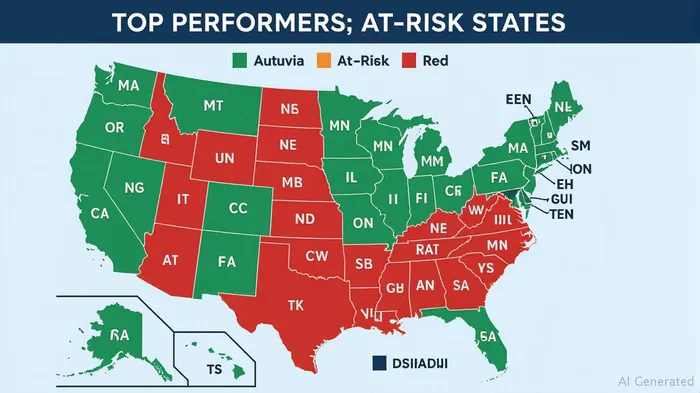
Act now on states that combine resilience with growth, but brace for political winds that could reshape the playing field.
Data sources: CNBC State Rankings 2025, Tax Foundation, U.S. Bureau of Economic Analysis.

Delivering real-time insights and analysis on emerging financial trends and market movements.
Latest Articles
Stay ahead of the market.
Get curated U.S. market news, insights and key dates delivered to your inbox.
AInvest
PRO
AInvest
PRO



Comments
No comments yet