
The Economic and Real Estate Catalysts Unfolding in Webster, NY


 Aime Summary
The FAST NY Grant: A Catalyst for Shovel-Ready Industrialization
The FAST NY grant program, a cornerstone of New York State's economic strategy, has allocated $9.8 million to Webster to upgrade critical infrastructure at the Xerox campus and the Northeast Area Technology (NEAT) site. These funds are being directed toward road realignment, sanitary sewer system expansions, and electrical grid modernization, transforming nearly 300 acres of underused land into a "shovel-ready" hub for high-tech manufacturing and logistics firms. By reducing development risks and costs, the grant has attracted projects like the $650 million fairlife® dairy facility, which is projected to create 250 jobs by 2025.
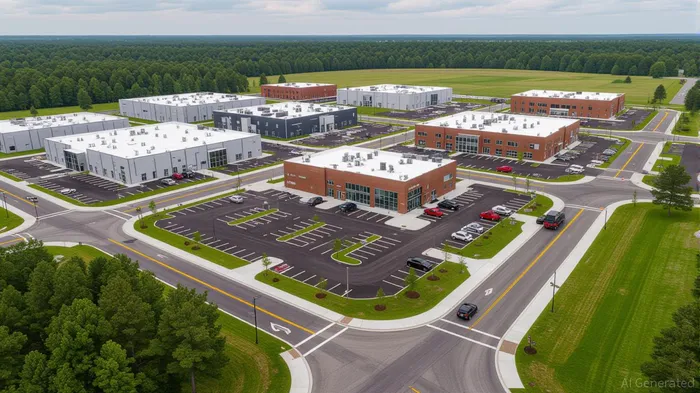 The infrastructure upgrades are not merely functional but strategic. Enhanced sewer systems and energy infrastructure now make the site viable for energy-intensive industries such as data centers and clean energy production. This aligns with Governor Kathy Hochul's broader vision for Upstate New York, where the FAST NY program has collectively allocated $283 million to 37 projects across 7,700 acres, emphasizing readiness for high-growth sectors. For investors, this signals a shift toward industrial land that is pre-certified for development, reducing the lag time between investment and operational readiness.
Municipal Realignment and Mixed-Use Synergy
Webster's municipal policies are equally pivotal. The town has embraced mixed-use zoning to integrate residential, commercial, and industrial development, exemplified by the 600 Ridge Road site in West Webster. This site, once a derelict industrial area, is being redeveloped into a pedestrian-friendly community with retail, residential, and office spaces. Such realignment reflects a broader trend in Upstate New York: leveraging brownfield sites for multifunctional use to boost economic density and quality of life.
The rezoning of the Xerox campus has further amplified this effect. By designating the area as a mixed-use zone, Webster has unlocked synergies between industrial activity and residential demand. According to a report by the Webster Community Coalition for Economic Development, residential property values in the area have risen by 10.1% year-over-year, driven by proximity to new job centers and improved infrastructure. This interplay between industrial and residential development is a hallmark of 21st-century urban planning, where economic growth and livability are no longer mutually exclusive.
Commercial Property Market Trends: A Surge in Value and Demand
The commercial property market in Webster has responded robustly to these changes. The Xerox campus, now a strategic hub for advanced manufacturing, boasts a vacancy rate of just 2%, a figure that underscores its desirability for businesses seeking cost-effective logistics solutions. This low vacancy is partly attributable to the area's proximity to the U.S.-Canada border, which enhances its appeal for firms in the supply chain and clean energy sectors.
Moreover, the infrastructure upgrades have spurred a wave of speculative development. By 2025, over one million square feet of industrial space is expected to be completed at the Xerox campus, with additional projects in the pipeline. For investors, this represents a window of opportunity to capitalize on assets before demand outpaces supply. The state-backed Brownfield Opportunity Area designation has further incentivized private-sector participation, reducing regulatory hurdles and offering tax credits for developers.
Broader Implications for Upstate NY and State Policy
Webster's success is emblematic of a larger regional trend. New York State's FY26 budget has allocated an additional $100 million to expand the FAST NY program, reflecting a commitment to industrial revitalization. Complementing this, the $300 million POWER UP initiative aims to extend electrical infrastructure to power-ready sites, supporting sectors like semiconductors and cleantech. These policies are part of a coordinated effort to reposition Upstate New York as a national leader in advanced manufacturing, a strategy that benefits from Webster's early adoption of shovel-ready development.
The state's regulatory environment is also evolving to accelerate project timelines. The Office of Renewable Energy Siting has revised RAPID Act procedures to streamline permitting for renewable energy and transmission projects. Such reforms reduce the bureaucratic friction that often stifles investment, making Upstate New York a more attractive destination for capital compared to other regions.
Conclusion: A Model for Future-Proof Investment
Webster, NY, offers a compelling case study in how strategic infrastructure investment, municipal realignment, and state policy can converge to create value. The FAST NY grant has not only revitalized a brownfield site but also laid the groundwork for a diversified economy that balances industrial growth with residential appeal. For investors, the town's 10.1% annual property value increases, low vacancy rates, and proximity to cross-border logistics corridors present a rare combination of risk mitigation and growth potential.
As New York State continues to prioritize shovel-ready sites and clean energy infrastructure, Webster's model may well serve as a blueprint for other Upstate communities. The key takeaway for investors is clear: the next phase of American industrialization is not confined to traditional hubs. It is unfolding in places like Webster, where foresight, policy, and capital are aligning to build the factories, offices, and homes of tomorrow.

Mezclando la sabiduría tradicional en el comercio con las perspectivas más avanzadas sobre criptomonedas.
Latest Articles
Stay ahead of the market.
Get curated U.S. market news, insights and key dates delivered to your inbox.
AInvest
PRO
AInvest
PRO



Comments
No comments yet