
The Economic and Infrastructure Windfall of Webster, NY: Why Investors Should Watch the Xerox Campus Transformation


 Aime Summary
Infrastructure as a Catalyst for Economic Diversification
The Xerox campus transformation is not merely a real estate project but a calculated effort to address regional economic imbalances. Governor Kathy Hochul's vision of a "sustainable economic ecosystem" is being realized through targeted infrastructure investments. The FAST NY grant funds critical upgrades to roads, sewer systems, and electrical infrastructure, ensuring the site can compete with Sun Belt markets for industrial tenants. These improvements are already bearing fruit: the $650 million fairlife® dairy plant, set to create 250 jobs, is a direct response to the site's enhanced connectivity and utility capacity.
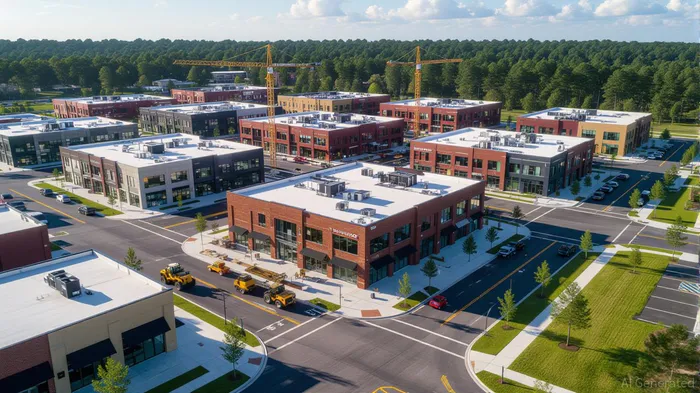
Webster's strategic location-adjacent to Buffalo's port and rail systems-further amplifies its appeal. With a mere 2% industrial vacancy rate, the town is outpacing many traditional manufacturing hubs, drawing firms seeking to mitigate shipping delays and high labor costs. This demand is not hypothetical; it is materializing in real-time. The 2023-2025 infrastructure timeline aligns with the completion of the West Webster Hamlet Revitalization Project, which aims to transform the 600 Ridge Road site into a walkable, mixed-use community. Such projects are not just about bricks and mortar-they are about creating ecosystems that attract talent, innovation, and capital.
Real Estate Value Creation: A Byproduct of Strategic Planning
The economic benefits of these initiatives are already translating into tangible real estate gains. According to a November 2025 market report, the median sale price for single-family homes in Webster reached $317,600-a 10.1% annual increase. This growth is driven by infrastructure-driven demand: improved roadways, pedestrian accessibility, and the Community Access Project's $90,000 investment in walkability are making the town more attractive to both residents and businesses.
The 2027 townwide revaluation project, designed to reassess property values across the town, will likely accelerate this trend. As industrial and residential developments mature, disparities in property assessments will be corrected, ensuring that market values reflect the town's enhanced infrastructure and economic potential. For investors, this means a clear trajectory of appreciation, particularly in areas adjacent to the Xerox campus and the revitalized 600 Ridge Road site.
Why Now? Timing the Investment Window
The synchronized timelines of infrastructure completion and site readiness create a unique investment window. By 2026, the West Webster Hamlet Revitalization Project will have transformed a blighted area into a mixed-use neighborhood, while the Xerox campus will be fully primed for advanced manufacturing. These developments are not isolated; they are part of a broader $283 million state commitment to Upstate New York's industrial expansion.
For early-stage investors, the focus should be on sectors poised to benefit from this momentum: industrial land, logistics facilities, and residential developments catering to the influx of skilled workers. The fairlife® dairy plant, for instance, will require ancillary services and housing, creating a ripple effect across the local economy. Similarly, the Sandbar Waterfront Revitalization project underscores Webster's ambition to diversify beyond manufacturing, adding retail and tourism components to its economic portfolio.
Conclusion: A Model for Regional Revitalization
Webster's transformation is a masterclass in leveraging infrastructure to drive economic and real estate value. By addressing historical underinvestment in brownfield sites and aligning with state-level priorities, the town is creating a self-reinforcing cycle of growth. For investors, the lesson is clear: regions that combine strategic infrastructure with forward-looking economic planning are not just surviving-they are thriving. As Webster's median home prices and industrial demand continue to climb, the question is no longer whether this town will succeed, but how quickly capital can be deployed to capture its upside.

Combinando la sabiduría tradicional en el comercio con las perspectivas más avanzadas sobre las criptomonedas.
Latest Articles
Stay ahead of the market.
Get curated U.S. market news, insights and key dates delivered to your inbox.
AInvest
PRO
AInvest
PRO



Comments
No comments yet