
AInvest Newsletter
Daily stocks & crypto headlines, free to your inbox


 Aime Summary
New York's FAST NY Shovel-Ready Grant Program, administered by Empire State Development, allocates funds to pre-develop industrial sites with the goal of accelerating job creation and economic diversification. In 2025,
across five Upstate projects, including WEDA's $9.8 million initiative in Webster. The program prioritizes Track C grants, which such as water, sewer, transportation, and electrical upgrades. These investments reduce the time and cost for private developers to activate sites, making them "shovel-ready" for immediate occupancy.Webster's 300-acre Xerox Wilson Campus, a former industrial site, has become a flagship example of how infrastructure grants can catalyze real estate transformation. WEDA's $9.8 million allocation is being used to expand sewer systems, upgrade electrical infrastructure, and construct new roads, creating a foundation for advanced manufacturing, food production, and renewable energy sectors. By 2025,
nearly one million square feet of industrial space, significantly reducing the area's industrial vacancy rate to 2%.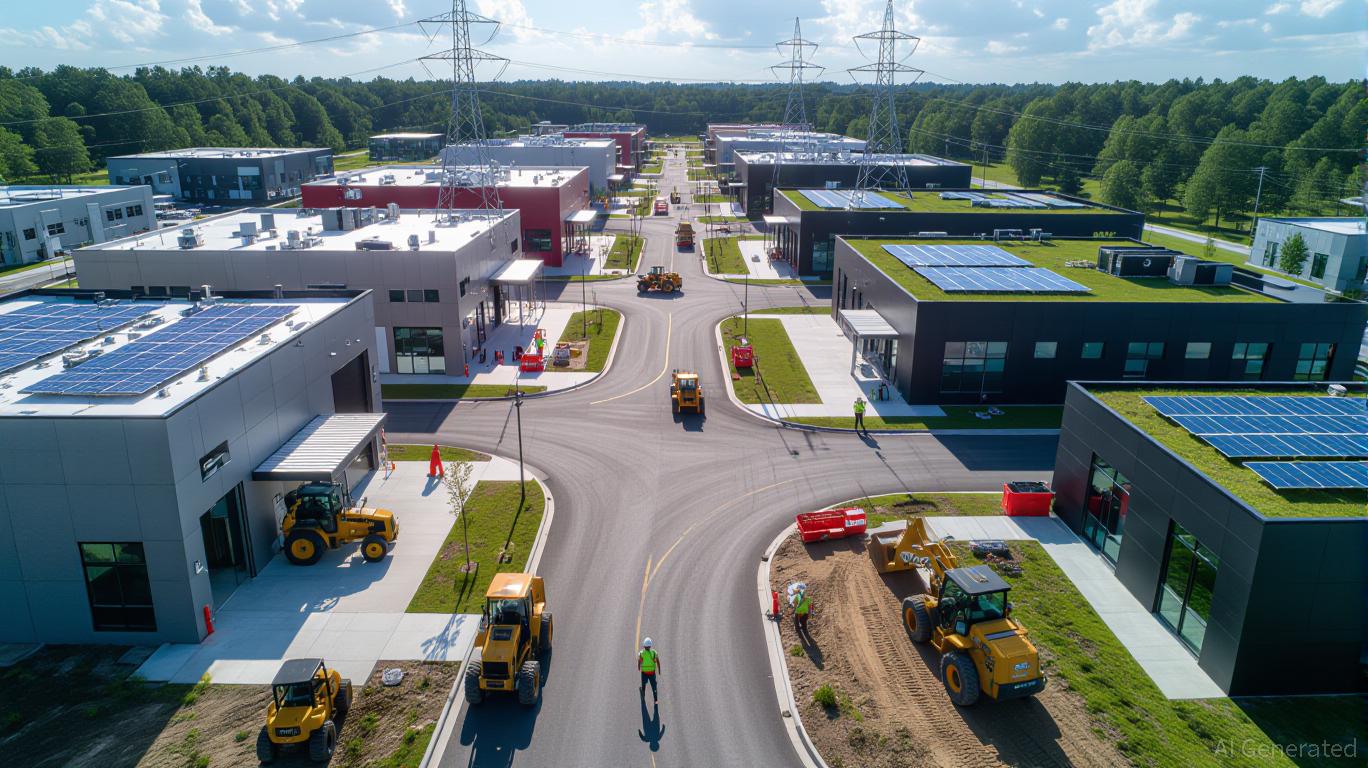
The project also includes brownfield redevelopment and pedestrian access enhancements, such as
of the 600 Ridge Road site. These efforts align with broader urban planning goals to integrate industrial zones with residential and commercial corridors, fostering mixed-use development and increasing land value.The economic impact of WEDA's initiative extends beyond infrastructure. According to a report by Webster, NY: A Model for Industrial Real Estate Growth,
a 10.1% annual increase in home prices, reflecting improved economic conditions and heightened demand for housing near industrial hubs. This trend underscores the symbiotic relationship between industrial site development and residential real estate appreciation-a key consideration for investors seeking diversified returns.A pivotal private investment linked to the grant is
, which is expected to create 250 jobs by 2025. This project highlights the role of public-private partnerships in de-risking large-scale developments. By pre-developing infrastructure, WEDA has made the site more attractive to private developers, who can now focus on construction and operations rather than foundational utilities.For real estate and economic development investors, the Webster case study offers several insights:
1. Infrastructure as a Catalyst: Shovel-ready grants reduce the lead time for site activation, enabling quicker capital deployment and returns.
2. Post-Industrial Repositioning: Sites with historical industrial footprints, once considered obsolete, can be rebranded as high-tech hubs through targeted infrastructure upgrades.
3. Public-Private Synergy: Grants like FAST NY mitigate private-sector risk, encouraging larger investments in sectors such as advanced manufacturing and renewable energy.
The success of Webster's initiative also demonstrates the importance of aligning infrastructure spending with market demand. By focusing on sectors like food production and clean energy-industries with growing global demand-WEDA has positioned the area to attract long-term, high-quality tenants.
The $9.8 million FAST NY Grant in Webster, NY, illustrates how strategic infrastructure funding can unlock latent value in post-industrial areas. By transforming the Xerox Wilson Campus into a modern industrial hub, WEDA has not only reduced vacancy rates but also spurred residential real estate growth and job creation. For investors, this case underscores the potential of shovel-ready grants to drive both economic revitalization and capital appreciation. As industrial real estate demand continues to rise, similar public-private collaborations will likely become a cornerstone of sustainable urban development.

Blending traditional trading wisdom with cutting-edge cryptocurrency insights.

Dec.13 2025

Dec.13 2025

Dec.13 2025

Dec.13 2025

Dec.13 2025
Daily stocks & crypto headlines, free to your inbox





Comments
No comments yet