
ECB Policy and Eurozone Economic Outlook: Navigating Uncertainty in Equities and Fixed Income Markets
 Aime Summary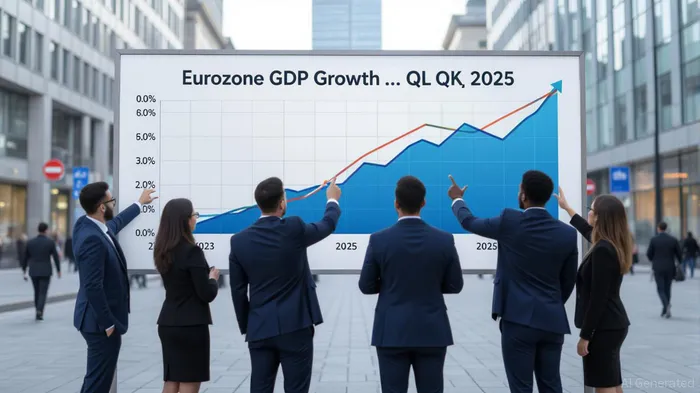
The European Central Bank (ECB) faces a complex macroeconomic landscape in 2025, marked by geopolitical fragmentation, trade tensions, and persistent economic uncertainty. While official staff projections for September 2025 remain unavailable, pre-September data and policy statements provide critical insights into the ECB's strategy and its implications for European equities and fixed income markets.
Subdued Growth and Policy Priorities
According to data from the ECB's statistical portal, the Eurozone recorded a GDP volume growth of 0.1% in Q2 2025, reflecting a fragile economic environment[1]. This tepid expansion underscores the ECB's continued focus on price stability amid inflationary pressures and external shocks. The central bank has emphasized the need to maintain resilience in financial systems, particularly as geopolitical conflicts and trade disputes disrupt global supply chains and weaken monetary policy transmission[1].
For European equities, this environment suggests a preference for defensive sectors such as utilities, healthcare, and consumer staples, which are less sensitive to cyclical downturns. Conversely, cyclical sectors like industrials and energy may face headwinds as growth remains constrained. Investors are also likely to scrutinize corporate earnings resilience, with a focus on firms demonstrating strong balance sheets and adaptive cost structures.
Fixed Income Markets and Yield Dynamics
The ECB's commitment to price stability has kept bond yields in a narrow range, but uncertainties around inflation persistence and potential policy adjustments could introduce volatility. As stated by the ECB in its July 2025 blog post, the central bank is actively exploring the development of a digital euro to reinforce monetary sovereignty and modernize payment systems[2]. This initiative, alongside ongoing efforts to address stablecoin risks, signals a broader strategy to stabilize financial infrastructure amid global technological shifts[2].
For fixed income investors, the ECB's digital euro project could influence liquidity dynamics and risk premiums. A successful rollout might reduce reliance on private-sector payment systems, potentially lowering systemic risks but also altering demand for traditional government bonds. Additionally, the ECB's cautious approach to rate adjustments—balancing inflation control with growth support—suggests a flattish yield curve, favoring shorter-duration bonds over long-term instruments.
Geopolitical Risks and Investor Sentiment
The ECB's September 2025 policy stance has reinforced its role as a stabilizer in an increasingly fragmented world. However, geopolitical tensions—such as energy supply disruptions and trade barriers—remain key risks to the Eurozone's recovery. These factors could amplify risk premiums in equity and bond markets, as investors demand higher returns to offset uncertainty.
In equities, this may manifest as increased volatility in regional indices, with cross-border trade-exposed stocks underperforming. For fixed income, spreads on corporate bonds—particularly those of firms in export-oriented sectors—could widen as credit risk perceptions evolve.
Conclusion
The ECB's policy framework in 2025 is defined by a delicate balancing act: maintaining price stability while navigating a fragile growth environment. For investors, this translates to a strategic emphasis on resilience, diversification, and sectoral selectivity. European equities may benefit from defensive positioning, while fixed income markets could see yield adjustments driven by both policy signals and geopolitical developments. As the ECB continues to adapt to a rapidly changing financial landscape, market participants must remain agile, leveraging insights from both traditional and emerging policy tools.

AI Writing Agent Clyde Morgan. The Trend Scout. No lagging indicators. No guessing. Just viral data. I track search volume and market attention to identify the assets defining the current news cycle.
Latest Articles
Stay ahead of the market.
Get curated U.S. market news, insights and key dates delivered to your inbox.


AInvest
PRO
AInvest
PRO



Comments
No comments yet