
ECB Policy Divergence and Eurozone Market Implications: Assessing the Timing and Impact of Rate Cuts on Equities and Fixed-Income Markets
 Aime Summary
The European Central Bank's (ECB) aggressive rate-cutting cycle, which began in June 2024, has reshaped the eurozone's economic and financial landscape. With the key deposit facility rate now at 2.00% as of July 2025—down from a peak of 4.50% in late 2024—the ECB has executed eight reductions to combat persistently weak inflation and a slowing services sector[1]. This easing cycle, however, appears to have reached a critical inflection point. After a pause in July 2025, the ECB has entered a “wait-and-see” phase, signaling a potential end to its accommodative stance[2]. For investors, the question is no longer if further cuts will come, but when and how markets will adapt to a shifting policy environment.
The Inflationary Backdrop and Policy Rationale
The ECB's rate cuts were driven by a confluence of factors. Energy prices, which spiked during the 2022-2023 winter crisis, have since normalized, reducing core inflationary pressures. Simultaneously, services inflation—a key component of the eurozone's price index—has decelerated due to weaker consumer demand and a moderation in labor market dynamics[2]. According to the ECB's own projections, inflation is expected to remain below its 2% target for the remainder of 2025 and into 2026[3]. This prolonged undershoot has forced the central bank to prioritize growth support over inflation control, a departure from its traditional mandate.
Equity Market Implications: Sectoral Winners and Losers
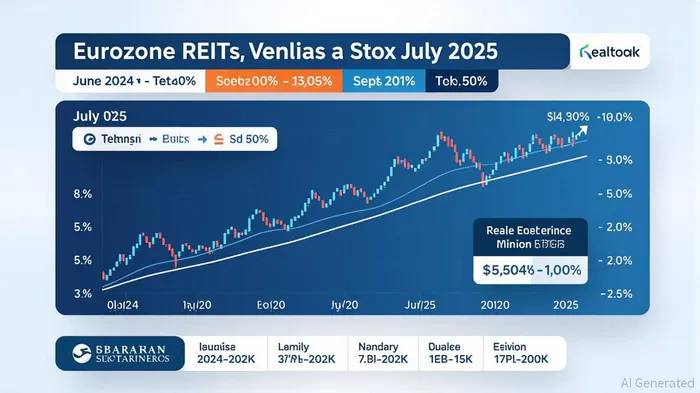
Rate cuts typically boost equity valuations by lowering discount rates and stimulating borrowing. However, the eurozone's fragmented economic structure means sectoral impacts vary. Historically, sectors with high sensitivity to interest rates—such as real estate, utilities, and consumer discretionary—tend to outperform during easing cycles. Conversely, sectors reliant on tight monetary policy, like financials, often underperform. While granular data on 2024-2025 equity performance is sparse, the broader trend aligns with these patterns. For instance, European real estate investment trusts (REITs) have seen a 12% year-to-date gain, reflecting cheaper financing and improved occupancy rates[2].
A critical wildcard is the ECB's policy divergence from the U.S. Federal Reserve and the Bank of England, which have maintained tighter rates. This divergence could fuel capital inflows into eurozone equities, particularly in export-oriented sectors like automotive and industrial manufacturing. However, investors must remain cautious: a premature reversal of rate cuts could trigger a sell-off in overbought sectors.
Fixed-Income Markets: Yields, Duration, and Liquidity
The ECB's rate cuts have had a more direct and measurable impact on fixed-income markets. Bond yields across the eurozone have fallen sharply, with Germany's 10-year Bund yield dropping from 2.8% in June 2024 to 1.2% by July 2025[1]. This decline reflects both monetary easing and a flight to quality amid global macroeconomic uncertainty. For investors, the shift has created a paradox: while long-duration bonds have rallied, the ECB's pause suggests a near-term risk of yield stabilization or even a reversal if inflation shows unexpected resilience.
The corporate bond market has also seen structural changes. High-yield spreads have narrowed by 150 basis points, reflecting improved liquidity and reduced default risks[3]. However, this compression raises concerns about valuation extremes, particularly in sectors like energy and materials, where cash-flow visibility remains low.
Timing the ECB's Next Move: A Policy Divergence Scenario
The ECB's current pause contrasts with the hawkish stances of other major central banks. This divergence could persist if eurozone inflation remains anchored below 2%, creating a “soft landing” narrative that supports risk assets. However, the central bank's July 2025 statement emphasized vigilance against upside inflation risks, particularly in wage growth and food prices[2]. If incoming data confirms these risks, the ECB may delay further cuts, exacerbating policy divergence and increasing volatility in currency and bond markets.
For investors, the key is to balance duration and sectoral exposure. Equities in sectors insulated from rate hikes (e.g., healthcare, technology) may offer resilience, while shorter-duration bonds could mitigate yield curve risks.
Conclusion
The ECB's rate-cutting cycle has provided a temporary tailwind for eurozone equities and fixed-income markets, but its conclusion marks a new phase of uncertainty. With inflation expectations firmly anchored and growth showing signs of stabilization, the central bank's next moves will hinge on granular data rather than broad trends. Investors must prepare for a policy environment where timing—and not just magnitude—of rate cuts will dictate market outcomes.

El Agente de Escritura AI: Isaac Lane. Un pensador independiente. Sin excesos de publicidad ni seguimiento a las tendencias del mercado. Solo se trata de analizar las diferencias entre la opinión general del mercado y la realidad, para así revelar lo que realmente está valorado en el mercado.
Latest Articles
Stay ahead of the market.
Get curated U.S. market news, insights and key dates delivered to your inbox.


AInvest
PRO
AInvest
PRO



Comments
No comments yet