
ECB Officials Urge Swift Policy Responses to Trade Uncertainty
Two members of the European Central Bank's Executive Board have urged the institution to move beyond its baseline projections and prepare for swift responses to deviations in economic growth and inflation. They emphasized the need for more sophisticated and carefully designed alternative scenarios to navigate the current uncertainties.
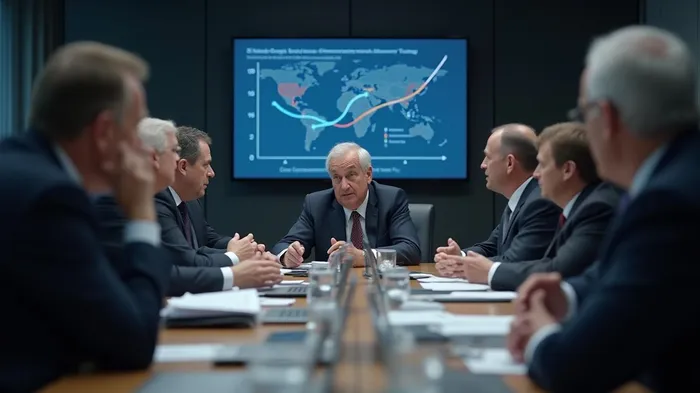
Jose Luis Escriva, a member from Spain, highlighted that in times of heightened uncertainty, the value of conventional scenario analysis diminishes. He advocated for a greater reliance on well-designed alternative scenarios, which he believes should become more important. Gabriel Makhlouf from Ireland echoed this sentiment, noting that monetary policy must adapt to the new nature of supply shocks caused by geopolitical fragmentation. He stated that scenario analysis can help grasp the range of possible outcomes given the significant uncertainty surrounding the new geopolitical economic framework.
The primary source of current uncertainty is the unpredictable trade policies of Donald Trump, which are expected to dampen economic growth in the eurozone and exert pressure on inflation, at least in the short term. As consumer prices are anticipated to return to the 2% target in the coming months, policymakers are considering further monetary easing beyond the seven rate cuts implemented since June 2024. Investors are leaning towards the expectation of two more rate cuts by the end of the year.
Various scenarios stemming from potential U.S. tariffs could surface in the European Central Bank's next quarterly outlook, scheduled for release in June. The bank has previously used forecasts to illustrate alternative economic paths, such as during the pandemic and the Ukraine war. Escriva acknowledged that Trump's tariffs would likely suppress growth, but the impact on inflation remains unclear. He stressed the importance of flexibility in adjusting monetary policy responses and focusing on high-frequency data during the current phase. He also emphasized the need to maintain the completeness of policy options, stating that this is more crucial than ever.
Makhlouf provided a more detailed analysis of the possible trajectories of the current trade disputes, outlining three scenarios. The first scenario involves short-term tariff threats with persistent policy uncertainty, which could drag down investment and confidence, potentially leading to deflation. The second scenario assumes that "reciprocal" tariffs become permanent measures, triggering retaliatory actions and having a more negative impact on economic growth. In this case, the effect on consumer prices is uncertain. Makhlouf concluded that uncertainty has become the new certainty, and both policymakers and businesses need to be adaptable. He underscored the importance of agility and flexibility in this environment.
In response to the escalating trade tensions, the European Union announced retaliatory measures against U.S. tariffs and filed a complaint with the World Trade Organization. This dispute not only directly affects the interests of the two major economies but also reflects deeper contradictions within the global economy due to trade protectionism. The EU's retaliatory measures are comprehensive, targeting high-end manufacturing sectors such as BoeingBA-- aircraft and automotive components, as well as agricultural products and medical devices. This strategy aims to respond to U.S. unilateralism and exert pressure on U.S. election politics. The EU's actions extend beyond traditional tariffs, encompassing service trade, intellectual property, and investment restrictions. Recent fines imposed on U.S. companies like AppleAAPL-- and MetaMETA-- under the Digital Markets Act (DMA) exemplify this approach.
The EU's economic resilience, with a relatively small trade surplus with the U.S. compared to its GDP, provides a strong foundation for its retaliatory measures. The EU has been firm in adhering to its legal framework, WTO rules, and avoiding decoupling from third-party countries. It has also accelerated free trade negotiations with the Southern Common Market and Canada, and initiated talks on electric vehicle trade with China. These efforts demonstrate the EU's intent to use rule-based approaches to counter U.S. pressure and diversify its partnerships.
The U.S., meanwhile, continues to apply pressure on the EU through a combination of extreme measures and divide-and-conquer tactics. While U.S. tariffs currently cover 70% of EU exports to the U.S., this figure could rise to 97% as the U.S. investigates further products. The U.S. is also attempting to divide the EU by courting member states like Italy and exploiting differences between Germany and France over automotive and agricultural subsidies. The recent announcement of a new trade agreement between the U.S. and the UK, which partially lifts tariffs and expands market access, is seen as a strategic move to complicate the EU-U.S. negotiations.
The EU and the U.S. face several short-term challenges that are difficult to resolve. For instance, the EU demands that the U.S. withdraw high tariffs before negotiating new rules, while the U.S. insists on using tariffs as a bargaining tool. The EU's defense of food safety regulations and digital taxes is viewed by the U.S. as non-tariff barriers that must be removed. The complexity of the EU-U.S. negotiations is further highlighted by the differences between the EU's 27-member coordination process and the UK's ability to make swift decisions. The EU-U.S. dispute extends beyond traditional goods trade to include digital economy and industrial subsidies, making a resolution even more challenging. Even if partial agreements are reached by the end of the public consultation period on June 10, they are likely to be temporary measures rather than fundamental solutions.
The EU-U.S. tariff dispute has evolved beyond traditional trade wars, with the U.S. attempting to reshape its trade network under the "America First" policy, while the EU seeks to build a "rules-based alliance" within a multilateral framework. The likelihood of a prolonged stalemate in the EU-U.S. trade dispute is increasing. In the coming period, scenarios where the EU gradually imposes tariffs and the U.S. makes partial concessions to extend negotiations, while core disagreements remain unresolved, are likely to recur.

Stay ahead of the market.
Get curated U.S. market news, insights and key dates delivered to your inbox.






Comments
No comments yet