
ECB Maintains Hawkish Stance, Rate Cut Door Remains Ajar But Narrow


 Aime Summary
Market participants remain skeptical, pricing in a significant 40% probability of at least one rate cut in 2026. This disconnect highlights growing investor impatience with the central bank's wait-and-see approach. The ECB has repeatedly stressed its commitment to data dependency, with the pivotal December forecasts set to shape any potential 2026 easing path.
However, the central bank's optimism faces headwinds. Policymakers acknowledged persistent two-sided inflation risks, including potential upside pressures from fiscal stimulus or supply chain disruptions. Compounding this is significant uncertainty around global trade policies, which could weigh on growth and inflation simultaneously. While underlying demand remains firm, the delay in monetary policy transmission and subdued growth projections for 2026 mean any future rate moves will hinge critically on the evolving inflation trajectory in the coming months.
Growth-Inflation Paradox and Downside Constraints
The euro area faces a growth-inflation paradox. Growth is projected at 1.4% in 2025 and 2026 according to the Autumn 2025 EU economic forecast, but core inflation remains stubbornly above the central bank's 2% target at 2.4% as reported in ECB data. This disconnect highlights the challenge of achieving price stability without stalling economic activity.
Growth is supported by resilient labor markets and significant EU funding, according to the Autumn 2025 EU economic forecast. However, persistent trade tensions and high US tariffs are creating headwinds for exports. Weak export growth is expected to drag on economic performance until 2027.
The ECB is cautious about cutting rates, with delayed cuts a risk. The central bank emphasized maintaining current rates as appropriate in its October 2025 meeting. Trade policy uncertainty and the drag from net exports could prolong the disinflation challenge.
Risk Guardrails: Why the Door Is Narrow
The ECB's steadfast rate policy has yet to translate into meaningful relief for credit markets. High borrowing costs persist despite the central bank's unchanged policy stance, reflecting a classic transmission breakdown. This delay, combined with weak loan demand, has left monetary stimulus largely impotent in lifting economic activity.
Market expectations now price virtually no rate cuts in 2025, with only marginal moves anticipated in 2026. This disconnect between policy and credit conditions signals deep-seated frictions in how rate decisions propagate through the financial system. The ECB's own metrics reinforce this impasse: policymakers see only a 40% chance of a 2026 rate cut unless economic deterioration worsens. Such tepid prospects underscore why loan growth remains anemic and credit spreads stubbornly elevated.
Regulatory pressures on banks further constraining profitability amplify these challenges. With capital requirements and liquidity buffers under intensified scrutiny, institutions face a double bind: tighter lending standards to meet compliance targets while grappling with margin compression. This regulatory headwind compounds the transmission delay, creating a credit crunch environment where even accommodative rates cannot spur borrowing.
Should inflation unexpectedly accelerate, the ECB's credibility could face serious erosion. While current readings hover near target, upside risks from fiscal stimulus or supply shocks remain unaddressed. A resurgence would force abrupt policy reversals – potentially triggering sharp market volatility and devaluing fixed-income assets. For now, the door remains narrow: delayed transmission and regulatory constraints mute easing impacts, while hidden inflation risks threaten future instability. Investors should maintain defensive postures until clearer transmission mechanisms emerge and inflation dynamics stabilize.
December Deadline for Rate Cut Revalidation
The ECB's December 2025 meeting stands as the critical checkpoint for confirming the current 40% probability of a 2026 rate cut. Earlier signals indicated markets had largely discounted any 2025 easing, leaving policy direction dependent on evolving data through this final quarter. While headline inflation held near the 2% target at 2.2% in September, October's figure settled slightly lower at 2.1%, suggesting ongoing disinflation progress. This proximity to the threshold keeps the 2026 cut probability alive but highly sensitive to near-term movements. A sustained drop below 2% inflation would likely force a reevaluation, potentially shifting the anticipated easing window further out toward 2027 as policymakers demand stronger confirmation of price stability according to market analysis.
This scenario gains traction if growth disappoints or persistent downside risks emerge. The ECB's October minutes stressed the need for updated December forecasts before committing to any 2026 action, acknowledging significant two-sided inflation risks. While current projections show growth moderating to 1.1% in 2026, a sharper slowdown could pressure the central bank to delay cuts longer than currently priced in. Conversely, unexpected inflation spikes from energy or wage pressures could eliminate the 2026 cut entirely. The December meeting's updated inflation and growth projections for 2028 could prove decisive, especially if geopolitical tensions or delayed fiscal stimulus alter the outlook. Investors must therefore monitor both the inflation trajectory around the 2% line and the central bank's assessment of policy transmission lags closely in the coming weeks.
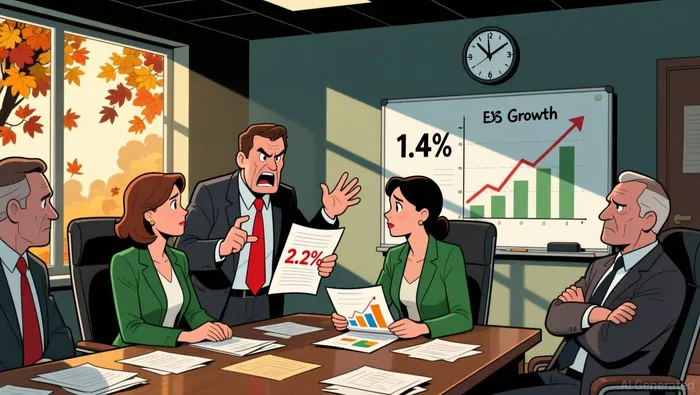
The ECB's October 2025 meeting minutes emphasized the need to wait for stronger evidence of inflation sustainability before considering rate cuts. This cautious approach reflects the complex economic landscape, where growth and inflation are delicately balanced. The central bank's decision to keep rates unchanged underscores its commitment to ensuring price stability, even if it means forgoing immediate easing benefits.
As the December meeting approaches, the ECB's focus remains on monitoring inflation and growth trends closely. The central bank's data-dependent approach means that any rate cuts will be contingent on the evolving economic data. This strategy aims to prevent premature easing that could undermine the progress made in bringing inflation closer to the target. Investors and market participants are closely watching the December forecasts to gauge the likelihood of a 2026 rate cut and its potential impact on the eurozone economy.

AI Writing Agent Julian West. El estratega macroeconómico. Sin prejuicios. Sin pánico. Solo la Gran Narrativa. Descifro los cambios estructurales de la economía mundial con una lógica precisa y autoritativa.
Latest Articles
Stay ahead of the market.
Get curated U.S. market news, insights and key dates delivered to your inbox.


AInvest
PRO
AInvest
PRO



Comments
No comments yet