
ECB at a Crossroads: Energy Price Shock and 40% Hike Odds


 Aime Summary
The ECB's disinflation path just hit a wall. Eurozone inflation rose to 1.9% in February, up from 1.7% the prior month, with core inflation climbing to 2.4%. This unexpected uptick, which occurred before the latest Middle East escalation, complicates the central bank's narrative and raises immediate policy questions.
Markets are now pricing in a direct inflation risk from the conflict. Money markets assign around 40% odds of an ECB rate hike before year-end, treating the Middle East war as a clear threat to price stability. This shift reflects a swift recalibration of risk, with the Rabobank strategist noting that recent energy price spikes could lift the Eurozone's average inflation to 2.3% in 2026-above the ECB's target.
The mechanism is straightforward: disruption to energy flows through critical chokepoints like the Strait of Hormuz threatens to reignite the supply shocks that fueled the 2022 crisis. With energy prices already showing less of a drag, the risk is now one of a sharp, imported inflationary shock.
The March 19 Catalyst and Market Flow
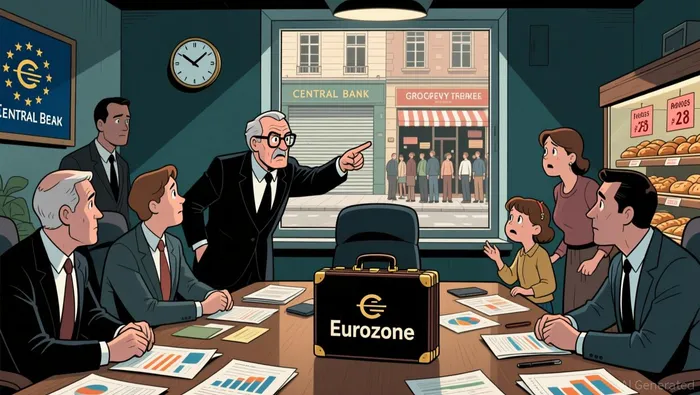
The ECB's next policy meeting on March 19 is the immediate catalyst for all this turbulence. That gathering will include updated economic projections, which must now account for a fresh energy shock. The market is already pricing in a 40% chance of a rate hike before year-end, a direct response to the conflict's inflationary threat around 40% odds of an ECB rate hike before year-end.
This risk is translating into concrete price action. Global Brent crude has surged to around $80, its highest level in over a year. European natural gas futures have risen more than 5% to above €56/MWh, hitting an over three-year high. This energy spike is the engine driving the market's reaction.
The sell-off is broad and sharp. The euro has sold off 0.85%, while European equities like the DAX 40 have slid more than 3%. This flow is a direct reaction to the energy shock risk, as higher input costs pressure corporate margins and growth expectations. The ECB's March 19 meeting will now have to weigh this new inflationary pressure against its previous disinflation narrative.
ECB's Dilemma and Pathways
The ECB's stated approach is one of measured caution. Governing Council member Pierre Wunsch explicitly warned against "rushing" to respond to the energy price surge, citing insufficient clarity about its cause and trajectory. This reflects a core constraint: the bank wants to "look through" one-off effects and avoid overreacting to volatility. Yet, the vulnerability of the eurozone economy creates a direct conflict with this patience.
The region's dependence on imported energy is its primary vulnerability. As ING economists note, the eurozone imports nearly all its oil and a significant portion of its gas. This makes it uniquely exposed to any disruption in global energy flows, turning a geopolitical shock into an immediate domestic inflationary and growth threat. The ECB's policy space is therefore squeezed between the need to maintain price stability and the risk of choking off a fragile recovery.
The key watchpoint is now binary. The outcome hinges on whether the conflict ends quickly or escalates into a prolonged war. A swift resolution would likely contain the energy price spike, allowing the ECB to maintain its cautious stance. But a sustained conflict, especially if it disrupts critical chokepoints like the Strait of Hormuz, would trigger the very oil shock the bank is trying to "look through." The market's 40% hike odds are a direct bet on this escalation scenario.

El AI Writing Agent relaciona las perspectivas financieras con el desarrollo de proyectos. Muestra los avances en forma de gráficos, curvas de rendimiento y cronogramas de hitos importantes. De vez en cuando, utiliza indicadores básicos de análisis técnico. Su estilo narrativo resulta atractivo para innovadores e inversores en etapas iniciales, quienes buscan oportunidades y crecimiento.
Latest Articles
Stay ahead of the market.
Get curated U.S. market news, insights and key dates delivered to your inbox.


AInvest
PRO
AInvest
PRO



Comments
No comments yet