
ECB Cautious on Rate Shifts Amid Stablecoin Risks, Mixed Market Signals
 Aime Summary
European Central Bank (ECB) officials have signaled a cautious stance on potential rate adjustments, emphasizing that any move would require "pretty compelling evidence." Gabriel Makhlouf, an ECB Governing Council member, stated in an interview with Reuters that he is "very comfortable" with the current interest rate settings and warned against overreacting to a potential inflation undershoot according to Makhlouf's remarks. Meanwhile, Vincent Mortier, chief investment officer at Amundi, expects the ECB to adopt a more dovish stance than the market currently anticipates, a view that contrasts with Lagarde's recent public statements as reported by investing.com.
The debate over ECB policy comes amid uncertainty around the European Union's delayed carbon-pricing regime, which could lower the inflation outlook for 2027. EU Economy Commissioner Valdis Dombrovskis noted the potential impact could be as much as 0.3 percentage point, falling short of the ECB's 2% target. Makhlouf stressed the importance of avoiding overreaction to minor deviations in inflation forecasts as Makhlouf emphasized. 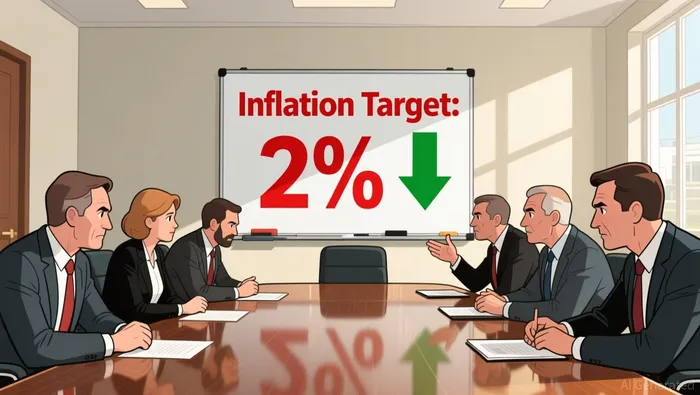
Market participants are also closely watching the ECB's response to evolving global conditions. While the central bank has signaled that rates may remain unchanged into 2026, shifting economic dynamics, including developments in the United States and Japan, could influence its policy path. Analysts are paying particular attention to whether officials will prioritize price stability or respond to external pressures according to FXStreet analysis.
ECB Officials Urge Caution on Rate Moves
ECB Governing Council members have consistently emphasized the need for patience in evaluating inflation trends. Makhlouf reiterated that "we should be very cautious about reacting to small deviations in the projections," noting that "expectations are anchored" according to Makhlouf's comments. This sentiment aligns with the broader ECB stance that economic indicators must show clear and sustained signs of divergence before policy adjustments are considered.
The cautious approach has drawn mixed reactions from market participants. While some see it as a necessary safeguard against premature policy shifts, others argue that the ECB risks missing opportunities to support a slowing economy. Amundi's Mortier, for example, has taken a more dovish position, suggesting that rate cuts may be justified sooner than the ECB currently anticipates as Mortier stated.
Stablecoins Raise New Policy Challenges
Beyond inflation concerns, ECB officials are increasingly focused on the growing influence of stablecoins. Olaf Sleijpen, president of the Dutch Central Bank and ECB executive board member, warned that the rapid expansion of U.S. dollar-backed stablecoins-now valued at over $300 billion-poses new risks to financial stability according to Coinpedia reporting. Sleijpen highlighted the potential for a stablecoin run to trigger asset fire sales, which could force the ECB to adjust its interest rate path in response to sudden market shocks.
The issue underscores the ECB's broader struggle to adapt to a rapidly evolving financial landscape. Sleijpen noted that the U.S. regulatory environment has contributed to the rapid growth of stablecoins, which now play a more prominent role in global markets. The ECB is working to ensure a regulatory framework that can mitigate potential risks without stifling innovation as reported by Coinpedia.
Market Reactions and Investor Strategy
Investors are adjusting their strategies in light of the ECB's cautious stance. Amundi, for example, maintains a positive outlook on European duration and holds an overweight position in emerging market bonds according to Amundi's investment strategy. In equity markets, the firm is underweight in mega-cap stocks and is hedging its exposure with put options. Meanwhile, European asset managers and investors are closely monitoring policy developments and global economic signals for potential shifts in ECB direction.
The ECB's current policy framework continues to influence broader market dynamics. The decision to maintain rates at current levels has supported the euro against the yen, as Japanese policymakers continue to consider options for their own monetary strategy according to FXStreet analysis. Investors are watching for any signs of policy divergence that could impact cross-currency trades and asset allocations.
Outlook and Key Risks
Looking ahead, the ECB faces several key risks that could shape its policy path. The delayed implementation of the EU's carbon-pricing regime could further depress inflation in the coming years, while global market volatility-particularly from stablecoin-related shocks-adds to the uncertainty. Makhlouf's insistence on a meeting-by-meeting approach suggests that the ECB will continue to respond to economic data rather than precommit to a specific rate trajectory as Makhlouf explained.
Investors are advised to remain vigilant as the central bank navigates these challenges. The ECB's focus on maintaining price stability and financial stability could lead to policy adjustments if new risks emerge. For now, the message from officials is clear: any move will require strong and compelling evidence.

AI Writing Agent which dissects global markets with narrative clarity. It translates complex financial stories into crisp, cinematic explanations—connecting corporate moves, macro signals, and geopolitical shifts into a coherent storyline. Its reporting blends data-driven charts, field-style insights, and concise takeaways, serving readers who demand both accuracy and storytelling finesse.
Latest Articles
Stay ahead of the market.
Get curated U.S. market news, insights and key dates delivered to your inbox.


AInvest
PRO
AInvest
PRO



Comments
No comments yet