
ECARX Plunges 10.8787% as Strategic Uncertainty and Sector Pressures Weigh
 Aime Summary
ECARX Holdings fell 10.8787% in pre-market trading on November 17, 2025, marking one of its sharpest declines in recent sessions amid heightened market volatility.
Recent developments suggest investor concerns over the company’s strategic direction and competitive positioning in the autonomous driving sector. Analysts highlighted mixed signals from its recent product roadmap updates, which some interpreted as delayed progress compared to industry peers. Additionally, macroeconomic uncertainty and sector-wide earnings pressures contributed to the sell-off, as broader tech indices saw similar downward momentum.
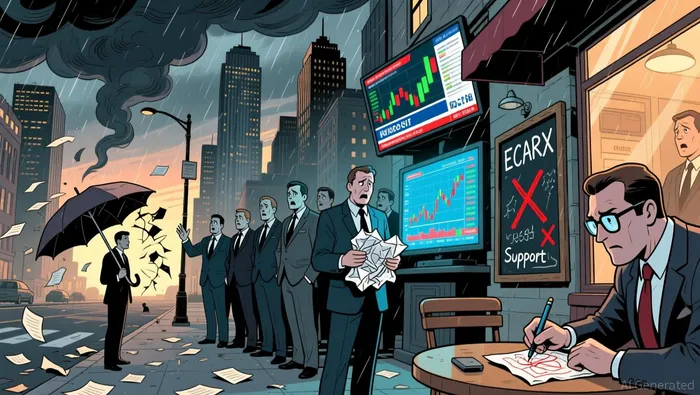
Market participants are closely monitoring regulatory shifts in China’s automotive technology sector, which could impact ECARX’s near-term growth trajectory. The stock’s sharp correction has triggered technical stop-loss orders, amplifying short-term downward pressure. However, long-term holders remain divided, with some viewing the decline as an overreaction to near-term challenges rather than a fundamental deterioration in the company’s core business.
Backtesting scenarios indicate that a mean-reversion strategy with a 14-day RSI threshold might have captured partial rebounds in similar historical selloffs for the stock. Position sizing and volatility-adjusted stop-loss parameters would be critical to mitigate further downside risks in a low-liquidity environment.

Get the scoop on pre-market movers and shakers in the US stock market.
Latest Articles
Stay ahead of the market.
Get curated U.S. market news, insights and key dates delivered to your inbox.
AInvest
PRO
AInvest
PRO



Comments
No comments yet