
eBay Defies Downgrades to Lead Market Turnover as $1.4 Billion Depop Gamble Weighs on Margins
 Aime Summary
Market Snapshot
eBay Inc. (NASDAQ: EBAY) concluded trading on August 4, 2026, with shares closing up 2.31%, defying the broader negative sentiment triggered by a wave of analyst downgrades earlier in the week. The stock experienced a notable contraction in trading activity, with total turnover reaching $0.50 billion, a sharp 29.52% decline from the previous day’s levels. Despite the reduced volume, the stock remained the most actively traded equity in the market for the session, indicating intense investor scrutiny and debate regarding the company’s near-term valuation. The closing price of approximately $107.13 placed the company near its 80-day moving average, a critical technical support level that has held firm against recent selling pressure. This modest gain comes after a turbulent period where the stock had dipped as much as 4.7% on Monday, driven by fears of margin compression. The resilience observed on August 4 suggests that while investors remain cautious, the panic selling has subsided, allowing the market to assess the fundamental implications of the company’s strategic shifts in a more measured manner.
Key Drivers
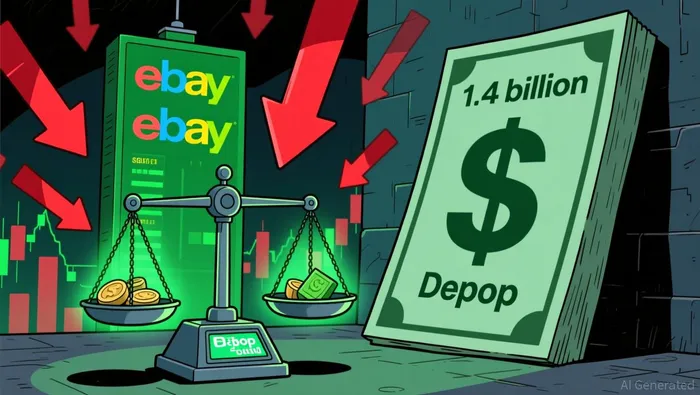
The primary catalyst for eBay’s recent volatility and subsequent analyst downgrades is the financial implications of its $1.4 billion acquisition of the fashion resale platform Depop. Citigroup initiated the downward revision by downgrading eBayEBAY-- from Market Outperform to Market Perform, citing a balanced risk-reward profile that no longer justifies premium valuation. The brokerage highlighted that intensifying competition in the online resale sector, particularly from Vinted, necessitates significantly higher marketing investments to defend market share. These elevated customer acquisition costs are expected to weigh heavily on profitability, a factor that current earnings models may not fully capture. The downgrade underscores a fundamental shift in investor perception: the narrative of seamless growth through Depop is now being weighed against the reality of expensive customer churn and competitive retention strategies in a maturing recommerce landscape.
Compounding the concerns over Depop is the aggressive expansion of rival Vinted into the United States market. Data indicates that Vinted’s paid search spending in the U.S. surged from approximately $16,000 in February to $236,000 in June, while simultaneously climbing to fifth place in Apple’s App Store rankings. This aggressive digital marketing push has forced eBay to respond with increased spending to maintain its position, with estimates suggesting Depop’s marketing expenditure could exceed $250 million in 2026, more than double the $119 million spent in 2025. Wells Fargo echoed these concerns, downgrading eBay to Underweight and cutting its price target to $92, noting that the necessary marketing spend to counter Vinted could dilute earnings in fiscal 2027. The competitive intensity in the secondhand fashion market is no longer a theoretical risk but a tangible drag on near-term margins.
Beyond the immediate competitive threats, there is growing skepticism regarding whether the market has priced in the capital intensity required for eBay’s growth strategy. eBay shares were trading at approximately 21 times the 2027 GAAP earnings estimate, a valuation that Citigroup and other analysts now view as fairly valued rather than attractive. The market is grappling with the tension between eBay’s long-term vision and short-term profit erosion. While the core marketplace business, particularly in collectibles and motors, remains resilient, the heavy reinvestment required for Depop and AI-enabled tools like Magical Listing and Agentic Search creates a complex margin profile. Investors are reassessing the timeline for earnings accretion, with many fearing that the path to profitability post-acquisition will be slower and more costly than previously anticipated.
Despite the bearish analyst consensus, which currently shows 18 Hold ratings against 13 Buy ratings, eBay’s stock has demonstrated significant year-to-date strength, climbing 27% from the start of 2026. This divergence between long-term performance and recent negative sentiment highlights a market that is currently in a price-discovery phase. The upcoming second-quarter earnings report on August 5 serves as the immediate focal point for resolving these uncertainties. With consensus estimates pegged at $3.02 billion in revenue and $1.51 in non-GAAP EPS, the market is looking for concrete evidence that eBay can manage the Depop integration without sacrificing overall financial health. Any deviation from these estimates, particularly regarding marketing spend guidance, could further exacerbate the stock’s volatility.
Finally, macroeconomic and regulatory headwinds add another layer of complexity to eBay’s outlook. The European Union’s imposition of a €3 customs duty on low-value parcels has introduced friction into cross-border transactions, potentially dampening buyer demand and seller activity in international markets. While the U.S. business remains comparatively resilient, the softer consumer confidence in Europe poses a risk to the company’s global growth trajectory. Additionally, the stock faces significant technical resistance around the $119 region, its record high from May, suggesting that any recovery rally may face substantial selling pressure. As the market digests the latest analyst reports and prepares for earnings, the interplay between competitive spending, regulatory changes, and execution capability will dictate eBay’s trajectory in the coming months.

Stay ahead of the market.
Get curated U.S. market news, insights and key dates delivered to your inbox.


AInvest
PRO
AInvest
PRO




Comments
No comments yet