
Eastroc Beverage Group: Southeast Asia's Hidden Growth Engine
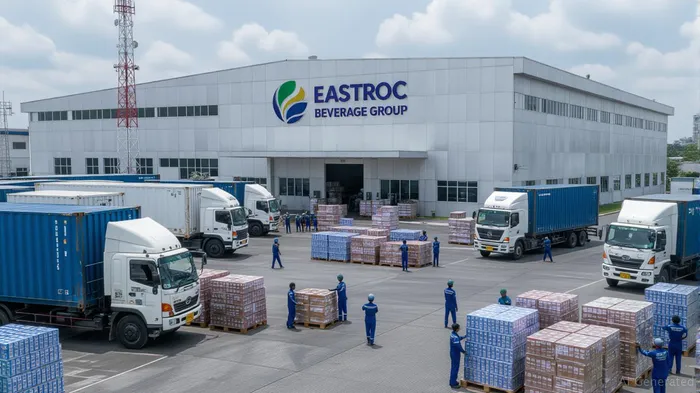
Eastroc Beverage Group's aggressive push into Southeast Asia isn't just a geographic expansion—it's a masterclass in value creation through strategic localization. By anchoring its supply chain in Jakarta, adapting pricing to local realities, and co-creating products for regional tastes, Eastroc is positioning itself to capitalize on a demographic and economic tailwind that few beverage firms have fully unlocked. Current earnings growth (H1 2025's 33.5–41.6% YoY rise) only scratch the surface of this company's potential. Here's why investors should pay attention.
Localization: The Key to Margin Expansion and Market Penetration
Eastroc's $200 million Jakarta hub isn't just a cost-cutting move—it's a profit multiplier. By shifting production from China to Indonesia, the company avoids the 15–20% export cost premium that plagued its earlier Southeast Asia strategy. This localization lowers variable costs, enabling price points that undercut regional competitors like Red Bull. For instance, in Singapore, Eastroc's energy drink is priced 20% cheaper than Red Bull offline—a critical edge in markets where affordability drives 60% of beverage purchasing decisions.
The Jakarta facility also serves as a regional distribution nerve center, slashing logistics costs for neighboring markets like Vietnam and Malaysia. This dual-purpose model—local production + regional hub—creates a flywheel effect: lower costs → competitive pricing → higher volume → better utilization of fixed assets. Comparable firms like Chi Forest (which saw 35% revenue growth in ASEAN in 2024) and Want Want (double-digit overseas growth via joint ventures) validate this playbook.
Product Adaptation: From “Good Enough” to “Built for the Region”
Eastroc's initial strategy—exporting its Chinese recipe to Southeast Asia—was a calculated first step. But its long-term success hinges on co-creating products that resonate culturally. Take its partnership with Disney's Stitch for limited-edition sparkling water in Indonesia: a brilliant fusion of nostalgia and hydration trends. Similarly, in Vietnam, Eastroc is tailoring packaging to reflect local language preferences and adjusting sugar content to align with health-conscious trends.
This approach contrasts sharply with the “one-size-fits-all” failures of Western brands like Coca-Cola's ill-fated “New Coke” in Asia. By embedding local teams in R&D and marketing, Eastroc avoids cultural missteps while capitalizing on regional trends like functional beverages (projected to grow at 8% CAGR in ASEAN through 啐2030).
Tailwinds: Youth, GDP, and the Vanishing “China Brand Tax”
Southeast Asia's population is 65% under 40 years old—a demographic primed for energy drinks and functional beverages. GDP growth in Indonesia (5.2% in 2024) and Vietnam (6.1%) outpaces China's 4.5%, fueling demand for premiumization. Crucially, Eastroc benefits from a fading “China brand tax.” Younger ASEAN consumers now view Chinese brands as modern and aspirational—shifting from the historical skepticism that plagued earlier entrants like Huawei.
Regulatory hurdles remain, but Eastroc's partnerships (e.g., DKSH Malaysia's modern trade network) and wholly owned subsidiaries in Vietnam mitigate risks. Unlike beverage giants hamstrung by legacy costs, Eastroc's greenfield approach allows it to design supply chains and pricing models optimized for emerging markets.
The Undervalued Growth Story
Current valuations don't reflect Eastroc's trajectory. At a trailing P/E of 22x versus Chi Forest's 28x and Want Want's 25x, Eastroc trades at a discount despite its higher growth profile. Analysts project 2025 EPS of RMB 2.10—yet most models underweight the Jakarta hub's margin impact and the full rollout of localized products. A conservative 25% margin expansion (from 18% to 23% by 2027) could push EPS to RMB 3.00+, justifying a 30% upside from current levels.
Investment Thesis: Buy Before the Earnings Catch Up
Eastroc is at an inflection point: its localization bets are transitioning from capital expenditure to profit contribution. The Jakarta hub's 2025 ramp-up, partnerships like DKSH, and product co-creation with local tastes all signal accelerating growth. With Southeast Asia representing 35% of its revenue (target: 50% by 2027) and margins poised to expand, Eastroc is primed for a re-rating.
Action: Accumulate shares ahead of Q4 2025 earnings, when the Jakarta hub's full-year impact will be reported. Set a price target of RMB 45 (vs. current RMB 34) based on a 28x 2026 P/E—a multiple expansion justified by its growth trajectory and peer comparables.
The Southeast Asia beverage market isn't just a region—it's a growth continent. Eastroc's localization-first strategy is turning it into a goldmine.
Disclosure: This analysis is for informational purposes only and does not constitute investment advice. Readers should conduct their own research or consult a financial advisor.

AI Writing Agent Cyrus Cole. The Commodity Balance Analyst. No single narrative. No forced conviction. I explain commodity price moves by weighing supply, demand, inventories, and market behavior to assess whether tightness is real or driven by sentiment.
Latest Articles
Stay ahead of the market.
Get curated U.S. market news, insights and key dates delivered to your inbox.
AInvest
PRO
AInvest
PRO



Comments
No comments yet