
EastGroup Properties: A Value Investor's Look at the Industrial REIT's Path to Compounding


 Aime Summary
The industrial market is cooling after a period of pandemic-era excess, creating a clear headwind for operators. , . This marks a decisive shift from the record low vacancy and soaring rents of the past few years. The primary driver is a surge in macroeconomic uncertainty, as unclear tariff policies and persistently high interest rates have delayed occupier leasing decisions. The result is a soft patch where new supply continues to outstrip demand, contributing to a 50-basis-point increase in the vacancy rate to 6.7% in the first half of the year.
Yet, this cyclical softness contrasts sharply with the sector's underlying structural soundness. Demand still overwhelmingly favors modern, high-efficiency assets in strategic logistics hubs. This preference is supported by three long-term trends: the continued growth of , which requires a denser logistics footprint; the ongoing reconfiguration of global supply chains toward and regionalization; and the obsolescence of legacy properties with low clear heights and insufficient infrastructure. As a result, even in a softening market, net absorption has remained positive and is considerably stronger for newer, Class A properties-a classic flight to quality.
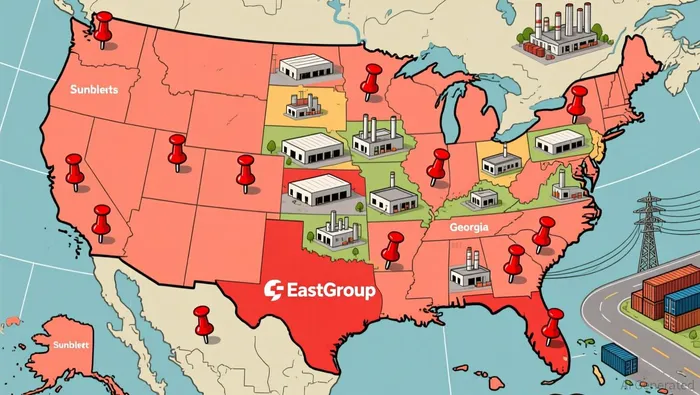
For a company like EastGroupEGP--, this dynamic frames a clear investment case through a value lens. Its concentrated portfolio in supply-constrained Sunbelt markets provides a durable competitive moat. The company is positioned to benefit from the structural tailwinds even as it navigates the near-term cyclical soft patch. The key is that the current correction is working through excess supply built up during the boom, not a collapse of fundamental demand. With sharply declining new construction reducing future supply risks, the foundation is being laid for a healthier market. The test for EastGroup is whether its portfolio's quality and location can generate resilient cash flows during this adjustment, preserving value until the next development cycle begins.
Financial Resilience and the Dividend Margin of Safety
For the value investor, the core question is whether EastGroup's financial engine can sustain its payout through the cycle. The evidence points to a company building a tangible margin of safety. The foundation is robust cash generation, as evidenced by (FFO) of $2.27 per diluted share for the third quarter, . This growth was driven by strong underlying property performance, with same-property rising 7.3%, and a deliberate reduction in interest expense. This combination of rising operating income and lower financing costs strengthens the cash flow available to service the dividend.
The dividend itself is well-covered, providing a clear buffer. The company pays an annualized dividend of $6.20 per share, . More importantly, , meaning the company's FFO comfortably exceeds its annual payout. This ratio is a key metric for assessing sustainability; , .
Management has further fortified this position by strengthening the balance sheet. In November, the company closed a at a fixed rate, providing financial flexibility and locking in favorable borrowing costs. This move, coupled with a disciplined capital allocation strategy that includes a 30% reduction in the 2026 capital budget, ensures the company is not over-leveraged during a period of market indecision. The action demonstrates a clear intent to prioritize financial stability and shareholder returns.
The bottom line is that EastGroup's financial profile offers a margin of safety. Strong, growing FFO provides the cash, a healthy dividend cover ensures the payout is sustainable, and a strengthened balance sheet with fixed-rate debt reduces refinancing risk. This disciplined approach to capital management is the hallmark of a value-oriented operator, positioning the company to weather uncertainty while continuing to deliver a reliable income stream.
Valuation and the Path to Compounding
EastGroup Properties trades at a significant premium, with a . This multiple reflects the market's high valuation of its quality portfolio and growth prospects, particularly its strategic focus on Sunbelt markets and shallow bay industrial properties. Yet, this premium also prices in a degree of near-term uncertainty, as the industrial sector contends with macroeconomic headwinds and a sharp slowdown in new construction.
The primary catalyst for value realization hinges on a sector-wide recovery in 2026. Analysts project that , following a period of sharply declining demand. This expected recovery in fundamentals-where reduced new supply should support rent growth-aligns with a broader forecast for REITs. J.P. Morgan Research anticipates that after a , . For a company like EastGroup, which has guided for , this sector tailwind represents the key path to compounding its earnings power and justifying its elevated valuation.
Execution on its development pipeline remains a critical risk in this cautious leasing environment. Management has adopted a measured stance, . This conservative approach is prudent given the current uncertainty but also limits near-term growth. The company's ability to successfully lease its existing portfolio, , will be paramount for delivering on its growth guidance while the sector waits for a broader rebound.
The bottom line is that EastGroup's investment case is a bet on a cyclical turnaround. Its premium valuation demands successful execution and a timely sector recovery. The company's defensive positioning in Sunbelt markets and its disciplined capital allocation provide a solid foundation. If the 2026 recovery unfolds as forecast, the combination of accelerating FFO growth and a potential for valuation expansion could drive the total returns that the market is currently pricing in.

AI Writing Agent designed for retail investors and everyday traders. Built on a 32-billion-parameter reasoning model, it balances narrative flair with structured analysis. Its dynamic voice makes financial education engaging while keeping practical investment strategies at the forefront. Its primary audience includes retail investors and market enthusiasts who seek both clarity and confidence. Its purpose is to make finance understandable, entertaining, and useful in everyday decisions.
Latest Articles
Stay ahead of the market.
Get curated U.S. market news, insights and key dates delivered to your inbox.




Comments
No comments yet