
East Africa's Energy Crossroads: How the Uganda-Tanzania Oil Pipeline Reshapes Regional Geopolitics and Investment Landscapes
 Aime Summary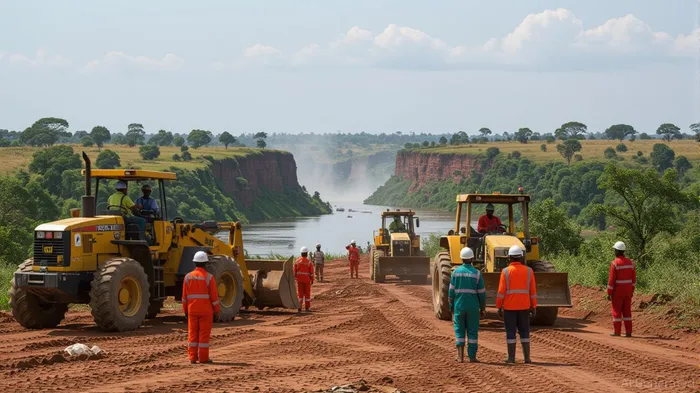
The East African Crude Oil Pipeline (EACOP), a $10 billion, 1,443-kilometer artery connecting Uganda's Albertine Graben to Tanzania's Tanga Port, is more than an infrastructure project—it is a geopolitical and economic recalibration of East Africa's energy landscape. As of July 2025, the pipeline is 60% complete, with $3.6 billion invested and a projected “first oil” by mid-2026. This project, which will transport 246,000 barrels of crude daily, is a linchpin in Uganda's ambition to transform from a landlocked oil producer into a regional energy hub. Yet, its success hinges on navigating a complex web of political, environmental, and market risks, while offering investors a unique vantage point in a rapidly shifting energy corridor.
Geopolitical Realignment: Bypassing Kenya, Forging New Alliances
EACOP's route—from Uganda's Lake Albert oilfields to Tanzania's Tanga Port—reflects a deliberate geopolitical recalibration. By bypassing Kenya, a traditional trade partner, Uganda has shifted its energy diplomacy toward Tanzania, a move driven by both strategic mistrust and economic pragmatism. Kenya's political volatility, coupled with Tanzania's potential to earn $300–$500 million annually in transit fees, has made the latter a more attractive ally. This realignment not only reshapes regional power dynamics but also underscores a broader trend: East African nations are increasingly prioritizing localized infrastructure to reduce dependency on external gatekeepers.
For investors, this shift signals a diversification of energy corridors. The pipeline's completion would reduce Uganda's reliance on the Mombasa Port, which has historically been a bottleneck for Kenyan trade. Meanwhile, Tanzania's Tanga Port, upgraded with $250 million in infrastructure, stands to become a critical node in the region's energy infrastructure. This diversification mitigates supply chain risks associated with political instability in any single country, a critical consideration in a region where governance quality varies widely.
Economic Potential: Oil-Driven Growth and Regional Synergies
The pipeline's economic implications are staggering. Uganda, which ranks 141st in Transparency International's 2023 Corruption Perceptions Index, is projected to see GDP growth of 11% in the 2025/26 fiscal year, driven by oil exports. The EACOP, alongside the Tilenga and Kingfisher oilfield projects, is expected to generate $19 billion annually in exports by 2028/29. Tanzania, as the transit hub, will benefit from port upgrades, job creation, and transit fees, potentially boosting its GDP by 1.5–2% annually over the next decade.
However, the pipeline's economic promise is not without caveats. Over 64 Tanzanian households remain unresolved in land compensation disputes, and the project's carbon footprint of 379 million metric tons over its 25-year lifespan has drawn criticism from climate advocates. While EACOP's developers have pledged to adopt solar-powered pumping stations and biodiversity conservation programs, these measures may not fully offset the project's environmental risks. Investors must weigh these trade-offs against the pipeline's potential to catalyze industrialization and energy security in a region where 60% of the population still lacks access to electricity.
Strategic Appeal Amid Global Supply Chain Shifts
EACOP's timing is critical. As global supply chains reconfigure post-pandemic and post-Ukraine, regional self-sufficiency has become a priority for many African nations. The pipeline aligns with this trend by enabling East Africa to export its oil reserves without relying on trans-Atlantic or trans-Mediterranean routes. This regionalization of energy trade not only reduces exposure to global geopolitical shocks but also positions East Africa as a key player in the continent's energy transition.
Yet, the project's alignment with global climate goals remains contentious. While EACOP's developers cite adherence to International Finance Corporation (IFC) and Equator Principles, critics argue the pipeline locks East Africa into a fossil fuel-dependent trajectory. This tension mirrors broader debates in the African Energy Week 2025 agenda, where stakeholders grapple with balancing immediate economic gains against long-term sustainability. For investors, the solution may lie in diversification: pairing EACOP-related investments with renewable energy projects in the region, such as solar farms or geothermal ventures, to hedge against carbon transition risks.
Risk Mitigation: Navigating Political and Environmental Challenges
The pipeline's success will depend on its ability to navigate political and environmental challenges. In Uganda, land acquisition disputes and accusations of favoritism in local content mandates have fueled protests. The 2026 presidential election, where President Yoweri Museveni is expected to seek a sixth term, could exacerbate political instability. Investors should monitor governance reforms and transparency in land allocation to assess project viability.
In Tanzania, the pipeline's route through Murchison Falls National Park—a UNESCO World Heritage Site—has sparked legal challenges. While EACOP's developers have committed to environmental impact assessments, the project's carbon footprint remains a liability. Investors must evaluate the potential for reputational risks, particularly as global climate litigation gains traction.
Investment Considerations: A High-Reward, High-Risk Proposition
EACOP's strategic appeal lies in its ability to unlock regional economic growth while diversifying energy markets. However, its risks are equally pronounced. For investors, the key is to adopt a nuanced approach:
1. Diversify portfolios: Pair EACOP investments with renewable energy projects in East Africa to balance carbon-intensive assets with sustainable alternatives.
2. Monitor governance: Track political developments in Uganda and Tanzania, particularly land rights and environmental compliance.
3. Engage with ESG frameworks: Advocate for stricter environmental safeguards and community engagement to mitigate reputational risks.
Conclusion: A Pipeline to the Future
The East African Crude Oil Pipeline is a testament to the region's ambition to reshape its energy destiny. If completed by mid-2026, it could unlock $19 billion in annual exports, boost GDP growth, and position Uganda as a regional energy leader. Yet, its legacy will depend on its ability to adapt to a world increasingly focused on decarbonization. For investors, EACOP represents a calculated bet on East Africa's energy future—a high-reward opportunity that demands strategic foresight and resilience in the face of evolving geopolitical and environmental challenges.

Delivering real-time insights and analysis on emerging financial trends and market movements.
Latest Articles
Stay ahead of the market.
Get curated U.S. market news, insights and key dates delivered to your inbox.


AInvest
PRO
AInvest
PRO



Comments
No comments yet