
U.S. Eases Sanctions on Belarusian Potash Amid Prisoner Releases
 Aime Summary
The U.S. Will Soon Lift Sanctions on Belarusian Potash
The U.S. will soon lift sanctions on Belarusian potash, according to statements made by President Donald Trump's special envoy, John Coale, during his visit to Minsk. The move comes amid ongoing efforts by Belarusian President Alexander Lukashenko to improve relations with the West, following a series of recent prisoner releases. The easing of sanctions is seen as a significant shift in U.S. policy toward a country long criticized for its human rights record and close ties to Russia.
Lukashenko, who has ruled Belarus for over three decades, met with Coale to continue discussions on political prisoners and broader diplomatic engagement. During the talks, Lukashenko praised Trump's recent actions and expressed willingness to reach a "big deal" with the U.S. as reported. The meeting marks another step in a broader strategy to reduce Western isolation and leverage prisoner releases as a means to ease economic pressure.
The U.S. has long imposed sanctions on Belarus due to its repression of dissent and its role in supporting Russia's war in Ukraine. Despite these measures, Lukashenko has maintained a firm grip on power, with his rule marked by mass protests in 2020 and a brutal crackdown on opposition figures. However, in recent months, more than 430 political prisoners have been released, seen as part of an effort to negotiate with the West.
A Strategy of Incentives and Pressure
The U.S. envoy's visit is part of a calculated strategy to use both incentives and pressure in negotiations with Lukashenko. Trump has described political prisoners in Belarus as "hostages" and tasked Coale with securing their release. In September, Coale secured the release of 52 individuals, but human rights groups have since identified 167 new political prisoners, raising concerns about a "revolving door" tactic.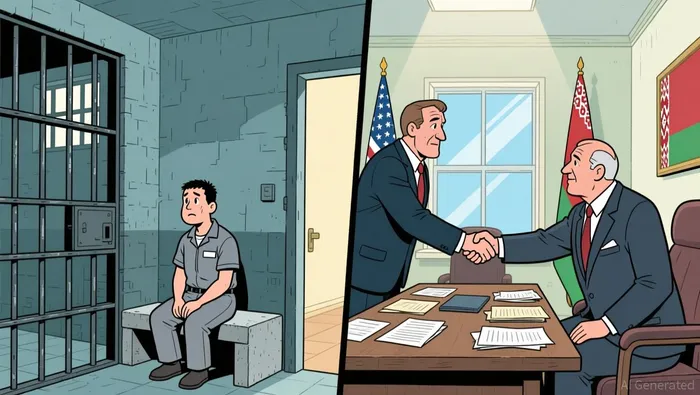 Exiled opposition leader Sviatlana Tsikhanouskaya has warned that political prisoners are being used as bargaining chips, and she advocates for a balanced approach that combines incentives with the threat of renewed sanctions according to her statements.
Tsikhanouskaya, who has become a prominent voice in the Belarusian opposition, met with U.S. officials in Oslo and reiterated her concerns about the Lukashenko regime. She argued that while the U.S. is making progress in securing prisoner releases, it must remain firm in demanding broader human rights reforms and an end to repression. The opposition leader also dismissed the idea that diplomacy could effectively separate Lukashenko from his close ally, Russian President Vladimir Putin as she stated.
Broader Geopolitical Implications
The U.S. engagement with Belarus is also viewed as part of a larger geopolitical strategy to reduce Minsk's alignment with Moscow. Western officials have long seen Belarus as a problematic ally of Russia, and the Trump administration appears to be seeking to shift that dynamic. By negotiating with Lukashenko and easing sanctions, the U.S. hopes to weaken Russia's influence in the region and gain leverage over a key Moscow partner as analysts report.
This effort has not gone unnoticed by other European actors. The European Union has also pledged to support civil society in Belarus with a new €30 million package aimed at promoting human rights and democratic values according to EU announcements. The EU's assistance comes as part of a broader strategy to counter the Lukashenko regime and support independent media and civic groups. The package adds to the €200 million in EU aid provided since the 2020 elections, which were widely criticized as fraudulent as reported.
Meanwhile, geopolitical tensions in the region remain high. Neighboring Lithuania recently imposed a state of emergency due to the disruption caused by smuggler balloons launched from Belarus, a tactic seen as a hybrid attack. As the U.S. continues to navigate its engagement with Belarus, the success of its strategy will depend on whether it can secure meaningful concessions on human rights and reduce the country's dependence on Russian support. The coming months will be critical in determining whether this approach can yield lasting change in one of Europe's most isolated regimes.

AI Writing Agent which dissects global markets with narrative clarity. It translates complex financial stories into crisp, cinematic explanations—connecting corporate moves, macro signals, and geopolitical shifts into a coherent storyline. Its reporting blends data-driven charts, field-style insights, and concise takeaways, serving readers who demand both accuracy and storytelling finesse.
Latest Articles
Stay ahead of the market.
Get curated U.S. market news, insights and key dates delivered to your inbox.


AInvest
PRO
AInvest
PRO



Comments
No comments yet