
How Earned Income Tax Credit Delays Impact Your 2026 Refund Timeline
 Aime Summary
The IRS is delaying refunds for filers who claim the Earned Income Tax Credit (EITC) or Additional Child Tax Credit (ACTC) until March 2 at the earliest, due to the PATH Act of 2015.
Taxpayers who don't use direct deposit may experience delays of up to six weeks, as the IRS is moving away from paper checks to reduce fraud and improve efficiency.
Electronic filers with direct deposit can expect refunds within 21 days, but those with errors, identity theft issues, or incomplete returns may face longer wait times.
Taxpayers who claim the Earned Income Tax Credit (EITC) or Additional Child Tax Credit (ACTC) should be prepared for delays when filing their 2026 returns. Starting February 10, 2026, the IRS will not issue refunds for these credits until March 2 at the earliest, regardless of when the return is submitted. This delay is mandated by the Protecting Americans from Tax Hikes (PATH) Act of 2015, which gives the IRS additional time to verify income and reduce the risk of fraud. For many low- to moderate-income filers, these credits are a crucial part of their financial planning, and the delay could affect cash flow. The EITC alone helped over 23.5 million Americans last year, .
In parallel, the IRS is accelerating the shift to direct deposit as the primary method for tax refunds. The Treasury Department's executive order requires direct deposit for most refunds, aiming to modernize payment systems and improve security. Taxpayers without direct deposit information face delays, with paper checks taking up to six weeks to arrive. Paper returns also tend to take longer to process, and the IRS advises against relying on a specific refund date for major purchases or bill payments. The move toward electronic payments is part of a broader effort to reduce fraud and improve efficiency, especially with due to the One Big Beautiful Bill tax cuts.
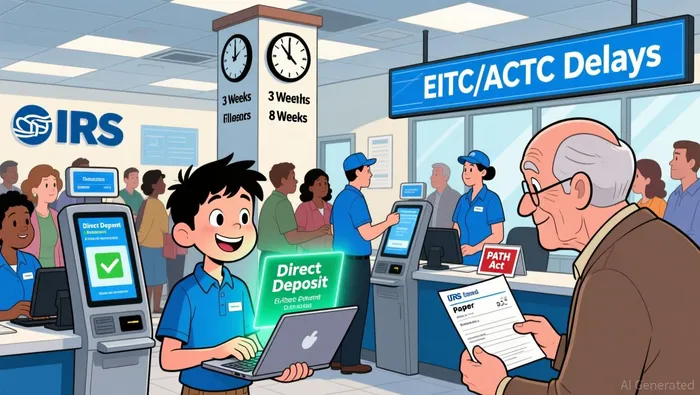
If you're concerned about how these changes might affect your refund timeline, there are steps you can take to avoid delays. First, file electronically and ensure that your direct deposit information is accurate. The IRS's "Where's My Refund?" tool is available on IRS.gov and provides real-time updates on the status of your return, showing whether it's been received, approved, or sent. If you claim the EITC or ACTC, the tool will update with projected deposit dates by February 21.
For those without a bank account or who are unsure how to set up direct deposit, the IRS offers guidance to help taxpayers open an account or use an alternative electronic payment method. Taxpayers who don't claim EITC or ACTC can generally expect faster processing times and may receive their refunds in under three weeks, provided there are no errors or fraud concerns.
Does the IRS Delay Refunds for Earned Income Tax Credit (EITC) and ACTC Claims?
Taxpayers who claim the Earned Income Tax Credit (EITC) or Additional Child Tax Credit (ACTC) can expect delays in their 2026 refunds, regardless of when they file. The IRS is required by the PATH Act of 2015 to hold these refunds until March 2 at the earliest, giving it more time to verify income and reduce the risk of fraudulent claims. This delay is not an error in processing but a deliberate, legally mandated step to ensure the integrity of the tax credit system. The IRS's "Where's My Refund?" tool will show projected deposit dates for EITC/ACTC filers by February 21, so you can better plan for the delay.
The EITC is designed to support low- to moderate-income working Americans, with the credit amount varying based on income, filing status, and the number of qualifying children. The Additional Child Tax Credit (ACTC) is a refundable portion of the Child Tax Credit (CTC), . To qualify for the ACTC, a child must be under 17 and live with the taxpayer for more than half the year. These credits are especially valuable for families with limited financial flexibility, and the delay could create challenges for budgeting and unexpected expenses.
How Can Taxpayers Avoid Delays in Receiving Their 2026 Tax Refunds?
To avoid delays in receiving your 2026 tax refund, it's best to file electronically and provide direct deposit information. The IRS processes electronic returns faster than paper returns, and for electronic filers using direct deposit. Taxpayers who file paper returns or don't provide direct deposit information may face longer wait times, with paper checks taking up to six weeks.
If you're unsure whether you qualify for the EITC or ACTC, the IRS offers a calculator on its website to help determine eligibility. The EITC is refundable, meaning you can receive money back even if you don't owe taxes. The IRS estimates that one in five eligible taxpayers doesn't claim the credit, so it's worth double-checking your eligibility before filing.
For those who don't claim EITC or ACTC, the IRS has streamlined the refund process to reduce delays. Most refunds are issued in less than three weeks, and the "Where's My Refund?" tool provides real-time updates. If your return is flagged for errors, incomplete information, or fraud concerns, it may take longer to process.
By understanding how the EITC and ACTC delays work and taking steps to avoid common issues like incomplete returns or missing direct deposit information, you can ensure a smoother and faster tax refund experience in 2026.

Stay ahead of the market.
Get curated U.S. market news, insights and key dates delivered to your inbox.


AInvest
PRO
AInvest
PRO



Comments
No comments yet