
How to Value Early-Stage Mining Projects: Navigating the Price Sensitivity Gap
Investing in early-stage mining projects offers the potential for massive returns, but it also carries unique risks that differ significantly from trading established stocks. A primary challenge for investors is the 'Price Sensitivity Gap'—the phenomenon where a company's valuation swings wildly based on minor fluctuations in commodity prices, despite the project being years away from production. Understanding this concept is crucial for making informed decisions in the resource sector.
At its core, the Price Sensitivity Gap refers to the extreme volatility in a mining company's valuation relative to the current market price of the metal or mineral it intends to extract. Early-stage projects have no revenue; their value is based entirely on the future potential of the deposit. Therefore, their valuation is highly sensitive to the long-term forecast of commodity prices. 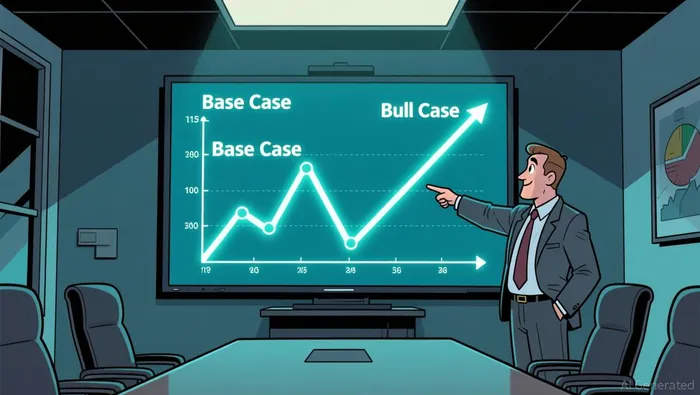 A small 5% increase in the expected price of copper or gold can theoretically double the estimated value of a deposit, while a 5% drop can render a project unprofitable. This creates a wide gap between the 'base case' valuation (using average prices) and the 'bull case' (using optimistic prices), making it difficult to pin down a fair price for the stock.
To navigate this gap, investors must look beyond simple price tags and focus on the project's 'All-In Sustaining Costs' (AISC). AISC represents the total cost to produce one ounce of gold or one pound of copper, including mining, processing, and administrative expenses. The strategy involves calculating the project's profit margin at various commodity price scenarios. If a project has low AISC, it can remain profitable even if metal prices drop, reducing the impact of the sensitivity gap. Conversely, high-cost projects are fragile. Investors should prioritize companies that have conducted thorough feasibility studies and have clear pathways to reducing costs before construction begins.
Consider the case of a hypothetical junior miner, 'Northern Gold Corp,' in 2021. At the time, gold was trading at $1,800 per ounce. The company's shares traded at $0.50 based on a base-case model assuming gold stays at $1,800. However, when gold prices spiked to $2,000, Northern Gold's valuation jumped 60% almost overnight, despite no new geological data being released. This was the Price Sensitivity Gap in action. The market re-rated the entire project based on the improved profitability margin. However, when gold later corrected to $1,700, the stock fell 40%. This volatility illustrates why investing based solely on current spot prices is risky; the real value lies in the project's cost structure and long-term price resilience.
However, relying on this concept carries significant risks. The biggest danger is the 'commodity price trap,' where investors overestimate future prices based on temporary market booms. Additionally, early-stage projects face execution risks, including permitting delays, environmental hurdles, and geological uncertainties. If a project fails to secure necessary permits or encounters unexpected geological issues, the sensitivity gap becomes irrelevant because the asset may become worthless regardless of commodity prices.
To mitigate these risks, investors must conduct thorough due diligence. This includes analyzing the company's balance sheet to ensure they have enough cash to reach production without diluting shareholders. It is also vital to diversify your portfolio; do not put all your capital into a single junior miner. Always understand the break-even price of the project and ensure it has a significant margin of safety against price drops.
In conclusion, the Price Sensitivity Gap is a defining feature of early-stage mining investing. It creates opportunities for high returns but demands a disciplined approach focused on cost structures rather than just current metal prices. By understanding the relationship between commodity forecasts and operational costs, investors can better navigate the volatility and identify projects with genuine long-term value.

Stay ahead of the market.
Get curated U.S. market news, insights and key dates delivered to your inbox.


AInvest
PRO
AInvest
PRO



Comments
No comments yet