
EA Tops Trading Leaderboard With $1.02B Volume As EU Clearance Seals $55B Takeover
 Aime Summary
Market Snapshot
Electronic Arts Inc. (NASDAQ: EA) concluded trading on July 31, 2026, with a modest gain, reflecting a market that is largely pricing in the imminent conclusion of its high-profile takeover bid. The stock rose 0.13 percent by the close of the session, continuing its convergence toward the acquisition price as regulatory uncertainty dissipates. Trading activity was notably vigorous, with the company recording a total transaction value of $1.02 billion. This volume placed Electronic ArtsEA-- at the top of the daily trading leaderboard, indicating heightened investor interest and liquidity as market participants adjust positions ahead of the expected deal closure. The slight upward movement suggests that while the stock is nearing its floor, there remains residual speculative activity and cautious optimism surrounding the final steps of the transaction. The trading volume significantly outpaced average daily metrics, underscoring the intense focus on the completion of the $55 billion all-cash deal, which is now viewed as a near-certainty rather than a speculative outcome.
Key Drivers
The primary catalyst driving the recent market sentiment for Electronic Arts is the successful navigation of the final major regulatory hurdle in the European Union. On Friday, a filing by the European Commission confirmed that the bloc’s Foreign Subsidies Regulation (FSR) review has been concluded, granting approval for the acquisition led by Saudi Arabia’s Public Investment Fund (PIF). This regulatory clearance was widely anticipated to be the most significant obstacle, given the FSR’s mandate to prevent unfair non-EU subsidies from distorting competition within the 27-country bloc. The completion of this review, following earlier approval under standard EU merger rules last week, means that Electronic Arts has now secured all necessary regulatory consents. The company confirmed in an SEC filing on Thursday that it expects the merger to close on or about August 4, 2026. This definitive timeline has effectively eliminated the risk of regulatory delays or a failed transaction, allowing the stock price to stabilize firmly near the $210 per share acquisition price.
The structural composition of the acquiring consortium has also been clarified, providing further clarity on the future governance of the video game giant. The $55 billion all-cash deal involves a group of investors where Saudi Arabia’s PIF will take a dominant 93.4 percent stake. The remaining equity will be split between Silver Lake, an investment firm, which will hold 5.5 percent, and Affinity Partners, led by Jared Kushner, which will retain 1.1 percent. This structure highlights the PIF’s aggressive strategy to establish itself as a global hub for gaming and sports, betting on the enduring value of blockbuster franchises despite a prolonged industry downturn. The involvement of these specific private equity partners signals a shift toward a more consolidated ownership model, which may influence long-term strategic directions, particularly regarding the development of major titles and studio operations.
Despite the positive regulatory news, analyst sentiment remains cautious, with a consensus "Hold" rating and an average target price of $201.42, which sits below the current acquisition consideration. This discrepancy reflects the limited upside potential for shareholders as the stock price is already arbitraging close to the deal value. However, unusual options activity suggests that some traders are positioning for final gains or confirming the deal’s success. Data indicates that 6,913 call options were purchased, more than double the typical daily volume of 3,137 contracts. While this speculative interest highlights continued engagement from the market, it also underscores that the fundamental price movement is driven by the certainty of the buyout rather than organic growth expectations or new product announcements.
The acquisition has not been without controversy, generating significant reputational pressure on the company’s leadership. Recent reports have highlighted a stark contrast between executive compensation and workforce reductions. CEO Andrew Wilson received approximately $38.7 million last year, a figure that includes an $8 million bonus increase, while the company simultaneously executed layoffs among its development teams. Furthermore, Wilson is poised to receive an additional $125 million in severance as the buyout approaches. This disparity has drawn criticism from developers and investors alike, raising concerns about management incentives and workforce stability. Although these issues are unlikely to alter the financial terms of the $55 billion deal, they contribute to a complex narrative surrounding the transaction, balancing the financial closure against broader social and corporate governance concerns within the gaming community.
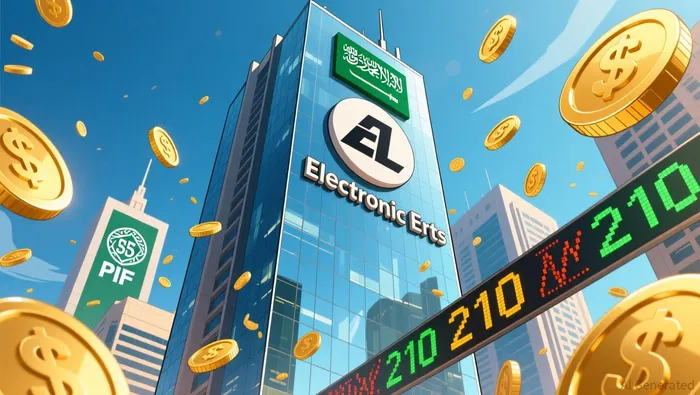
Ultimately, the market’s reaction to Electronic Arts is defined by the transition from a public entity to a private one under state-backed ownership. The convergence of the stock price to the $210 offer price, coupled with the highest trading volume in the market, indicates that investors are finalizing their positions in anticipation of the August 4 closure. The removal of regulatory risk has been the dominant factor, allowing the stock to shed its volatility premium. As the deal moves toward completion, the focus will shift from regulatory compliance to the operational strategies of the new ownership structure, particularly as Saudi Arabia’s PIF seeks to leverage its capital to diversify its economy beyond oil into the gaming and sports sectors.

Stay ahead of the market.
Get curated U.S. market news, insights and key dates delivered to your inbox.


AInvest
PRO
AInvest
PRO




Comments
No comments yet