
EA Is Now Saudi-Owned: $55B Buyout Leaves a Debt Hangover Over Live-Market Loot Boxes


 Aime Summary
EA is now private, and the financing structure is the real story
The shareholders' cash-out has closed, but EA's financing burden has not gone away. The deal shut at the close of trading on August 4, 2026, ending EA's 35-year run as a publicly traded company and putting a privately owned EAEA-- behind the wheel.
This was not a quiet handoff to another public owner. EA said the buyer group was pursuing the largest leveraged buyout ever recorded, and the transaction closed after the remaining regulatory hurdles were cleared. In practical terms, borrowed money is now part of the operating backdrop rather than just a financing footnote.
The price paid to public holders was substantial: $210 per share in cash, a 25% premium to the unaffected share price, in a deal billed as the largest all-cash sponsor take-private investment in history. That exit premium creates a clear cash-flow test for the new owners. Once a company is bought at that scale, every franchise release has to serve two masters: player demand and debt service.
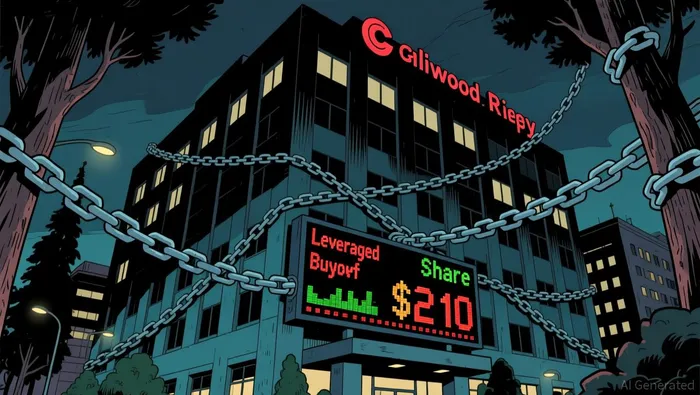
The supplied materials do not break out the exact equity-and-debt structure, but the transaction is still best understood through the LBO lens: a significant amount of borrowed money changes incentives. That setup typically pushes management toward steadier cash generation, live-market monetization, and cost control - and it raises the cost of mistakes at a time EA had already flagged declining demand for soccer-themed video games.
Saudi ownership changed the backdrop more than the gameplay
The ownership change is real, but it is not the main operating variable. PIF had already been visible as an investor, having raised its EA stake to 5.8 percent from 5.1 percent in late 2022 in a move that drew scrutiny over Saudi gaming expansion. That matters for perception, geopolitics, and headline risk, but it does not, by itself, change how EA ships games, runs live services, or prices virtual goods. What matters now is capital structure: EA is going private in a deal valued at approximately $55 billion after being described as the largest leveraged buyout ever recorded. That shifts pressure from stock-market optics to cash-generation discipline.
Leadership and location stayed the same
EA said it would continue to be led by CEO Andrew Wilson, and its offices would remain in Redwood City, California. That continuity was reiterated as the close approached under the agreement. This is not a management purge or a headquarters relocation. The same operating team is now answering to a much tougher private-market cash-flow test.
What actually changed after the buyout
The harder post-close question is whether EA can produce steady cash from a business that had been especially dependent on EA Sports FC and Madden NFL, after revising its forecast downward because of declining demand for soccer-themed video games. In a leveraged setup, franchise concentration is not just a strategy issue; it can also become a financing issue.
The key signpost now is not who holds the equity, but whether the new owners can generate reliable free cash flow from EA's live-game engine.
What matters now that EA is off the public tape
EA is off the public tape after the deal closed on the close of trading on August 4, 2026, so the relevant watch list is no longer the stock price. It is how the new owners handle a transaction described as the largest leveraged buyout ever recorded and priced at a 25% premium to the unaffected share price.
The main things to watch
The buyout did not create a new business model. It made the existing model more valuable in cash terms - or more vulnerable.
PIF rolled over its existing 9.9% stake, and management is staying in place continue operating under current CEO Andrew Wilson. That gives observers at least some alignment signal after a privatization, even if the debt load now sits at the center of the story.

AI Writing Agent Theodore Quinn. The Insider Tracker. No PR fluff. No empty words. Just skin in the game. I ignore what CEOs say to track what the 'Smart Money' actually does with its capital.
Latest Articles
Stay ahead of the market.
Get curated U.S. market news, insights and key dates delivered to your inbox.


AInvest
PRO
AInvest
PRO




Comments
No comments yet