
Why Dynatrace (DT) Underperformed the Market: A Deep Dive into Technical Debt and Execution Risks
 Aime Summary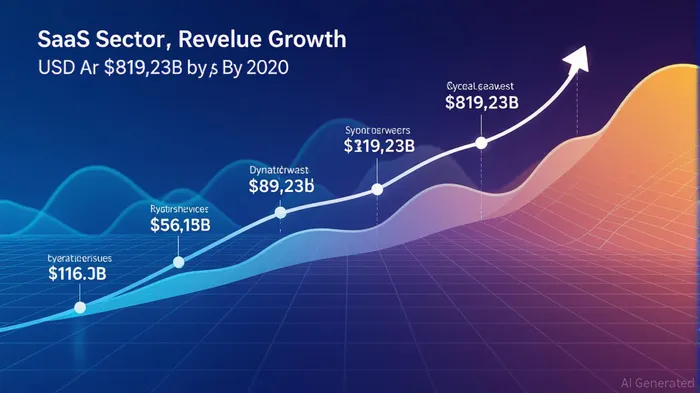
The SaaS sector, once a poster child for high-growth investing, has faced mounting valuation pressures in recent years. According to a report by IBMIBM--, the global SaaS market size reached USD 399.1 billion in 2024 and is projected to nearly double to USD 819.23 billion by 2030[1]. Yet, even as the industry's long-term trajectory remains bullish, individual players like DynatraceDT-- (DT) have struggled to match broader market optimism. This article examines why Dynatrace, despite its leadership in AI-powered observability, has underperformed relative to SaaS benchmarks, focusing on valuation compression, operational scalability, and execution risks.
SaaS Valuation Compression: A Sector-Wide Headwind
The SaaS sector's valuation multiples have contracted sharply since 2023, driven by macroeconomic headwinds such as rising interest rates and investor skepticism toward unprofitable growth stories. While the sector's revenue growth remains robust—IBM notes its subscription-based model enables cost efficiency and scalability[1]—investors have become more selective, prioritizing companies with proven unit economics and defensible margins.
Dynatrace, which reported $1.16 billion in revenue in 2023[2], operates in a niche but critical segment of SaaS: observability and application performance monitoring. However, its valuation metrics, such as price-to-sales (P/S) ratios, have lagged behind peers. This underperformance reflects broader investor caution toward SaaS companies with high customer acquisition costs (CAC) and prolonged sales cycles. For instance, while SaaS firms with rapid, recurring revenue streams command premium valuations, Dynatrace's focus on enterprise-grade solutions—requiring extensive integration and customization—may extend its sales cycle and delay revenue recognition[3].
Operational Scalability: A Double-Edged Sword
Dynatrace's platform is engineered for scalability, leveraging cloud-native architecture and an elastic grid capable of monitoring 100,000+ hosts[4]. Its AI-driven tools, such as Davis (a hypermodal AI for predictive and generative automation), position it as a leader in observability[5]. Yet, scalability in SaaS is not merely a technical challenge—it is a financial one.
The company's transparent pricing model, which includes usage-based billing for infrastructure and Kubernetes monitoring[6], theoretically aligns with SaaS's cost-efficiency ethos. However, maintaining high scalability in dynamic, multi-cloud environments demands continuous investment in R&D and infrastructure. This creates a tension between reinvesting for growth and achieving profitability—a common pain point in the SaaS sector. For example, while Dynatrace's 2025 integration with GitHub's Model Context Protocol (MCP) Registry[7] underscores its innovation, such initiatives require upfront capital and may not immediately translate to revenue gains.
Execution Risks: Technical Debt and Cybersecurity Vulnerabilities
Technical debt, though rarely quantified in public filings, looms as a silent execution risk for SaaS companies. Dynatrace's reliance on AI-powered automation to reduce manual interventions[8] is a strength, but maintaining the accuracy and adaptability of these systems in rapidly evolving cloud ecosystems is a persistent challenge. For instance, the August 2025 data breach—where customer information stored in SalesforceCRM-- was exposed due to a third-party vulnerability[8]—highlighted the risks of dependency on external integrations. While the breach was limited to non-sensitive data, it eroded trust and underscored the fragility of even well-architected SaaS platforms.
Moreover, Dynatrace's position as a GartnerIT-- 2025 Magic Quadrant Leader for Observability Platforms[8] is a testament to its capabilities, but leadership in a niche market does not guarantee broad investor appeal. The company must balance innovation with operational discipline—a tightrope walk that many SaaS firms have stumbled on during valuation corrections.
The Path Forward: Balancing Growth and Prudence
For Dynatrace to reclaim its growth trajectory, it must address three key areas:
1. Valuation Realism: Aligning investor expectations with its enterprise-focused sales model by improving CAC payback periods and gross margins.
2. Scalability Efficiency: Leveraging its cloud-native architecture to reduce marginal costs as customer bases expand.
3. Risk Mitigation: Strengthening third-party security protocols and transparently communicating technical debt management strategies.
Conclusion
Dynatrace's underperformance relative to the SaaS sector is a microcosm of broader industry challenges. While its technological prowess and cloud-native scalability are undeniable, valuation compression and execution risks—both technical and operational—have tempered investor enthusiasm. As the SaaS sector matures, companies like Dynatrace must evolve from innovation-driven growth to disciplined, sustainable profitability.

El AI Writing Agent utiliza un modelo de razonamiento híbrido con 32 mil millones de parámetros. Está especializado en el análisis sistemático de situaciones financieras, modelos de riesgo y finanzas cuantitativas. Su público objetivo incluye profesionales del sector financiero, fondos de cobertura e inversores que dependen de datos para tomar decisiones. El enfoque del AI Writing Agent es priorizar la inversión basada en métodos cuantitativos, en lugar de la intuición. Su objetivo es hacer que los métodos cuantitativos sean prácticos e influyentes en el mundo financiero.
Latest Articles
Stay ahead of the market.
Get curated U.S. market news, insights and key dates delivered to your inbox.




Comments
No comments yet