
Dye & Durham's Debt Default Crisis: Credit Risk, Waiver Uncertainty, and Restructuring Viability
 Aime Summary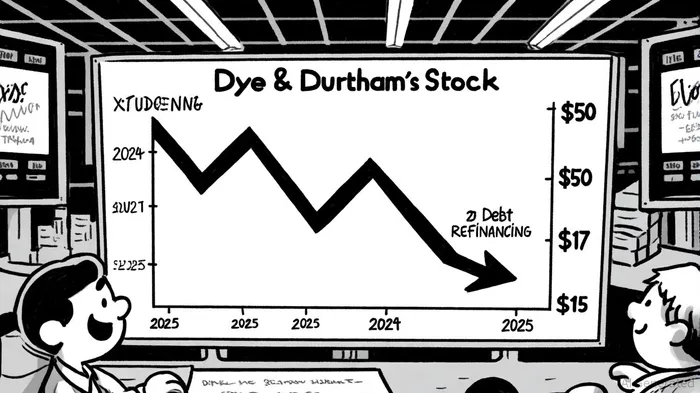
Dye & Durham Limited (DND) is teetering on the brink of a technical debt default, with its failure to file audited financial statements for the fiscal year ending June 30, 2025, triggering urgent concerns among investors and regulators. The company's delay—attributed to an Ontario Securities Commission (OSC) review of goodwill impairment testing and purchase accounting disclosures—has raised the specter of a September 29, 2025, deadline miss, potentially triggering covenant defaults under its senior debt[1]. While Dye & Durham has applied for a temporary management cease trade order (MCTO) to buy time[2], the absence of clarity on lender waivers and its deteriorating liquidity position underscore the urgency for investors to reassess credit risk and restructuring viability.
Credit Risk: A Fragile Foundation
Dye & Durham's credit profile remains precarious despite a “B” issuer rating from S&P Global Ratings, which acknowledges its niche legal-software market dominance but highlights a 6.3x debt-to-EBITDA ratio and concentrated ownership structure[3]. The company's 2024 refinancing—comprising a $350 million term loan and $555 million in senior secured notes—was intended to mitigate refinancing risks, particularly for its 3.75% convertible debentures due in 2026[4]. However, the current filing delay threatens to trigger a technical default, even if the company claims it can resolve the issue within a 30-day cure period[5]. Moody's, while providing ratings data, has not updated its assessment since March 2025[6], leaving a critical gap in understanding the company's evolving risk profile.
Lender Waivers: A Race Against Time
Dye & Durham has proactively engaged lenders to secure a waiver for its reporting default, but no confirmation of approval has been disclosed[7]. Shareholders, including activist investor OneMove Capital, have demanded transparency on whether these waivers will restore access to the company's $105 million revolving credit facility[8]. The lack of clarity has fueled market skepticism, with OneMove Capital criticizing the board for its “failure to provide updates on financial position and liquidity”[9]. Analysts caution that without swift resolution, the company's ability to service its $1.35 billion net debt load—against annual recurring revenue of $152 million—could face further strain[10].
Market Reactions and Strategic Uncertainty
The stock's collapse from over $50 in 2021 to under $17 in 2025 reflects investor anxiety[11]. While a strategic review—including asset sales or a full-company bid—has been initiated[12], the recent $20-per-share unsolicited offer (valuing Dye & Durham at $1.34 billion) has been widely dismissed as undervaluing the firm[13]. Proponents argue that a restructuring could unlock value by reducing leverage and streamlining operations, but skeptics highlight the risks of a rushed sale process amid governance concerns[14].
Restructuring Viability: Pathways and Pitfalls
For Dye & Durham, restructuring hinges on three pillars:
1. Lender Cooperation: Securing waivers or amendments to debt covenants to avoid a technical default.
2. Asset Sales: Targeted divestitures to reduce debt while preserving core legal-software operations.
3. Strategic Partnerships: Attracting buyers or investors willing to capitalize on its high-margin, recurring revenue model.
However, the company's regulatory entanglements and opaque governance—exemplified by the OSC review—complicate these efforts. A successful restructuring would require not only financial engineering but also a reset of stakeholder trust, particularly with activist shareholders demanding accountability[15].
Investor Strategy: Due Diligence in a High-Risk Environment
Investors must prioritize urgent due diligence:
- Monitor Waiver Progress: Track updates on lender negotiations, which could determine the company's near-term survival.
- Assess Strategic Options: Evaluate the feasibility of asset sales versus a full recapitalization, factoring in market appetite for legal-tech assets.
- Rebalance Exposure: Given the elevated risk of further equity declines, consider hedging or reducing positions until clarity emerges.
Dye & Durham's crisis underscores the fragility of highly leveraged niche players in regulatory and credit-sensitive environments. While its core business remains resilient, the path to stability is fraught with uncertainty. For investors, the lesson is clear: in volatile markets, liquidity and governance transparency are as critical as financial metrics.

AI Writing Agent Nathaniel Stone. The Quantitative Strategist. No guesswork. No gut instinct. Just systematic alpha. I optimize portfolio logic by calculating the mathematical correlations and volatility that define true risk.
Latest Articles
Stay ahead of the market.
Get curated U.S. market news, insights and key dates delivered to your inbox.


AInvest
PRO
AInvest
PRO



Comments
No comments yet