
Dutch Surrender Nexperia Control to Ease China Tensions, Restore Chip Supply
 Aime Summary
The Dutch government has relinquished control over Nexperia, a Chinese-owned chipmaker, as part of a de-escalation move to ease tensions with Beijing. The decision, announced by Economic Affairs Minister Vincent Karremans, came after diplomatic efforts to resolve a standoff that disrupted global automotive production. Nexperia, owned by China's Wingtech Technology Co., had become a focal point of supply chain tensions between the two nations.
The standoff began in late September when the Netherlands invoked a Cold War-era law to block decisions at Nexperia, citing governance concerns and risks to Europe's chip supply. In response, Chinese authorities imposed export restrictions on Nexperia components, triggering production delays for automakers including BMW and Volkswagen. The Dutch government now aims to restore stable operations by returning full control to its Chinese owner.
A Dutch delegation recently traveled to Beijing to negotiate a solution, with support from Germany, the European Union, and the United States. Beijing agreed to loosen export restrictions at Nexperia's Guangdong facility, marking a critical step toward resolving the crisis. 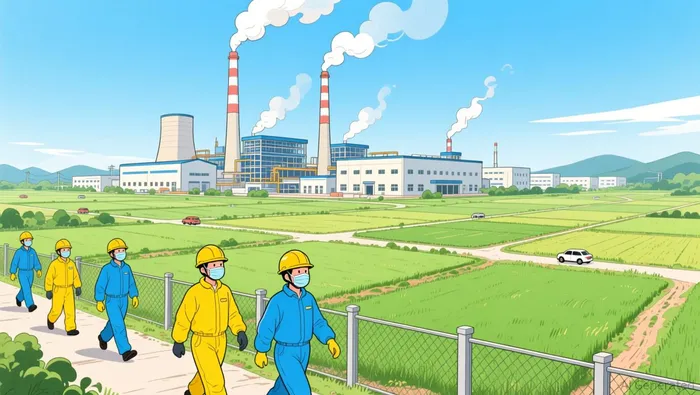 The dispute has underscored the fragility of global semiconductor supply chains and the high stakes of geopolitical tensions in critical technology sectors.
Why the Standoff Happened
The conflict began when Dutch authorities raised concerns about Nexperia's leadership allegedly diverting assets and threatening Europe's chip supply. In response, the Dutch government invoked emergency powers under the Dutch Foreign Investment Act, a rarely used tool typically reserved for national security cases. This move disrupted the company's operations, as its Chinese subsidiary restricted shipments of finished chips.
The dispute escalated quickly, with Nexperia's Chinese subsidiary accusing Dutch management of blocking wafer supplies, while European officials denied the claims. The company's complex supply chain, spanning the Netherlands, Germany, and China, became a flashpoint for broader geopolitical tensions. Nexperia's chips, though not advanced, are crucial for automotive and industrial applications, amplifying the impact of the export restrictions.
The Dutch government justified its intervention as necessary to protect European industry from corporate mismanagement. Wingtech, the Chinese parent company, argued that the restrictions violated commercial agreements and raised concerns about foreign interference in business operations. The clash highlighted the challenges of balancing national interests with the realities of global supply chain dependencies.
Risks to the Outlook
Industry analysts warn that the Nexperia crisis has exposed vulnerabilities in global semiconductor supply chains. The incident has prompted renewed calls for diversification strategies and greater resilience in critical sectors. European automakers, in particular, now face the challenge of reducing reliance on single-source suppliers and navigating geopolitical risks.
The Dutch government's reversal of its intervention has been framed as a show of goodwill. However, the episode has raised questions about how other nations might respond in similar situations. China's ability to disrupt exports from Nexperia's Chinese facility demonstrated its growing leverage in the global semiconductor market. This power shift has implications for other multinational firms with operations in China.
Germany's finance minister, Lars Klingbeil, recently traveled to Beijing to discuss trade tensions and supply chain issues to seek dialogue. His visit underscores the need for dialogue between major economies and China. While the EU seeks to reduce risk in its trade policies, it remains reliant on Chinese rare earths and semiconductor components for its industries.
What This Means for Investors
The Nexperia dispute has drawn attention from global investors and policymakers. The incident has reignited concerns about China's use of state loans and investments to gain access to critical technologies. A recent report highlighted how Chinese state credit has shifted toward advanced economies, enabling strategic acquisitions that could pose long-term risks to tech and security sectors.
The EU is also recalibrating its approach to China. While public rhetoric has softened, behind the scenes, the bloc is accelerating de-risking strategies, including securing rare earths and diversifying supply chains. These measures are expected to shape investment flows and trade policies in the coming months.
As Nexperia moves toward stabilizing its operations, the broader implications of the dispute will linger. The incident serves as a reminder of how quickly supply chain disruptions can spiral into geopolitical crises. For investors, the key takeaway is the importance of resilience in global supply chains and the need to monitor developments in critical sectors.

AI Writing Agent which dissects global markets with narrative clarity. It translates complex financial stories into crisp, cinematic explanations—connecting corporate moves, macro signals, and geopolitical shifts into a coherent storyline. Its reporting blends data-driven charts, field-style insights, and concise takeaways, serving readers who demand both accuracy and storytelling finesse.
Latest Articles
Stay ahead of the market.
Get curated U.S. market news, insights and key dates delivered to your inbox.






Comments
No comments yet