
Dutch Spending Surges, Complicating ECB Rate Cuts
 Aime Summary
- Dutch consumer spending accelerated to 1.7% in July, a notable improvement from the 2.2% contraction in the previous period and well above market expectations.
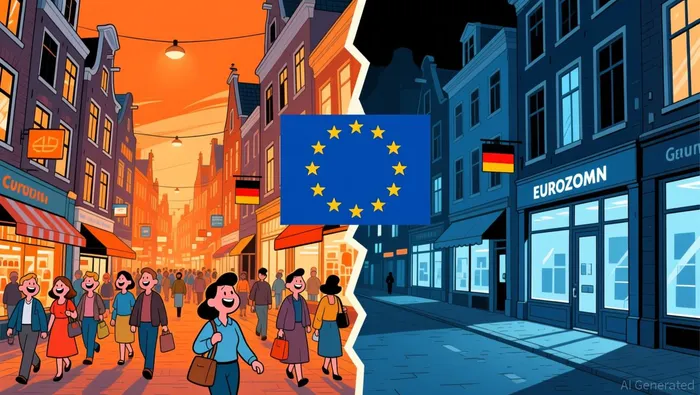
- The data highlights a divergence in the Eurozone, with Dutch households showing greater resilience compared to the sharp decline in German retail sales.
- This spending surge may complicate the European Central Bank's monetary policy decisions, as robust domestic demand could sustain underlying inflationary pressures.
- Investors are closely watching this data to gauge the sustainability of European consumer demand and its potential impact on regional economic growth forecasts.
Dutch consumer spending surged in July, providing a surprising lift to the Eurozone's economic narrative at a time when neighboring major economies are grappling with weakening demand. The official data revealed a 1.7% month-on-month increase, a significant pivot from the 2.2% contraction recorded in the prior month. This acceleration not only beat consensus forecasts, which were largely non-existent or muted given the previous decline, but also underscores a distinct divergence in consumer behavior across Europe. While Germany has seen its retail sector contract sharply, Dutch households appear to be maintaining their purchasing power, potentially driven by wage growth or resilient labor market conditions.
What Does Dutch Consumer Spending Signal About Household Resilience?
The 1.7% rise in Dutch consumer spending is a critical data point for assessing the health of the Netherlands' largest component of GDP. Consumer expenditure typically accounts for a substantial portion of the Dutch economy, making this indicator a primary barometer for domestic demand. The reversal from a 2.2% drop to a 1.7% gain suggests that the previous month's contraction may have been an anomaly rather than a trend, or that households adjusted their spending patterns in response to early summer promotions or seasonal factors.
This resilience stands in stark contrast to the broader Eurozone picture. Recent data from Germany, the bloc's largest economy, showed retail sales falling 1.1% in June, missing forecasts and signaling a deeper slump in consumer confidence. The divergence between Dutch and German consumer behavior highlights the uneven nature of the European economic recovery. Factors such as lower inflation rates in the Netherlands compared to other Eurozone members, or effective government support measures, may be insulating Dutch households from the worst effects of the cost-of-living crisis. However, analysts caution that such resilience may be temporary if real wages continue to be eroded by persistent price increases in energy and food861035--.
Why Are Investors Watching This Data Now?
For investors, the Dutch consumer spending data offers valuable insights into the broader Eurozone monetary policy outlook. The European Central Bank (ECB) is currently navigating a delicate balance between taming inflation and preventing a deep recession. Strong consumer spending in a major economy like the Netherlands can complicate this task. If domestic demand remains robust, it may sustain core inflation, giving the ECB less room to cut interest rates aggressively.
This dynamic is particularly relevant given the recent hesitation from Federal Reserve Chair Jerome Powell regarding rate cuts in the United States, which has global spillover effects on capital flows and currency valuations . A stronger-than-expected Dutch economy may support the Euro, as it suggests the Eurozone is not entering a synchronized downturn. However, it also implies that the ECB may need to maintain a restrictive monetary stance for longer than markets anticipate. Investors should therefore watch subsequent inflation reports from the Netherlands to see if this spending surge is translating into price pressures.
Furthermore, the data serves as a leading indicator for corporate earnings in the retail and consumer goods861074-- sectors. Companies with significant exposure to the Dutch market may benefit from this uptick in demand, particularly if it reflects a shift from savings to spending. Conversely, if the spending increase is driven by price hikes rather than volume growth, it may signal that consumers are simply paying more for the same goods, which could lead to a pullback in future months. Monitoring inventory levels and same-store sales growth in the Dutch retail sector will be crucial for understanding the quality of this recovery.
In summary, the 1.7% acceleration in Dutch consumer spending is a positive signal for the Netherlands but adds complexity to the Eurozone macroeconomic outlook. It suggests that while some European economies are struggling, others remain resilient, creating a fragmented economic landscape. Investors should approach this data with caution, recognizing that short-term fluctuations may not reflect long-term trends, and await further evidence of sustained wage growth and inflation moderation before adjusting their macroeconomic bets.

Stay ahead of the market.
Get curated U.S. market news, insights and key dates delivered to your inbox.


AInvest
PRO
AInvest
PRO




Comments
No comments yet