
Dutch Consumer Confidence Plunges to -30.0 Amid Rising Energy Costs
 Aime Summary
- The Netherlands reported a drop in consumer confidence to -30.0 in March 2026, down from -24.0 in the previous period, signaling heightened pessimism among Dutch households according to Marketscreener.
- The decline underscores growing uncertainty amid global events like the Middle East conflict and rising energy prices, both of which have been shown to weigh heavily on consumer sentiment as reported by Trucking Info.
- This indicator is closely watched by markets as a leading signal of future economic activity, especially in consumer-driven economies like the Netherlands.
Consumer confidence in the Netherlands has fallen to -30.0 in March 2026, a notable drop from the previous reading of -24.0. Published at 13:30 ET, the data highlights a deteriorating outlook among Dutch households amid ongoing global uncertainties. The decline aligns with broader trends observed in provisional purchasing managers' surveys from the U.S. and Europe, which suggest that the conflict in the Middle East and rising energy prices are having a measurable impact on business activity and consumer sentiment according to Trucking Info.
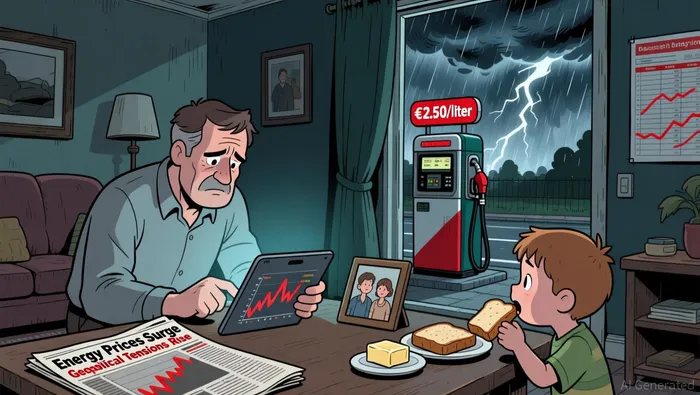
Consumer confidence surveys are a key barometer for macroeconomic health. In the case of the Netherlands, a fall into negative territory may indicate slowing consumer spending, which could have downstream effects on inflation and GDP growth. While the data do not directly influence monetary policy in real time, they contribute to a broader narrative that central banks and market participants are tracking. For example, the European Central Bank (ECB) has historically used such indicators to assess the effectiveness of its monetary easing or tightening measures. In this context, the drop in confidence suggests that households may be holding back spending amid economic volatility, which could result in softer retail sales and weaker service sector activity in the near term according to Marketscreener.
Looking ahead, investors will want to monitor upcoming consumer spending data, particularly in the eurozone, to determine whether this shift in sentiment translates into tangible economic outcomes. The coming weeks will also feature additional PMI data from the U.S. and Europe, which will provide further insight into whether the global energy price spike is leading to a more generalized slowdown in economic activity as reported by Trucking Info. In the Netherlands specifically, further assessments will be necessary to understand if this is a short-term correction or the beginning of a more sustained trend. Given the interconnected nature of European markets, this data point could also influence sentiment in broader European equities and bond markets, especially as energy costs remain elevated and inflationary pressures linger.
For now, the drop in Dutch consumer confidence serves as a reminder that households and businesses are adjusting their expectations to the evolving geopolitical and economic landscape. As such, the data adds to a broader narrative of uncertainty that is influencing not only consumer behavior but also market pricing and risk sentiment across the globe.

Stay ahead of the market.
Get curated U.S. market news, insights and key dates delivered to your inbox.


AInvest
PRO
AInvest
PRO



Comments
No comments yet