
Dutch Bros Claims Top Volume Spot as Price Slides Amid Salad and Go Bid Loss
 Aime Summary
Market Snapshot
Dutch Bros Inc. (NYSE: BROS) experienced a significant divergence between trading volume and price action on September 1, 2026, as the stock closed down 5.22%. Despite the decline in share price, the company recorded the highest trading volume in the market for the day, with transaction values reaching $0.34 billion, marking a substantial 132.35% increase from the previous session. This surge in activity suggests intense institutional repositioning or heightened retail interest amid recent fundamental developments. The stock currently trades near the lower end of its 52-week range, which spans from $44.58 to $74.02, reflecting the ongoing volatility that has characterized its performance since the beginning of 2025. Although the company reported strong second-quarter results, including a 32.5% year-over-year revenue climb to $550.9 million and an adjusted EPS beat of 33 cents against 29 cents, the market’s reaction has been mixed. The current price of approximately $46.16 sits well below the consensus analyst price target of $77.15, indicating a potential disconnect between current market sentiment and long-term growth expectations held by Wall Street analysts.
Key Drivers
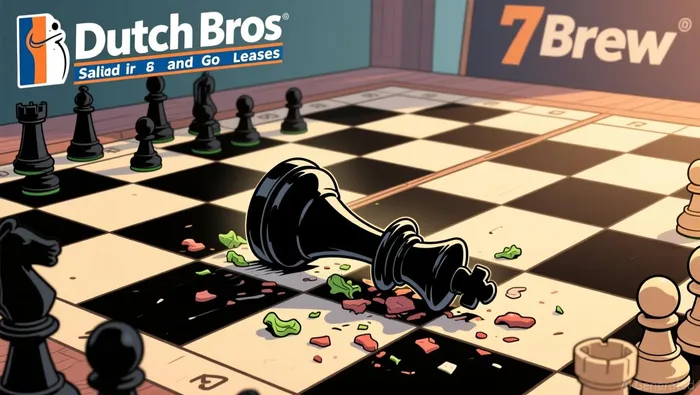
The primary catalyst for the recent negative sentiment and stock volatility appears to be a significant setback in Dutch Bros’BROS-- strategic expansion plans. The company was involved in a competitive bidding process for the leases of the bankrupt drive-thru chain Salad and Go, a move critical to Dutch Bros’ goal of doubling its footprint to more than 2,000 shops by 2029. Dutch BrosBROS-- had initially secured the position as the "stalking horse" bidder with a $105 million offer for 65 leases. However, rival coffee chain 7 Brew emerged with a superior bid of $143 million for 73 leases, effectively outmaneuvering Dutch Bros. This loss is particularly damaging because Salad and Go’s sites were identified as key assets due to their similarity in location requirements for drive-thru beverage concepts. The failure to secure these prime locations forces Dutch Bros to search for alternative sites to fulfill its aggressive growth targets, potentially increasing execution risk and slowing the pace of its expansion.
Despite this strategic loss, the fundamental business performance of Dutch Bros remains robust, serving as a counter-narrative to the bearish price action. The company’s second-quarter results demonstrated strong operational health, with systemwide same-shop sales growing 5.8% and company-operated same-shop sales rising 8.3%. This marks the 13th consecutive quarter of positive same-shop sales and the eighth straight quarter of traffic growth, underscoring the resilience of the brand’s customer base. Management responded to these strong metrics by raising full-year 2026 guidance, projecting revenue between $2.1 billion and $2.13 billion, up from the previous range of $2.05 billion to $2.08 billion. The consolidation net income jumped 34% to $51.6 million, and adjusted EBITDA rose 27.8% to $113.7 million, highlighting improved profitability and operational efficiency.
Institutional investor behavior presents a mixed picture that may be contributing to the stock’s instability. While major institutional players such as Wellington Management Group, State Street Corp, and the California Public Employees Retirement System have recently increased their stakes, suggesting confidence in the long-term growth trajectory, insider selling has been notable. CEO Christine Barone sold approximately $2.5 million worth of shares in June, and other insiders have sold over $127 million worth of stock in the last 90 days. These sales, executed under pre-arranged Rule 10b5-1 trading plans, may have weighed on investor sentiment, creating a perception of insider lack of confidence despite the company’s strong financial reporting and raised guidance.
The competitive landscape in the drive-thru coffee sector is also intensifying, adding pressure on Dutch Bros. The victory of 7 Brew in the Salad and Go auction highlights the aggressive expansion strategies of its competitors. 7 Brew, now the country’s fourth-largest coffee brand with more than 800 locations, continues to gain market share rapidly. Dutch Bros, which has more than 1,200 locations, faces the challenge of maintaining its growth momentum while navigating a crowded market. The loss of potential Salad and Go sites to a direct competitor not only represents a missed opportunity for physical expansion but also signals that rivals are aggressively targeting high-value real estate to solidify their market positions.
Analyst consensus remains cautiously optimistic, with a "Moderate Buy" rating and an average price target of $77.15, significantly above the current trading level. This disparity suggests that many analysts view the recent sell-off as an overreaction to the Salad and Go loss or a temporary market inefficiency, rather than a fundamental deterioration of the business model. However, the stock’s wild up-and-down ride since the start of 2025, including a 19% plunge following its strongest quarterly report in August, indicates that investors remain skeptical about whether Dutch Bros can sustain its tech-like growth rates in a traditional restaurant sector. The current high trading volume reflects this ongoing debate between short-term tactical setbacks and long-term fundamental strength.

Stay ahead of the market.
Get curated U.S. market news, insights and key dates delivered to your inbox.


AInvest
PRO
AInvest
PRO




Comments
No comments yet