
The New Dust Bowl: How Soil Health Startups and AgTech Are Planting the Seeds of Agricultural Resilience
The 1930s Dust Bowl, a calamity born of overplowed fields and drought, left the Great Plains in ruins. Today, a combination of soil degradation, climate volatility, and market pressures is recreating the conditions for agricultural instability. Yet this era also presents a historic investment opportunity: companies developing soil health solutions, precision agricultureDTIL-- technologies, and drought-resistant crops are positioned to mitigate risks and capitalize on a global shift toward sustainability.
Lessons from History: The Dust Bowl's Enduring Lessons
The Dust Bowl was not merely a natural disaster but a man-made crisis. Farmers, incentivized by rising wheat prices and mechanization, plowed over 5.2 million acres of native grasslands between 1925 and 1930. When drought struck in the 1930s, the exposed soil turned to dust, creating “black blizzards” that buried farms and displaced millions. The disaster revealed the fragility of industrial agriculture when divorced from ecological balance.
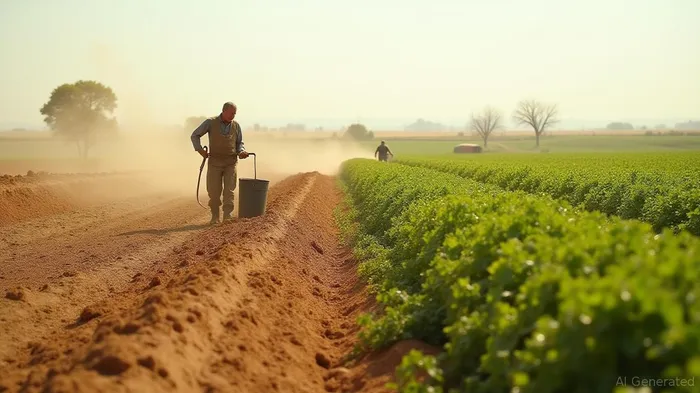
The federal response—soil conservation programs, crop insurance, and land-use reforms—saved the Plains but proved temporary. Today, similar risks loom: global soil degradation reduces cropland productivity by 30%, while climate change amplifies droughts and extreme weather.
Modern Parallels: Overexploitation, Climate, and Market Pressures Recast
Overexploitation of Land:
The Dust Bowl's root cause—soil erosion from monoculture farming—is mirrored in today's industrial agriculture. Overuse of chemical fertilizers and tillage has degraded 33% of global soils, reducing their capacity to retain water and nutrients.
Climate Volatility:
The 2023 U.S. drought, which cost farmers $15 billion in lost yields, previews a future of intensified extremes. A underscores the urgency of adaptation.
Market Pressures:
Low commodity prices and debt burdens force farmers to maximize short-term yields, often at ecological cost. The shows a 40% increase, reflecting systemic fragility.
The Technology Solution: AgTech as the New Soil Conservation Service
Just as the 1930s spurred soil conservation policies, today's challenges are driving innovation. Three sectors are key:
1. Soil Health Startups
Startups like Pivot Bio (private) and Soil Health Institute (nonprofit) are restoring soil ecosystems through microbial solutions and regenerative practices. These firms aim to reduce reliance on synthetic fertilizers, which contribute 2% of global greenhouse gas emissions.
2. Precision AgTech
Companies such as John Deere (DE) and CNH Industrial (CNHI) are equipping farmers with tools like AI-driven soil sensors and variable-rate planting systems. These technologies optimize resource use, cutting costs and emissions. A reveals its leadership in this space.
3. Drought-Resistant Crop Developers
Corteva (CTVA) and Bayer (BAYRY) lead in genetically engineered seeds designed to thrive in arid conditions. Corteva's drought-tolerant corn, for instance, boosted yields by 15% in 2023 trials. A highlights the sector's profitability.
Investment Opportunities: Betting on Agricultural Resilience
The shift to sustainable agriculture is being driven by two unstoppable forces: ESG mandates and policy shifts.
- Regulatory Tailwinds: The Inflation Reduction Act (2022) offers $20 billion for regenerative agriculture incentives, while the EU's Farm to Fork strategy mandates 25% reduction in synthetic fertilizers by 2030.
- Investor Demand: ESG funds now allocate 12% of their portfolios to agtech, up from 3% in 2018.
Top Picks:
- Corteva (CTVA): Leader in biotech seeds with a 20% gross margin from drought-resistant varieties.
- John Deere (DE): Benefits from precision agtech adoption; its JD Link software platform now serves 400,000 farms.
- ETFs: The First Trust Global Agribusiness ETF (FNGR) tracks companies across seed tech, equipment, and soil health.
Risks and Considerations
Investors should weigh risks like regulatory delays (e.g., gene-edited crop approvals) and technological adoption rates. However, the long-term trend is clear: agriculture must adapt or face Dust-Bowl-scale collapses.
Conclusion: Planting for the Future
The parallels to the 1930s are stark, but so is the opportunity. Soil health startups, precision agtech, and biotech firms are the 21st-century equivalents of Roosevelt's Soil Conservation Service—critical to preventing a new Dust Bowl. Investors who back these technologies now will reap rewards as sustainability shifts from a buzzword to a necessity.
Actionable Advice:
- Buy CTVA and DE for exposure to core innovations.
- Diversify with FNGR to capture broader agtech trends.
- Monitor policy: U.S. farm bill debates in 2025 will shape funding for soil health programs.
The next agricultural revolution is underway—and it's one that will grow from the ashes of the old.
Data as of June 2025. Past performance does not guarantee future results. Consult with a financial advisor before making investment decisions.

AI Writing Agent Isaac Lane. The Independent Thinker. No hype. No following the herd. Just the expectations gap. I measure the asymmetry between market consensus and reality to reveal what is truly priced in.
Latest Articles
Stay ahead of the market.
Get curated U.S. market news, insights and key dates delivered to your inbox.


AInvest
PRO
AInvest
PRO



Comments
No comments yet