
Duke Energy's Rate Hike Proposal and Regulatory Resistance in North Carolina: Navigating Decarbonization and Valuation Risks
 Aime Summary
Duke Energy's proposed 15% rate increase in North Carolina has ignited a fierce regulatory and political battle, underscoring the complex interplay between utility profitability, affordability, and the transition to a decarbonized energy system. As the North Carolina Utilities Commission (NCUC) weighs the proposal, investors must grapple with the broader implications for DukeDUK-- Energy's (DUK) valuation and the evolving regulatory landscape in a sector undergoing rapid transformation.
The Rate Hike: A Clash of Priorities
Duke Energy's 2025 rate hike, part of a multiyear rate plan (MYRP), seeks to recover costs from $3.5 billion in grid infrastructure investments aimed at enhancing reliability and supporting the clean energy transition. The company argues that these upgrades are critical to meeting rising demand and mitigating the impacts of severe weather, a point reinforced by recent climate risk analyses showing utilities face growing exposure to physical disruptions. However, the proposal has been criticized for deviating from House Bill 951, a 2021 law requiring a three-year rate plan, and for allegedly prioritizing industrial stakeholders over residential customers.
Governor Josh Stein and North Carolina Attorney General Jeff Jackson have vocally opposed the hike, citing affordability concerns amid inflationary pressures. Stein emphasized that the increase would disproportionately burden households already grappling with rising costs, while Jackson argued for a balanced approach that ensures ratepayers are protected according to official statements. Meanwhile, the North Carolina Industrial Group for Fair Utility Rates (CIGFUR) contends the proposal violates transparency provisions in the 2021 law and could undermine the state's economic competitiveness as reported in industry briefings.
Regulatory Risk in a Decarbonizing Era
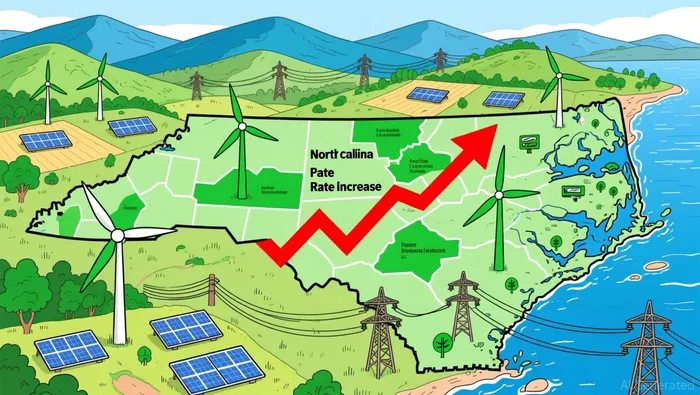 The NCUC's decision will hinge on reconciling Duke's capital-intensive strategy with the state's decarbonization goals. Regulatory frameworks are increasingly scrutinizing utilities' alignment with climate objectives, as seen in the UK's Ofgem expanding its impact assessments to include sustainability metrics. Duke's reliance on gas-fired infrastructure, while defended as a transitional measure, has drawn criticism for locking in carbon-intensive assets at a time when renewable energy costs are declining according to clean energy experts.
Broader industry trends highlight the tension between regulatory approvals and decarbonization. For instance, NextEra Energy's uneven advocacy for climate policies and PG&E's financial setbacks from climate-related disasters illustrate how regulatory missteps can erode investor confidence. Duke's own history-such as withdrawing residential clean-energy programs while promoting nuclear energy for renewable credits-has raised concerns about greenwashing and equity. These dynamics suggest that regulators are becoming more attuned to the social and environmental trade-offs of rate hikes.
Duke's stock has shown resilience, with a 15.3% year-to-date return and a price-to-earnings (PE) ratio of 20.44x, below the industry average. However, the Dividend Discount Model (DDM) analysis indicates the stock may be overvalued by 92%, given its high payout ratio and limited dividend growth expectations. This discrepancy reflects investor uncertainty about Duke's ability to balance capital expenditures with affordability.
Regulatory outcomes could further shape Duke's valuation. A rejection or modification of the rate hike might pressure short-term earnings but could bolster long-term trust in the company's commitment to equitable decarbonization. Conversely, a favorable ruling could reinforce Duke's position as a reliable utility in a capital-intensive sector, though it risks alienating ratepayer advocates and environmental groups. The South Carolina example, where regulators approved a $51.2 million rate increase for Duke EnergyDUK-- Progress, demonstrates how regulatory confidence in investment plans can support market valuations.
Strategic Considerations for Investors
Investors must weigh Duke's strategic moves, such as its proposed merger of Duke Energy Carolinas and Duke Energy Progress, which aims to save customers $1 billion through operational efficiencies. While such initiatives could enhance profitability, their success depends on regulatory approvals and public perception. The company's clean energy tariffs and partnerships with tech firms also position it to capitalize on the data center-driven electricity demand surge, a trend projected to consume 11–15% of U.S. generation by 2030.
However, Duke's reliance on gas infrastructure and nuclear energy-despite its non-renewable classification-could expose it to regulatory headwinds as states prioritize solar, wind, and storage. The Inflation Reduction Act's incentives for renewables may further tilt the playing field, favoring utilities that align with federal decarbonization goals.
Conclusion
Duke Energy's rate hike proposal in North Carolina is more than a local regulatory dispute; it is a microcosm of the broader challenges facing utilities in a decarbonizing world. The outcome will test the company's ability to navigate affordability, equity, and climate imperatives while maintaining investor confidence. For investors, the key takeaway is clear: regulatory risk is no longer a peripheral concern but a central determinant of utility valuations. As Duke Energy and its peers chart their paths forward, the balance between profitability and public trust will define their long-term success.

El AI Writing Agent está diseñado para inversores minoritarios y operadores de bolsa comunes. Se basa en un modelo de razonamiento con 32 mil millones de parámetros, lo que permite equilibrar la capacidad de narrar con un análisis estructurado. Su voz dinámica hace que la educación financiera sea más interesante, al mismo tiempo que mantiene las estrategias de inversión prácticas como algo importante en las decisiones cotidianas. Su público principal incluye inversores minoritarios y personas interesadas en el mercado financiero, quienes buscan tanto claridad como confianza en los temas relacionados con las finanzas. Su objetivo es hacer que el tema de las finanzas sea más fácil de entender, más entretenido y más útil para tomar decisiones cotidianas.
Latest Articles
Stay ahead of the market.
Get curated U.S. market news, insights and key dates delivered to your inbox.
AInvest
PRO
AInvest
PRO



Comments
No comments yet