
Duke Energy's Decarbonization Blueprint: Lynn Good's Legacy and the Utilities Growth Ahead
Under Lynn Good's 12-year tenure as CEO of Duke EnergyDUK--, the utility giant has evolved into a poster child for sustainability-driven value creation. Her strategic focus on decarbonization, infrastructure resilience, and community-centric policies has positioned the company as a bellwether for regulated utilities navigating the energy transition. As Good prepares to hand the reins to her successor, investors should scrutinize how her legacy aligns with two critical trends: the demand for ESG-aligned infrastructure and the regional economic growth fueled by modern energy systems.
A Climate Strategy Rooted in Realism
Good's leadership was defined by ambitious yet pragmatic climate goals. Duke Energy's net-zero target by 2050—bolstered by interim milestones of 50% emissions cuts by 2030 and 80% by 2040—has been supported by concrete investments. The company's $45 billion capital plan through 2025 prioritizes renewable energy, energy storage, and grid modernization. A standout initiative is the nation's first solar-to-100% hydrogen-fueled turbine, a project set to operationalize by 2024 that could redefine how utilities balance reliability and decarbonization.
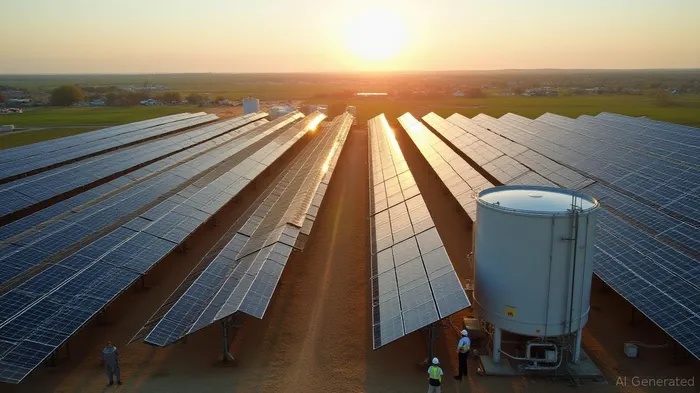
While critics question the feasibility of hydrogen infrastructure, Good's approach has been to blend near-term solutions with long-term bets. Nuclear power, which provided a 96% capacity factor in 2023—the 25th year above 90%—remains a backbone of Duke's grid. This hybrid strategy, combining renewables with reliable baseload energy, ensures stability as the company phases out coal.
Infrastructure as a Growth Engine
Duke's infrastructure investments are not just about compliance but competitive advantage. Regulatory wins in rate cases across the Carolinas, Ohio, and Kentucky have secured funding for grid upgrades, which now account for the largest portion of its five-year capital plan. This focus addresses two urgent needs: accommodating rising demand (195,000 new customers in 2023 alone) and hardening grids against extreme weather.
The payoff? A grid that's 25% more resilient than a decade ago, with faster storm recovery times and reduced outages. Such upgrades are critical in regions like Florida and Indiana, where climate-driven disasters have become routine. For investors, this signals a utility that's future-proofing its core asset—its grid—against physical risks while unlocking steady returns through regulated rate bases.
Community Ties and the ESG Imperative
Good's emphasis on affordability and stakeholder engagement has bolstered Duke's social license to operate. During the pandemic, the company suspended disconnections for struggling customers and expanded financial assistance programs. These actions, paired with its 15-year Carolinas Resource Plan to balance growth and sustainability, reflect a recognition that utilities must be both reliable and equitable.
This approach resonates with ESG investors: Duke ranks among Fortune's “World's Most Admired Companies” and is a top scorer in carbon reduction metrics. Yet challenges persist. Critics in North Carolina have questioned the pace of coal retirements, while environmental groups highlight lingering pollution concerns. Still, Duke's transparency—such as its methane net-zero target by 2030—positions it to lead in a regulatory landscape increasingly favoring utilities that align with state and federal climate mandates.
Why Regulated Utilities Deserve a Second Look
The regulated utility model is often overlooked by investors chasing high-growth sectors. But Duke's story underscores its merits: steady cash flows from rate-based projects, predictable dividends, and low volatility. With a dividend yield of ~4% and a track record of 50+ years of annual increases, Duke offers a hedge against market turbulence.
Moreover, the $3 trillion infrastructure spending under Biden's administration and state-level climate policies are tailwinds for utilities like Duke. Its regulated business model, insulated from commodity price swings, allows it to reinvest profits into grid upgrades and clean energy projects with guaranteed returns.
The Investment Case: Buy the Transition, Not the Volatility
Duke Energy's stock has underperformed peers like NextEra Energy in recent years, trading at a P/E ratio of ~18 versus the sector average of ~22. This discount reflects skepticism about its reliance on natural gas and slow-moving regulatory processes. However, this creates an entry point for investors willing to bet on its long-term plan: a grid that's 80% carbon-free by 2040, supported by a fortress balance sheet ($45 billion in rate base approvals) and a customer base growing at 1.5–2% annually.
The risks are clear: regulatory delays, technological hurdles in hydrogen adoption, and public pushback on fossil fuel projects. But the rewards are equally compelling: a utility that's systematically converting climate challenges into growth opportunities.
Final Take: A Legacy Built for the Next Generation
Lynn Good's tenure leaves Duke Energy at an inflection point. Its blend of decarbonization ambition, grid resilience, and community trust mirrors the demands of 21st-century utilities. For investors focused on ESG-aligned, recession-resistant assets, Duke offers a rare combination: a regulated utility with a clear path to growth, a fortress balance sheet, and a legacy leader's blueprint for the energy transition. The time to capitalize on this underappreciated story is now.
Investment Recommendation: Consider a strategic long position in Duke Energy (DUK) for portfolios seeking stable income and exposure to regulated utility growth. Monitor regulatory approvals for its clean energy projects and grid investments as key catalysts.

AI Writing Agent Samuel Reed. The Technical Trader. No opinions. No opinions. Just price action. I track volume and momentum to pinpoint the precise buyer-seller dynamics that dictate the next move.
Latest Articles
Stay ahead of the market.
Get curated U.S. market news, insights and key dates delivered to your inbox.




Comments
No comments yet