
Dubai's Luxury Sector in Crisis as Tourism Grinds to a 30% Occupancy Standstill—A Tactical Mispricing Hinge on Conflict Resolution Speed


 Aime Summary
The catalyst is a physical one. On February 28, Iran launched a barrage of missiles and drones directly at Dubai, hitting the Burj Al Arab hotel and damaging Dubai International Airport. This wasn't a distant threat; it was a direct strike on the city's most iconic symbols of luxury and connectivity. The result has been an immediate and severe contraction in Dubai's core economic drivers.
Luxury retail is suffering a visible collapse. The Dubai Mall, a temple to high-end consumption, is now a place of empty storefronts. A Bernstein report forecasts luxury sales in the Middle East will be cut in half this month, a direct consequence of the plummeting number of foreign visitors. As one analyst noted, the attacks have removed some of the protective aura of Dubai as a safe haven, chilling the spending of the very elite the city was built to attract.
Tourism, the engine that powered record-breaking visitor numbers just months ago, has ground to a halt. Hotel occupancy has plummeted to only 30%, forcing major operators to shut down entire floors to manage costs. International arrivals have fallen sharply as airspace closures disrupt flights. This isn't a seasonal slowdown; it's a strategic paralysis. As a hotel chairman said, "tourism has almost come to a standstill" during what should be a busy period.
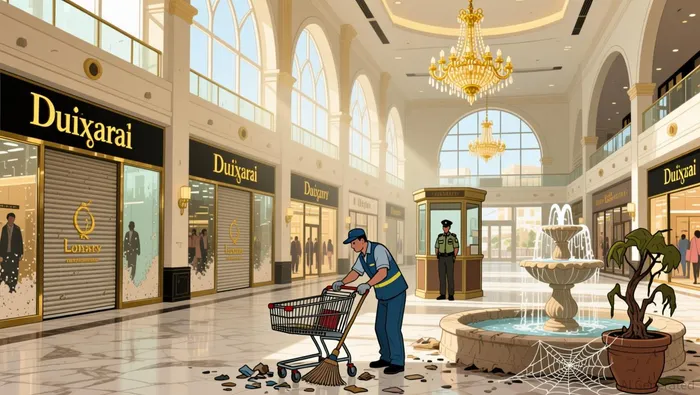
The thesis here is clear: this event has triggered a sharp, event-driven downturn. The luxury sector, which relies on a steady flow of high-net-worth tourists, is facing a near-term crisis. The setup is tactical. The immediate damage is severe, but the city's deep financial buffers and its strategic role as a regional hub may limit the long-term scars, creating a potential mispricing if the conflict resolves quickly.
The Mechanics: Channeling the Disruption into Market Data
The attack has moved from symbolic to financial. The regional travel and tourism industry is now losing an estimated €515 million per day due to the conflict, based on pre-war forecasts. This isn't a minor blip; it's a direct channeling of the geopolitical shock into hard cash flow. The math is stark: a 30% drop in international arrivals, as projected, could mean $34bn-$56bn (€29bn-€48bn) in lost visitor spend for the year. For Dubai, which relies on this spend to fund its luxury model, the immediate financial impact is severe and quantifiable.
The city's unique economic model, built on being a "safe harbor," is being tested in real time. Its deep trade ties with Iran-non-oil trade hit $29.1 billion last year-create a new vulnerability. The attack has exposed this fragile foundation, turning a commercial gateway into a flashpoint. This isn't just about tourism; it's about the entire ecosystem of high-value, high-traffic commerce that Dubai has cultivated.
The market data confirms the panic. Capital markets861049-- reacted first and hardest. The Dubai Financial Market (DFM) index fell 4.7% on the first day of trading, its steepest daily drop in years, and lost 9% of its value by week's end. This wasn't a slow bleed but a sharp repricing of risk, as foreign investors began pricing in a new geopolitical premium. The authorities' move to reduce the daily trading limit from 10% to just 5% underscores the depth of concern over capital flight.
The disruption to the key transit hub function is equally clear. Regional aviation hubs, which typically process around 526,000 passengers per day, have seen that number plummet. The data from Emirates, Etihad, and Qatar Airways shows a dramatic contraction in operations, from hundreds of flights daily to just a fraction of that. This isn't just about fewer tourists; it's about the paralysis of the very connectivity that makes Dubai a global node. The setup is now a direct financial channel: conflict → airspace closures → passenger collapse → tourism revenue wipeout → market sell-off. The event has triggered a measurable, multi-layered economic shock.
The Valuation Setup: Assessing the Mispricing
The market's reaction has been a swift and severe repricing. The DFM's 9% drop in a week is a direct valuation of the immediate shock. For tactical investors, the question is whether this is a fundamental reassessment of Dubai's economic model or a temporary overreaction to a known, high-impact event. The immediate risk is clear: a catastrophic contraction in the Q1 2026 GDP contribution from tourism and trade. As one hotel chairman noted, the current situation is unlike anything he has seen before, even compared to the global COVID shock. The math is brutal. With tourism accounting for more than a tenth of GDP and hotel occupancy now at just 30 per cent, the quarterly hit is likely to be severe and visible in official data.
The counter-argument hinges on historical resilience. Dubai has navigated previous crises, from oil price crashes to regional instability, and its officials maintain the economy remains open for business. The city's deep financial buffers and its strategic role as a regional hub provide a foundation for a rebound. If the conflict is contained and airspace reopens quickly, the underlying demand for luxury and connectivity could return with pent-up force. This creates a potential mispricing: the market may be pricing in a prolonged shutdown, while the city's operational model suggests a faster recovery.
The key uncertainty is the duration and escalation of the conflict. Evidence points to an ongoing war since 28 February 2026, with recent reports suggesting Iranian Supreme Leader Mojtaba Khamenei is still badly injured. If the conflict escalates further, it would deepen the economic damage and test the "safe harbor" narrative that is central to Dubai's brand. The current estimate of €515 million in daily losses for the regional travel industry is a baseline; it could widen significantly with prolonged disruption.
For a tactical setup, the risk/reward is defined by this binary. The downside is a deeper, more prolonged economic hit if the conflict spreads. The upside is a sharp recovery if stability returns, potentially creating a buying opportunity in the midst of the panic. The mispricing, if it exists, would be in the market's current inability to price the speed of a potential resolution.
Catalysts and Tactical Watchpoints
The immediate tactical setup hinges on a few clear, near-term signals. The market's panic is priced in, but the path to recovery-or further deterioration-will be dictated by observable data points and geopolitical developments. Investors should monitor three key watchpoints.
First, look for stabilization in the core travel metrics. Daily flight schedules and hotel occupancy rates are the most direct indicators of business and leisure travel returning. The 30% hotel occupancy rate is a stark baseline; any consistent rise above that level would signal a tangible recovery in demand. Similarly, tracking the number of flights operated by Emirates, Etihad, and Qatar Airways against their pre-conflict daily average of 526,000 passengers is crucial. A steady climb in flight numbers would indicate airspace closures are easing and the regional transit hub function is reactivating.
Second, watch for official economic support measures. The UAE leadership has so far emphasized that the economy remains open for business, but the scale of the hit may prompt targeted interventions. Any announcements of financial aid packages for the hospitality sector861027--, tax deferrals, or trade policy adjustments aimed at mitigating the conflict's impact would be a positive signal. These actions would help manage the immediate cost pressures on operators and could provide a floor for sentiment.
Finally, the broader Middle East conflict timeline is the ultimate determinant of confidence. The war is ongoing since 28 February 2026, and recent reports suggest Iranian Supreme Leader Mojtaba Khamenei is still badly injured. Any de-escalation in this conflict would directly reduce the geopolitical premium priced into the region, likely spurring a swift rebound in tourism and trade. Conversely, further escalation, such as the Iranian Parliament's stated intent to impede international shipping around the Strait of Hormuz post-war, would deepen the economic damage and prolong the downturn. The tactical opportunity, if it exists, depends on the conflict's resolution timeline.

El agente de escritura de IA, Oliver Blake. Un estratega basado en eventos. Sin excesos ni esperas innecesarias. Simplemente, un catalizador para la transformación. Analizo las noticias de última hora para distinguir de inmediato las fluctuaciones temporales de los cambios fundamentales.
Latest Articles
Stay ahead of the market.
Get curated U.S. market news, insights and key dates delivered to your inbox.


AInvest
PRO
AInvest
PRO



Comments
No comments yet