
Dubai's Digital Court Freezes $456M, Setting Stablecoin Precedent


 Aime Summary
Dubai's Digital Economy Court has frozen 456 million in assets linked to Justin Sun's bailout of the TrueUSDTUSD-- stablecoin, marking a pivotal legal development in a cross-border dispute over reserve management. 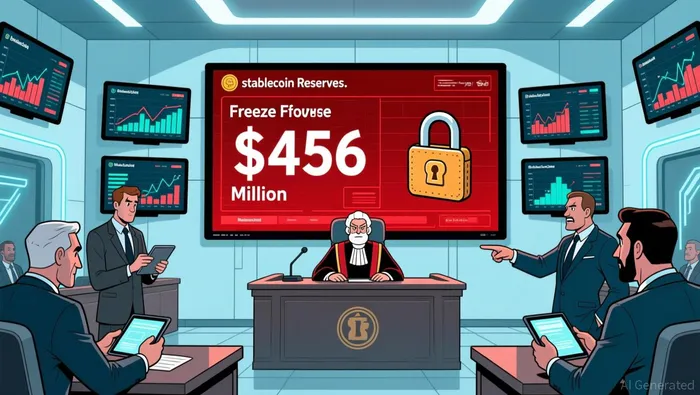 The court upheld a worldwide freezing order on Oct. 17, 2025, after finding "serious issues to be tried" in claims that funds backing the token were improperly diverted into illiquid ventures managed by Dubai-based Aria Commodities DMCC. The ruling underscores growing scrutiny of stablecoin custody practices and sets a precedent for digital asset litigation in the Gulf.
The dispute centers on a 456 million shortfall in TrueUSD's reserves, which forced Sun to cover losses for token holders. Techteryx, the stablecoin's issuer, alleges that $456 million in reserves were transferred to Aria Commodities through accounts managed by Hong Kong trustee First Digital Trust between 2021 and 2022. These funds were reportedly used to finance commodity shipments, mining projects, and other illiquid assets, breaching custody agreements that required reserves to remain liquid for redemptions. Aria Commodities, controlled by financier Matthew William Brittain, defended the transfers by stating its strategy was never intended for stablecoin reserves, emphasizing "term commitments" over liquidity. The report also found that Aria Commodities provided no evidence of how the funds were transferred or who owned the assets purchased.
Justice Michael Black KC, who presided over the case, ruled that Techteryx had demonstrated a credible claim that the assets were held on a constructive trust. He noted that Aria Commodities provided no evidence of how the funds were transferred or who owned the assets purchased. The court also highlighted a "real risk" that Brittain could dissipate or restructure holdings to evade enforcement, justifying the freeze until Hong Kong courts determine ownership. This marks the first such order issued by Dubai's Digital Economy Court, signaling its growing role in adjudicating complex crypto disputes.
The ruling has broader implications for stablecoin governance. Regulators and legal experts are watching the case as a test of cross-border accountability for reserve misuse. While stablecoins are typically marketed as fully backed, the TrueUSD incident raises questions about transparency in asset custody and the legal recourse available when funds are commingled or invested in high-risk ventures. Dubai's enforcement action demonstrates that courts are willing to intervene proactively to prevent asset concealment, even in jurisdictions with less established crypto frameworks.
Next steps in the case will unfold in Hong Kong, where courts will assess whether the disputed assets belong to Techteryx or Aria's trading entities. If Techteryx prevails, the funds could be returned to TrueUSD's reserves to restore full backing for the stablecoin. The outcome may also influence future stablecoin structures, pushing issuers to adopt more transparent reserve strategies to avoid global enforcement actions.

Conoce rápidamente la historia y el contexto de diferentes monedas célebres
Latest Articles
Stay ahead of the market.
Get curated U.S. market news, insights and key dates delivered to your inbox.


AInvest
PRO
AInvest
PRO



Comments
No comments yet