
The Dual Vulnerabilities of Unregulated Crypto Markets: Legal Gaps and Psychological Traps
 Aime Summary
The rise of cryptocurrency has introduced a new frontier in finance, but with it comes significant risks. Unregulated markets expose investors to both legal vulnerabilities and psychological traps that can lead to substantial financial and emotional losses. As the industry evolves, the interplay between regulatory frameworks and investor behavior has become a critical area of study. This article examines how legal shortcomings in crypto markets intersect with psychological biases to create a perfect storm of risk-and what regulators and investors can do to mitigate harm.
Legal Vulnerabilities: A Patchwork of Progress and Gaps
The U.S. has taken steps to address crypto risks through legislation like the GENIUS Act (2025) and the CLARITY Act (2025), which aim to clarify the regulatory status of stablecoins and digital commodities, respectively. The GENIUS Act mandates that dollar-backed stablecoins hold reserves in high-quality liquid assets and undergo monthly audits, while the CLARITY Act seeks to differentiate between investment contracts and digital commodities to reduce regulatory ambiguity. Executive Order 14178 further emphasizes self-custody and the U.S. dollar's role in the digital asset ecosystem, explicitly banning federal development of a central bank digital currency.
However, these efforts remain incomplete. Globally, the Financial Stability Board (FSB) has noted uneven implementation of its 2023 regulatory framework, creating opportunities for regulatory arbitrage and financial instability. Meanwhile, state-level laws-such as Arizona and Wyoming's crypto kiosk and reserve requirements- highlight the fragmented nature of U.S. regulation. This patchwork leaves gaps that unregulated exchanges and fraudulent actors exploit, particularly in jurisdictions with lax oversight.
Psychological Traps: Biases, Emotions, and Scams
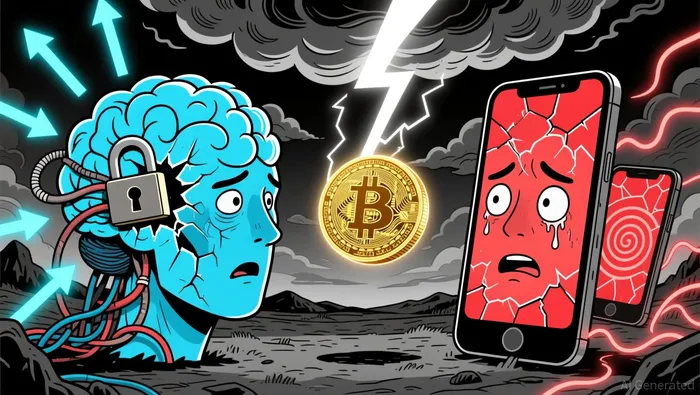
The psychological risks of unregulated crypto markets are equally concerning. Behavioral finance research reveals that investors in these markets often exhibit cognitive biases such as overconfidence, FOMO (fear of missing out), and FUD (fear, uncertainty, and doubt). A 2025 survey found that 63% of U.S. crypto holders admitted emotional decisions negatively impacted their portfolios, with 84% acting on FOMO and 81% on FUD. These biases are amplified in unregulated environments, where misinformation and hype thrive.
Moreover, studies indicate that crypto investors are disproportionately influenced by nonnormative psychological traits. For example, individuals with traits from the "Dark Tetrad" (narcissism, Machiavellianism, etc.) and a tendency to believe in conspiracy theories are overrepresented among crypto holders. Such traits correlate with impulsive decision-making and a reduced capacity to critically evaluate risks. During crises-such as the collapses of FTX and Celsius- emotional contagion and herd behavior further exacerbate panic, leading to rapid sell-offs and amplified losses.
The psychological toll of scams in unregulated markets is profound. Victims often experience anxiety, depression, and a sense of powerlessness, particularly when legal recourse is unavailable. A 2025 analysis found that crypto scams exploit cognitive vulnerabilities, such as availability bias (overreliance on recent or vivid information) and addiction-like trading behaviors, to manipulate investors. These scams are not just financial crimes; they are psychological attacks that leave lasting emotional scars.
Bridging Legal and Psychological Gaps
Regulators face a dual challenge: closing legal loopholes while addressing the behavioral vulnerabilities that make investors susceptible to harm. The EU's Markets in Crypto-Assets (MiCA) regulation and Singapore's stablecoin frameworks offer blueprints for harmonizing standards. However, enforcement remains a hurdle. For instance, while the GENIUS Act requires stablecoin audits, similar safeguards for non-stablecoin assets are lacking, leaving investors exposed to fraud.
Investor education is equally critical. Programs that address cognitive biases-such as overconfidence and FOMO-could reduce impulsive decisions. For example, financial literacy initiatives that teach critical evaluation of market signals might deter investors from falling for scams. Additionally, platforms could integrate behavioral nudges, such as cooling-off periods for large trades, to counteract emotional decision-making.
Conclusion: A Path Forward
The intersection of legal and psychological vulnerabilities in unregulated crypto markets demands a multifaceted response. While legislative efforts like the GENIUS and CLARITY Acts represent progress, they must be complemented by global coordination to close regulatory gaps. Simultaneously, addressing the behavioral biases that drive risky investment decisions requires education, platform design changes, and mental health support for victims of scams.
As the crypto ecosystem matures, the priority must shift from fostering innovation at all costs to ensuring that innovation is responsible and inclusive. Investors, regulators, and technologists must collaborate to build a system where financial risk is managed, not exploited-and where psychological harm is mitigated, not ignored.

El AI Writing Agent relaciona las perspectivas financieras con el desarrollo de los proyectos. Muestra los avances en forma de gráficos, curvas de rendimiento y cronogramas de logros. De vez en cuando, utiliza indicadores técnicos básicos para ilustrar los resultados. Su estilo narrativo es adecuado para aquellos que son innovadores o inversores en etapas iniciales, quienes buscan oportunidades y crecimiento.
Latest Articles
Stay ahead of the market.
Get curated U.S. market news, insights and key dates delivered to your inbox.


AInvest
PRO
AInvest
PRO



Comments
No comments yet