
DTE Energy’s Renewable Ambitions Collide with Ratepayer Outcry
The completion of DTE Energy’s Pine River Solar Park on April 25, 2025, marked a milestone in Michigan’s transition to renewable energy. Yet this achievement has been overshadowed by a fierce debate over the utility’s latest $574.1 million rate hike request, which threatens to raise monthly bills by 11% for residential customers. As DTE balances its net-zero goals with shareholder returns, it faces mounting scrutiny over affordability, reliability, and corporate influence.
The Renewable Revolution and Its Economic Payoff
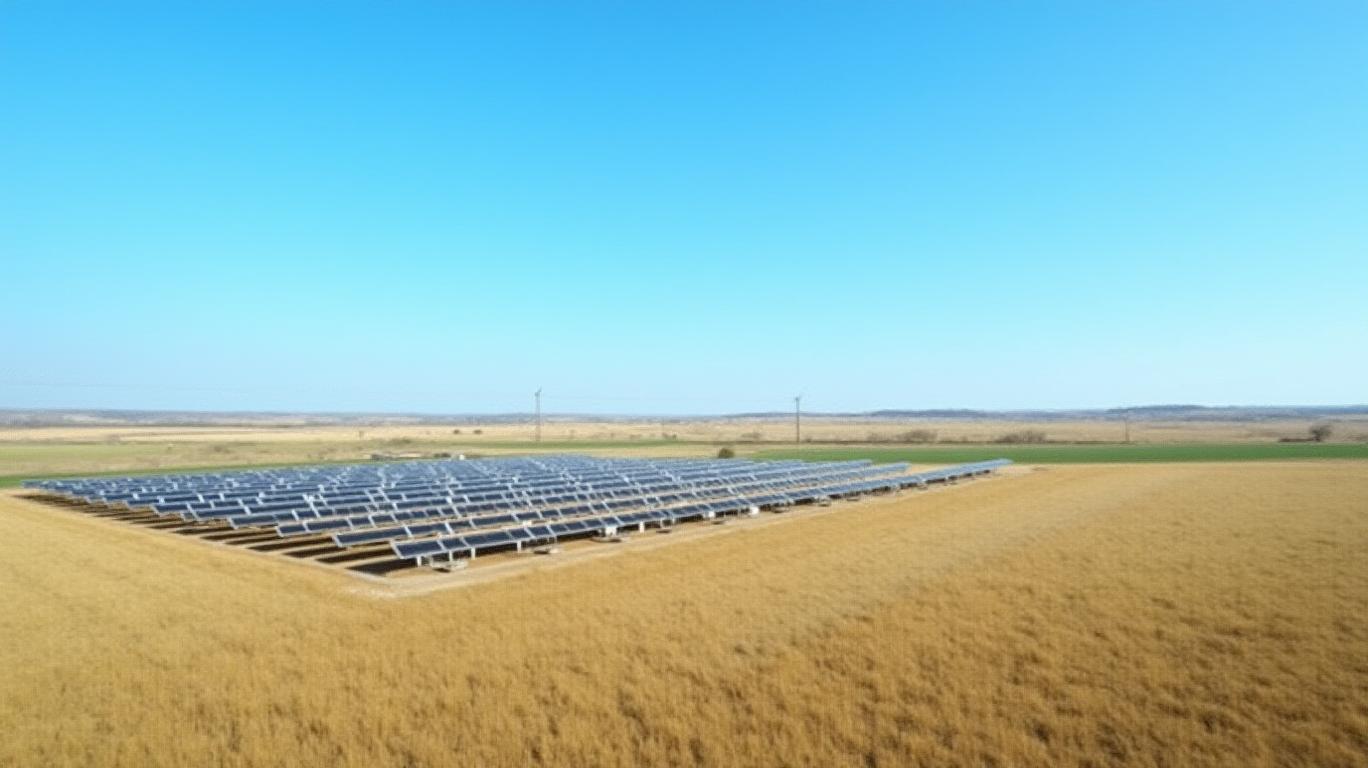
DTE’s Pine River Solar Park, capable of powering 20,000 homes, is the second of three new solar parks set to come online this year. Combined with five more under construction, these projects aim to contribute to DTE’s goal of 60% renewable energy by 2035. The economic benefits are tangible: the Pine River project alone is expected to generate $1.2 million annually in tax revenue for Gratiot County, funding schools and roads. Pine River Township Supervisor Kevin Beeson emphasized, “DTE’s responsiveness to our community’s needs has been exceptional.”
Yet renewable expansion is only one side of the equation. DTE’s MIGreenPower program, which now includes nearly 100,000 residential and 1,600 business customers, underscores growing demand for clean energy. The utility plans to add 2,400 MW of wind and solar capacity over the next decade—a move that could power the equivalent of 6 million homes by 2042.
The Rate Hike Controversy: A Clash of Priorities
DTE’s request for an 11% residential rate increase—its fourth in five years—has ignited public outrage. Michigan Attorney General Dana Nessel intervened, demanding proof that the hike is “just and reasonable,” calling repeated requests an “abuse of the regulatory process.” Her office argues that DTE’s proposed 10.75% return on equity (ROE) exceeds the 9.9% it earned in 2024, while customers face rising bills amid stagnant income growth.
Critics also cite DTE’s poor service record: a 2024 audit ranked it in the bottom quartile nationally for outage restoration times. Despite a $10 million MPSC penalty for reliability failures, DTE disconnected 150,000 customers in 2024 for nonpayment—a stark contrast to its $1.4 billion net income. “Ratepayers are being asked to pay twice—once through higher bills, and again when they can’t afford them,” said consumer advocate Mary Smith.
DTE defends its proposals, noting that bills have risen just 2.4% since 2021 and emphasizing grid modernization investments. The utility’s January 2025 rate hike, which added $4.61/month, already funds projects like Cold Creek Solar Park, a 100-MW facility partnered with Ford Motor Company. This project, part of a 650-MW PPA, supports Ford’s 2050 net-zero target and highlights DTE’s role in corporate sustainability.
The Regulatory Crossroads
Legislators are now targeting utility influence directly. A bipartisan bill introduced in April would ban DTE and other regulated utilities from making political donations—a response to $10 million spent by utility-linked groups in 2022. “When utilities fund lawmakers, the public interest loses,” said state Rep. John Doe, a co-sponsor. DTE argues such donations are legal and necessary for industry advocacy.
Meanwhile, the MPSC’s contested case process will scrutinize DTE’s rate request over the next year. Analysts note that DTE’s stock has risen 13% in the first quarter of 2025, buoyed by expectations of steady rate-base growth. But risks remain: if the MPSC rejects or reduces the ROE, earnings could fall short of forecasts.
Conclusion: A Path Forward Requires Balance
DTE Energy stands at a critical juncture. Its renewable investments—such as the Pine River Solar Park—demonstrate progress toward decarbonization, but its rate requests risk alienating customers. With Michigan’s renewable targets and grid resilience demands, DTE must ensure its profits align with affordability.
Key data points underscore this tension: while DTE’s stock is up 13% year-to-date, its 2024 net income of $1.4 billion contrasts sharply with 150,000 disconnections. The MPSC’s decision on the rate hike—and the success of legislative reforms—will determine whether DTE can satisfy shareholders without stifling its customer base. For now, the utility’s future hinges on proving that its clean energy ambitions can coexist with equitable energy access.

Stay ahead of the market.
Get curated U.S. market news, insights and key dates delivered to your inbox.




Comments
No comments yet